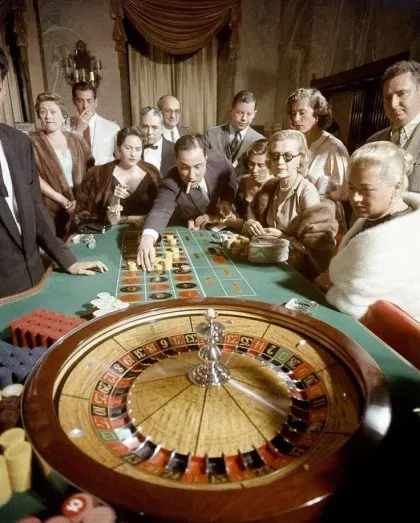
Paris, 1830. Simon Mannoury, a fabric seller at the Petit Saint-Thomas shop, has a problem: his unsold stock keeps piling up.
His solution? Slash prices to make room for the new collections. And just like that, the sale was born. A revolutionary idea at the time.
Almost 200 years later, this "innovation" has become the norm. So much so that you have to wonder: is it still a sales driver… or a mandatory condition for selling?
Black Friday, sales, private sales, anniversary offers… promotions are everywhere. And your customers know it. They wait, compare and put off their purchases.
So the real question is no longer "Should I run sales?" but "Do I still know how to sell without them?"
For e-commerce merchants, the real question today is: do I still know how to sell without sales?
As CRO experts, we work with many e-commerce merchants, and many regularly tell us they feel tied to a calendar they have no control over.
We try to bring an informed perspective on the value of their products.
The goal? Help them secure a lasting margin that lets them keep growing while still engaging their audiences during key moments.
To help you see more clearly, here's our thinking on the topic 👇
The numbers are clear
When you look at how people buy when promotions are running, the picture is pretty clear:
- In fashion, more than 60% of consumers are willing to delay their purchases until they get a discount (1)
- In 2024, 83% of French households buy discounted products "as often as possible." (2)
- 64% of French shoppers actively look for promotions, and 28% do so every time. (3)
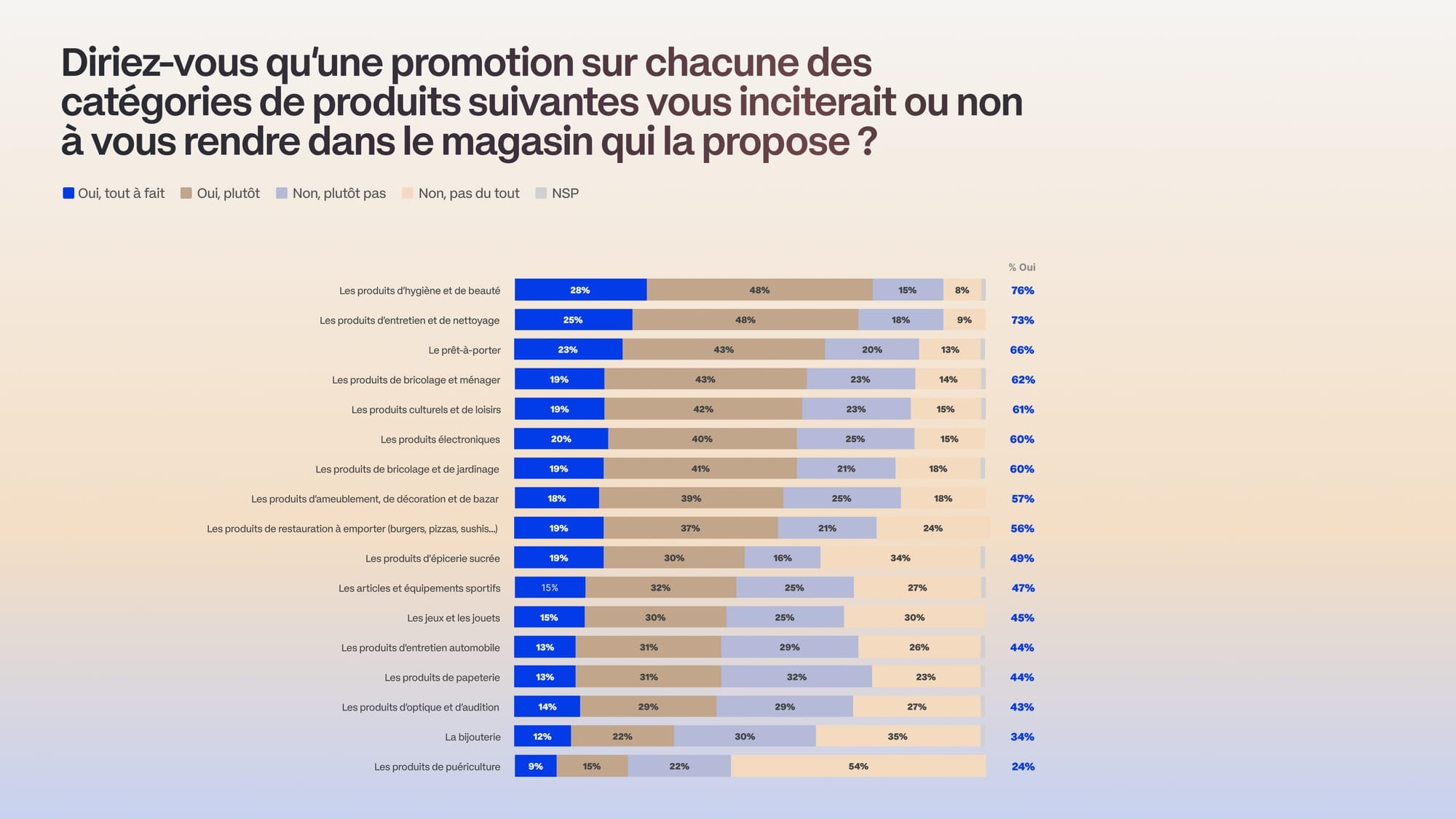
We're not talking about impulse buys here. We're talking about a buying strategy. Your customers have become promo experts. They scan, think it over and patiently wait for what they see as the right moment, the one where they feel they've "got a deal." But what does that tell us about our brands?
Big but concentrated sales spikes
Last year, Black Friday hit a record with 24% more transactions than the year before. But that apparent success needs some nuance. Average order value fell sharply (-17%). Total sales rose only slightly (+3%). (4)
The e-commerce calendar concentrates demand into a few days. The gain comes mainly from order volume, not from average order value. So is it really growth? You sell more, but you don't necessarily earn more. You've simply shifted revenue around the calendar.
And if it isn't really growth, is it really a prerequisite? How do you avoid training shoppers to buy only during promotions?
👇
When sales turn toxic for your brand
The impact is mathematical:
- The discount eats into your margin immediately
- If it becomes routine, you have to hold volume with… even more promotions
- Your brand loses credibility
- Trust erodes
- Little by little, even promotions stop working
It's a vicious circle, and it gets hard to break free.
In some sectors, sales have become structural, just to keep the machine running. The most striking example we've come across: mattresses.
Did you know we spend about a third of our lives sleeping? Yet there's one product nobody buys at full price: the mattress.
Look closer at this sector and you quickly see it's permanently on discount, averaging 40% off.
The result? Brands have built it fully into their margin, and it no longer means anything. The crossed-out price has become laughable.
But shoppers aren't fooled. Customers no longer see the "normal" price as the real price. Trust has slowly eroded. The sale price is seen as the true value. And everything else looks like a scam.
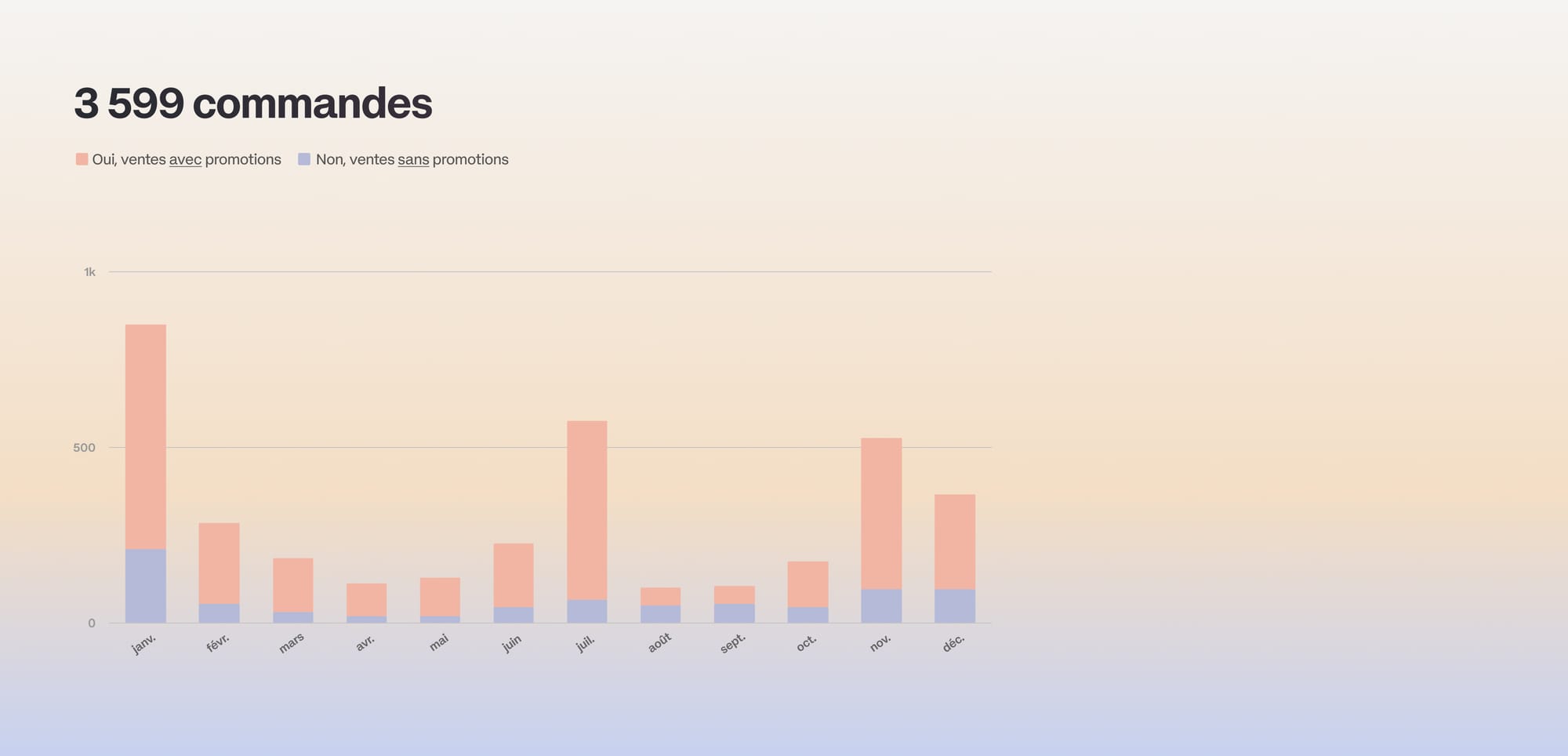
Take stock of your own promo dependence too!
Here's a simple query to copy and paste into the reporting section of your Shopify store to see how your sales break down:
SHOW orders
GROUP BY month, is_discounted_sale WITH TOTALS
DURING last_year
ORDER BY month ASC
VISUALIZE orders
Fashion: the extreme lab of all-promo
Some sectors are especially sensitive to promotions and the e-commerce calendar. Fashion is a good example.
The question is what, in this sector in particular, explains the impact of the e-commerce calendar.
When you think of fashion, it's hard not to think of fast fashion. With its huge volumes and fast turnover, it creates structural overproduction and a constant need to clear stock just to keep pace.
Big chains' prices are often inflated from the start, built to absorb future discounts. Customers have figured it out and increasingly refuse to pay full price.
On top of that, part of the sector faces fierce competition with little differentiation. When everyone sells the same cut, the same color, the same style… the battle is fought on price.
If Shein does the same thing as Zara, you might as well pay 10 times less. Never mind the environmental, human and social damage: unfortunately, price wins.
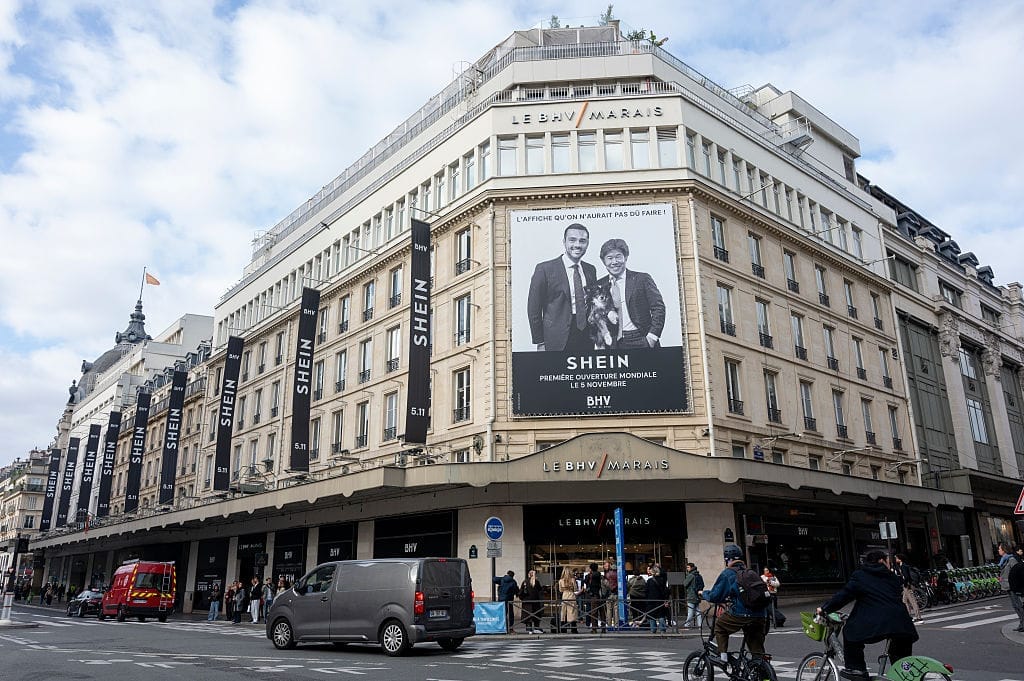
Effective in the short term. Risky in the long term if they become routine.
A vicious circle can be broken, as long as you step back, observe and draw the right conclusions.
First, you need to know where your brand stands. Where are you really? Are sales a boost or a pillar of your strategy?
To work out your position, ask yourself the right questions:
- What happens on your site outside promotion periods? Look at your KPIs: conversion rate, average order value, purchase frequency. If everything collapses without a promotion, you have a problem.
- Do your promotions create value, or do they cannibalize your full-price sales? If your customers systematically wait for sales, you're not creating demand. You're shifting it.
- Are your discounts consistent with your brand positioning? A premium brand that's permanently on sale at -70%… isn't a premium brand anymore.
- What alternatives to straight discounts do you offer? Free shipping, exclusive services, a loyalty program, content, personalization… Do you have any drivers other than the crossed-out price?
So can you really break free of the standard e-commerce calendar?
Sales aren't bad in themselves. They aren't an absolute prerequisite for selling online either. In many contexts, they remain a powerful accelerator.
But if they become your only conversion driver, you probably have a value proposition problem.
A few ways to step outside the traditional calendar and stand out:
- Create your own key moments → Collection launches, collaborations, editorial events. Take back control of your calendar and set yourself apart.
- Play on perceived value rather than price cuts → Limited editions, premium materials, strong storytelling. Give people a reason to buy now that isn't "-30%." Price is far from the only factor in the decision. You need to be able to justify a fair price.
- Look at the alternatives → Some brands (like Faguo) have taken the opposite stance and flatly refuse certain events, like Black Friday. What's interesting isn't so much their opposition as how they state it and communicate their values. It works because it's consistent.
Selling isn't just slashing prices.
It's convincing people.
In short, no: sales aren't (and above all shouldn't be) mandatory for selling online. But it takes courage.
If you no longer know how to sell without cutting your prices, it may be time to rethink your strategy.
To do that, it helps to audit your range, rework your communication, study your returns and customer reviews, and connect with your customers through social media.
The goal is to understand how your offer is perceived as a whole. It's a brand issue before it's a pricing issue.
Because selling isn't just slashing prices.
It's convincing people.