
Content creators now play an increasingly central role in how an audience meets a brand, forms an opinion of it, and remembers it at the moment of purchase.
This shift deserves a closer, more precise look, because many organizations still manage their creator partnerships with the same reflexes as five years ago: chasing reach, posting frequency, and view counts.
These metrics do tell you something about distribution potential, it's true, but they say almost nothing about what really matters to a brand: did this content leave a mark?
A role that has quietly changed
Creators were long seen as relays: an amplifier at the end of the chain, tasked with spreading a message already built elsewhere, by the brand and its agency. That view fit an era when distribution followed the social graph, when you reached a creator's audience because it followed them, period.
The logic of distribution has fundamentally changed.
Platforms now distribute content more than they distribute a list of followers: what circulates is whatever holds attention in the moment, regardless of who follows whom.
This shift fundamentally changes the creator's role. They are no longer just a mouthpiece. They become the place where an audience first meets a brand, often before people even knew they were looking for it.
Creators no longer just bring an audience to the brand. They lend it a context, a tone, and a legitimacy it could not have built alone at the same pace.
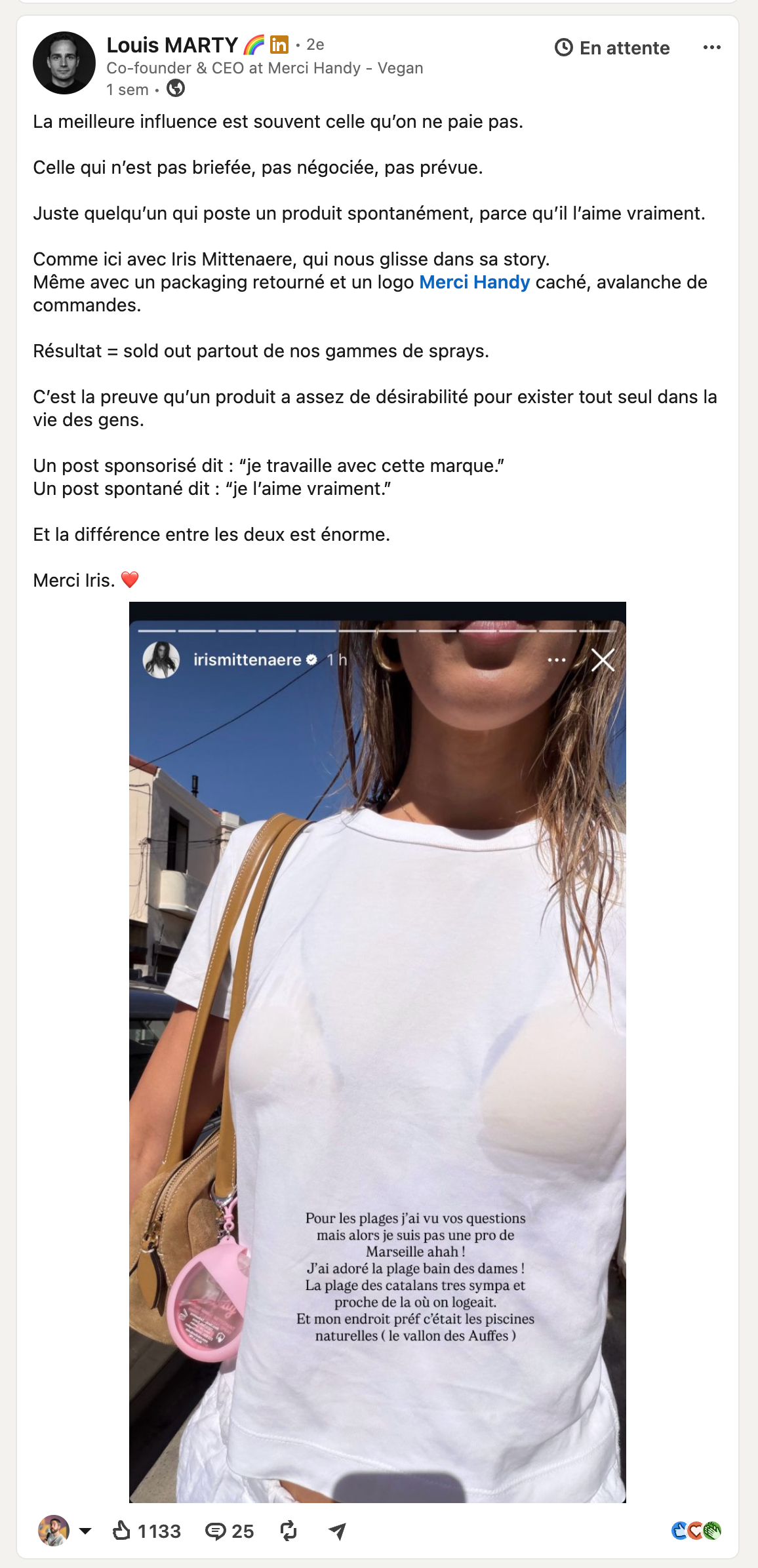
This dynamic explains why so many brands that built their growth on a close relationship with their community, like Gymshark, have treated content created by others as a core asset rather than an add-on. The same logic runs through everything UGC has stood for over the past several years: an audience gives more credit to content that doesn't carry the brand's exclusive signature.
The problem is that this new role took hold faster than the tools to manage it.
Most marketing teams still use dashboards inherited from the relay era: reach, views, engagement rate. And that's fine! But those metrics tell a story about distribution without asking whether the content left a strong enough imprint to influence a future choice.
What separates content that builds a brand from content that just makes noise
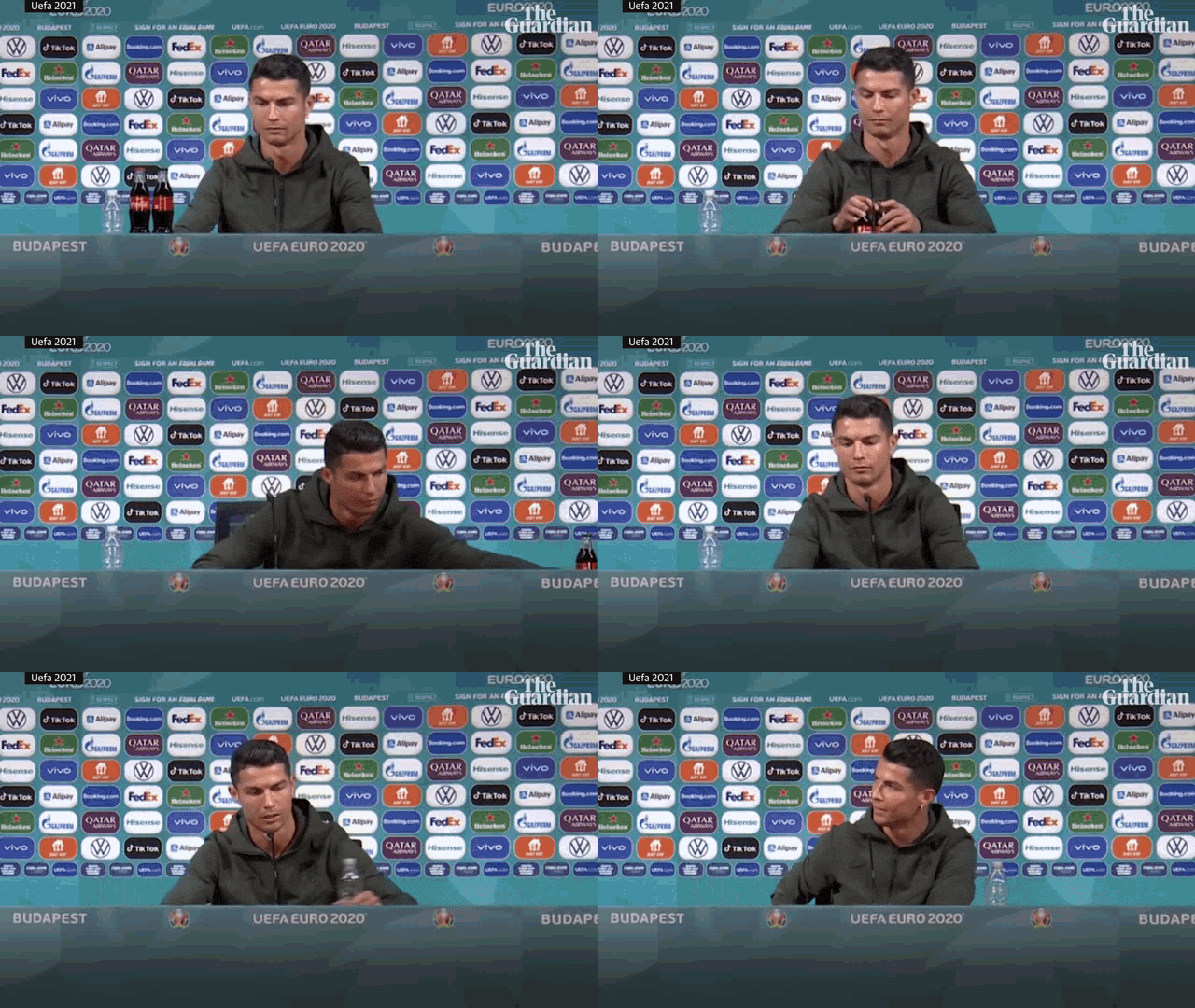
Two creator ads can get similar view counts and have radically different effects on the brand.
The gap no longer comes down to reach alone but to three distinct dimensions.
The first is what the content makes people feel, and how quickly the brand finds a clear place in it.
Content that stirs real emotion, without tying the brand to it early enough, leaves a memory that benefits the creator, the format, or the joke, but rarely the brand itself. Conversely, a brand dropped in too early, before the content has had time to set up its point, breaks the very attention it was trying to capture.
Next comes how well the audience actually recognizes the creator, which has little to do with follower count.
A creator can have a large audience that doesn't recognize them or grasp the codes of their world at a glance, while a smaller creator can be instantly identified by the exact people the brand wants to reach. That recognition is what gives creator content a head start, not the size of the community.
Finally, the most overlooked dimension is the brand's legitimacy in the creator's world. A product that has a natural role in what the creator already talks about moves faster than one forced into a world where it doesn't belong, even if the second creator has a much bigger audience.
A brand that combines real emotion, a recognized creator, and a credible role in their world doesn't just stack up three small advantages: it changes scale.
To work on this idea of legitimacy, teams work on brand distinctiveness drivers and approach their communication strategy through brand archetypes: a brand that knows exactly what it stands for spots much faster the creator worlds where it has a credible role to play, and those where it doesn't.
Now it's time to learn how to manage the relationship
Start by setting a strategy.
Start from a human need the brand wants to embody, rather than a simple product benefit: a need for comfort, trust, social recognition, or peace of mind.
That need then points toward a type of creator world where it fits naturally, before you even look at specific profiles.
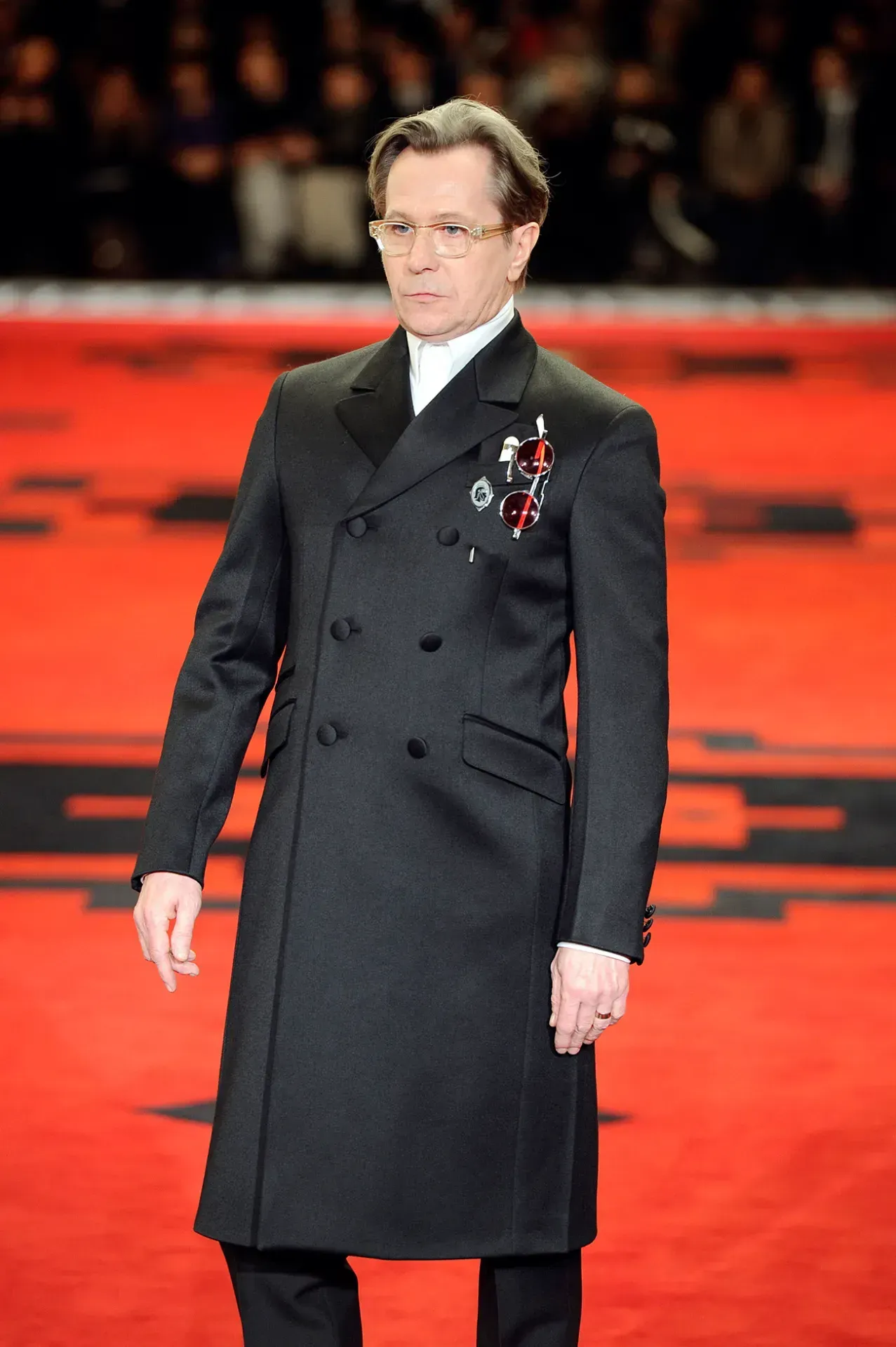
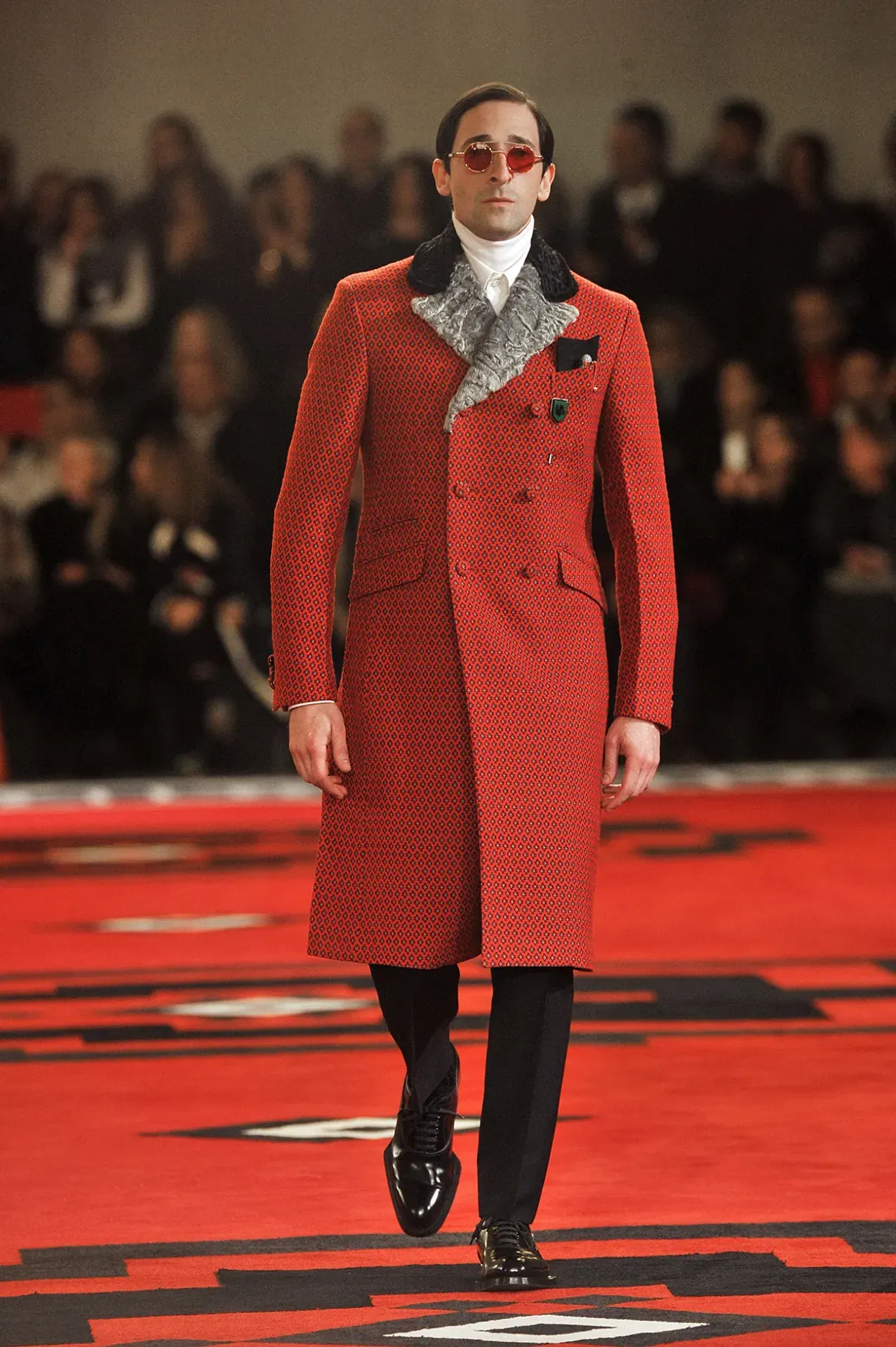
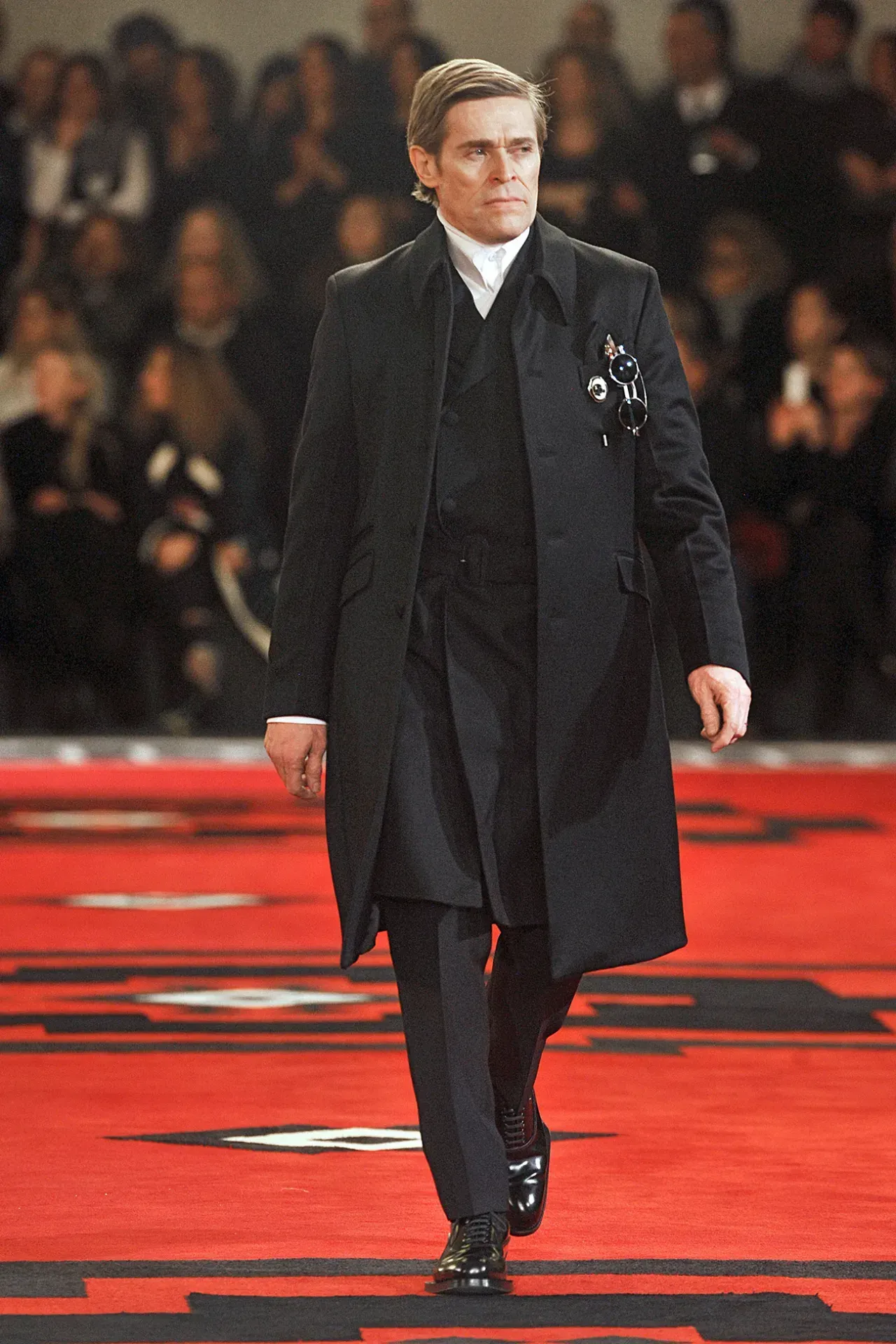

Prada casts actors known for playing villains in its fall 2012 collection
A "verification" phase is necessary to avoid potentially costly mistakes: does the target audience really recognize this creator or this world, and does the brand have a role there that doesn't feel forced?
This is where many partnerships lose what the strategy had prepared so well.
To structure this phase, keep a few rules in mind:
Entertain before you explain. Content that tells a story, that sets up a recognizable character, place, or situation, holds attention far better than content that lists arguments. A cosmetics brand that fits into an evening routine the creator has already shared goes further than one that interrupts that routine to place its message.
Bring the brand in early, but don't overdo it. The brand should appear soon enough for the emotion it creates to benefit it, without taking over so much that it breaks the content's rhythm. A few well-chosen brand cues, built into the setting rather than pasted on top, are more than enough.
Respect the format's codes. A well-chosen creator already masters most of how their platform works.
The risk comes more from too much control on the brand's side.
Too much on-screen text, a call to action that's too pushy, a tone that sounds scripted. An effective brief sets the feeling to aim for, the product's role, and the few brand cues expected, without choreographing every second of the performance.
Some creators build, over time, a recurring format of their own: a place, an object, an expression their audience recognizes before the content even needs to introduce itself.
A brand that finds its place in that established format benefits from recognition already in place, rather than having to build its own recognizable world in a single post.
A power that took time to recognize
Just a few years ago, the idea that a creator could weigh in almost equally with a brand established for decades would have made many marketing leaders smile.
A decade of creators building, on their own, communities more engaged and more loyal than those of many brands has ended up creating a balance of power that few companies saw coming.
This power deserves a clear-eyed look, with both its upside and its risk.
A creator who adopts a brand can make it known to an entire audience in just a few posts. The same power, poorly handled or misunderstood, can just as quickly slip away from the brand that thought it had it under control.

Feeling lost in this territory when you're not familiar with it is the most natural reaction there is.
The fear of bad buzz, the temptation to chase whoever is famous right now, the sense that a partnership choice can backfire without warning: all this uncertainty is enough to worry an organization used to keeping control of its image.
One thing helps restore some footing in this landscape: most creators who really matter operate, at their scale, as genuine PR operations. They tend their image, select their partnerships, and protect their audience's trust, often with as much rigor as a brand does for itself.
In this context, monitoring the creator ecosystem in your industry becomes as natural as competitive monitoring.
Seeing them as potential allies changes how you approach the whole relationship.
Next comes the question of getting closer: does it make sense to approach a given creator, and in what form? Interact with their posts, send them a product with nothing expected in return, invite them to see the company from the inside.
A creator is, first and foremost, a person passionate about a subject who has gathered a community around that passion.
The open question for every brand is how it can feed that shared passion.