Disclaimer: In this article, I look at how web search habits are changing, focusing on the differences between how people use Google and TikTok. My analysis doesn't cover searches through AI agents. I'll address those in a later article.
Looking for a restaurant in Paris? The best Italian coffee maker right now?
Five years ago, you'd have typed that into Google without thinking. Today, many people open TikTok directly.
The platform long dismissed as pure entertainment is becoming a full-fledged search engine.
Making Search a Visual Experience
Think about the last time you searched for a recipe online.
You clicked a Google link, scrolled past a long intro to get to the recipe, then hunted for the ingredients in a block of text.
Search on TikTok, and you can watch a quick, authentic video where someone shows you exactly what to do, the timing, the texture…
That's the shift: we no longer want to read descriptions. We want to see.
We want to see a preview of our finished recipe, our next vacation destination, our new coat being worn.
Text informs. Video proves.
TikTok understands you by watching you. The result? A feed that gets more and more precise, more and more "you." A search engine that anticipates what you want instead of just answering your questions.
TikTok analyzes your behavior in real time: a video watched to the end, scrolled past in 3 seconds, watched twice... Every micro-signal is captured.
You quickly get a feed that anticipates what you want instead of just answering your questions.

Trust Is Changing Sides
Picture two scenarios:
Scenario 1:
You're looking for a review of a curly hair treatment. Google serves up a well-ranked, SEO-optimized article that opens with "The 10 Best Curly Hair Treatments in 2026."
You read it. It's well written and well structured, but you don't really know who's behind it. Can you trust these recommendations?
Scenario 2:
On TikTok, you come across a hairstylist testing the product live on a client's hair. They show the application, then the result. In a few seconds, you've seen everything.
Which one seems more credible? That's where everything changes.
Users now trust creators more than websites. Not because creators are certified experts, but because they're human, real, and transparent. You see their face. You hear their voice. You see their reactions live.
Users now trust creators more than websites. Not because creators are certified experts, but because they're human, real, and transparent.
That's the power of UGC (user-generated content): content made by real people, for real people. No professional photo studio, no marketing script. Just someone sharing an authentic experience. And it's precisely this raw, unfiltered format that builds trust.
Kreme uses UGC on its store for reassurance and as marketing content
A study by IZEA Worldwide (2024) confirms it: micro-experts on TikTok have more influence than traditional SEO articles. A video review is seen as more sincere and more authentic.
Why? Because you can't fake it on video the way you can optimize text for Google. UGC reveals the imperfections, the hesitations, the real reactions, and that's exactly what makes it credible.
TikTok and Gen Z: Reinventing How They Search
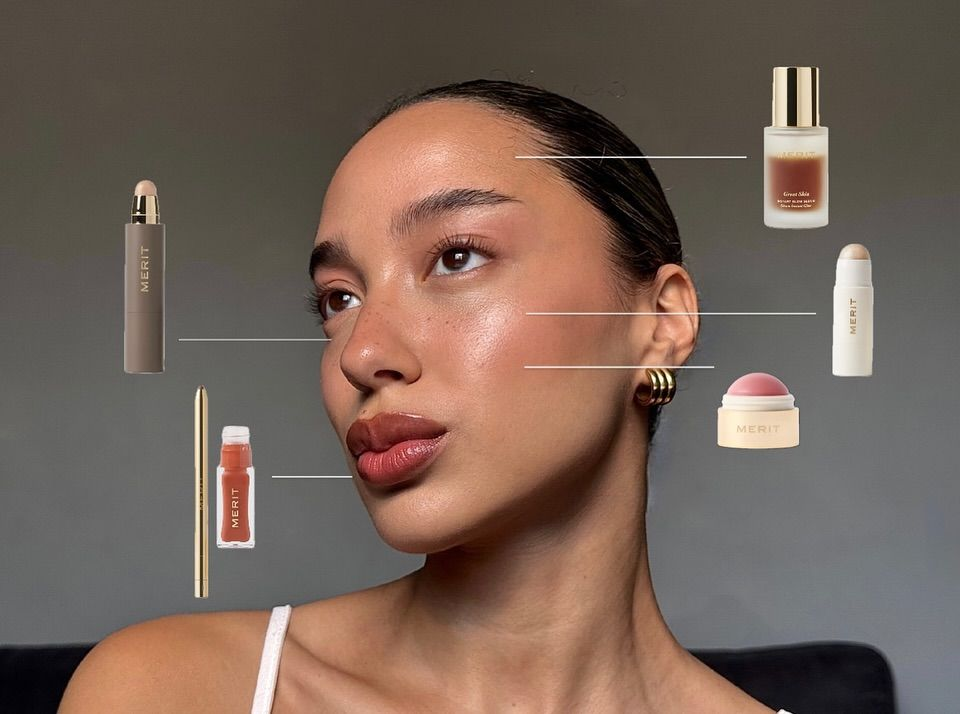
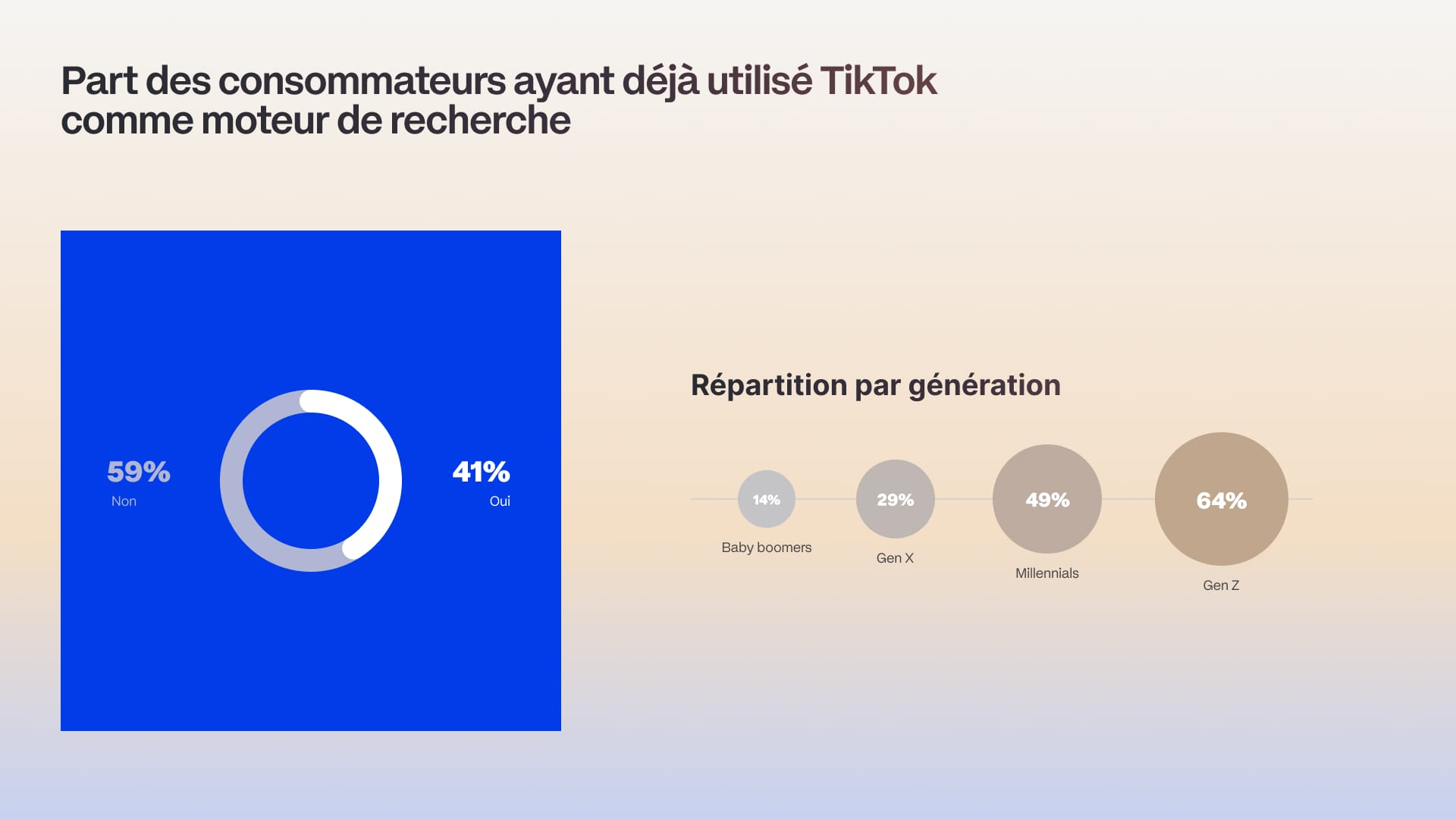
For Gen Z, TikTok hasn't "become" a search engine. It's their default search engine.
A 2022 Google study already showed that nearly 40% of 18-24 year olds prefer to search for a restaurant on TikTok or Instagram rather than Google Maps. Two years later, that number has exploded.
This generation grew up surrounded by disguised ads, non-transparent sponsored content, and SEO articles optimized to the point of absurdity. They've developed an extremely sharp "BS detector."
Gen Z has developed an extremely sharp "BS detector."
On TikTok, even though paid partnerships exist, the short, spontaneous video format makes manipulation harder. A creator who lies or oversells a product gets called out quickly in the comments. The community regulates. The algorithm punishes.
And above all, UGC is everywhere. On TikTok, 90% of content is created by everyday users, not by brands.
When a user searches "which phone to buy," they don't land on a Samsung ad. They land on dozens of videos from other users like them, showing their phones and sharing their real experience, unfiltered.
It's peer-to-peer.
This generation also searches differently. They no longer type "best Italian restaurant Paris" into a search bar.
They scroll until they hit a video that makes them want something. They save it. They come back. They discover through serendipity rather than intent.

Google searches. TikTok discovers.
Here's a fundamental difference that many brands haven't absorbed yet:
Google answers an intent:
TikTok creates the intent:
It's the difference between "I'm looking for a desk lamp" and "huh, I didn't know this kind of lamp existed, and now I want it."

TikTok doesn't just answer. It inspires. It suggests. It plants ideas in people's minds.
That's exactly why brands should be on the platform: that's where the start of the buying journey takes shape, long before the user types anything into Google.
TikTok vs. Google: It's a Match
Clearly, TikTok doesn't "replace" Google, but it complements it and, above all, steals the top of the funnel from it. Here's how the two stack up today:
Type of search:
- Google: you already know what you want.
- TikTok: you discover what you didn't know you were looking for.
Reliability
- Google: Factual, but influenced by sponsored content.
- TikTok: Authentic, but fairly subjective.
Accessibility
- Google: You have to read, analyze, and sort.
- TikTok: You just watch.
Engagement
- Google: Low. You click, then leave.
- TikTok: High. You like, comment, and share.
The takeaway is clear: Google remains unbeatable for verifying, digging deeper, and validating information. But TikTok is becoming the go-to for discovering, finding inspiration, and picturing yourself with a product.
TikTok SEO
For years, brands invested in Google rankings. They optimized their sites, bought links, and produced SEO-friendly content.
Today, they have to learn a new language: TikTok SEO.
TikTok has its own ranking system, and it doesn't work anything like Google's.
To be visible on TikTok, you need to:
- Say the keywords out loud in the video (the algorithm analyzes the audio, not just the hashtags)
- Add on-screen text with the important search terms
- Build formats people search for: "How to...," "The best...," "Testing...," "Before/after..."
- Create useful content, not just entertaining content: tutorials, comparisons, reviews
TikTok is no longer a comedy channel. It's a channel for capturing commercial intent.
Brands that have figured this out are already positioning themselves as "search results" in the minds of an entire generation of consumers.
Business Opportunities: How Can Brands Capitalize?
For brands, the rise of TikTok as a search engine opens up a whole new playing field.
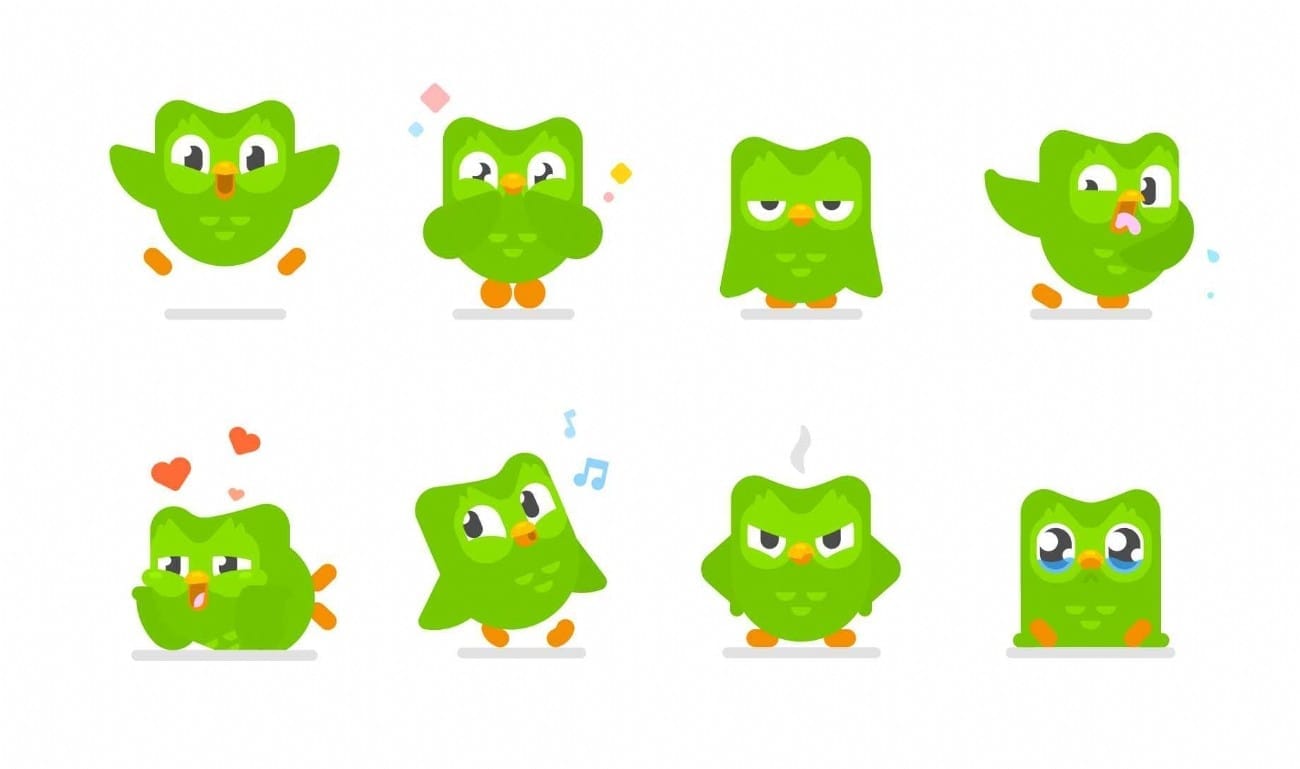
Take Duolingo. The brand understood early on that TikTok was more than an entertainment platform.
Its mascot, Duo the owl, became a full-fledged TikTok character, creating offbeat content, joining trends, and interacting with other accounts.
Another example: small cosmetics brands that take off thanks to a single viral product.
CeraVe, a fairly under-the-radar drugstore brand, saw sales jump 60% after dermatologists on TikTok recommended its products in their skincare routines.
No massive ad campaign. Just organic visibility on TikTok.
The key? UGC. The smartest brands no longer just create content. They encourage their users to create it for them. They launch challenges, hashtags, trends.
They turn their customers into ambassadors. And content created by real users has 10 times more impact than a traditional ad.
They turn their customers into ambassadors. And content created by real users has 10 times more impact than a traditional ad.
The model is clear: brands that succeed on TikTok don't run ads. They create value. They answer questions. They show behind the scenes. They educate. They entertain. And they make their community want to create content around their products.
Does This Apply to Your Product?
But be careful: not every product suits this new way of discovering things.
TikTok runs on visual demonstration and quick inspiration. Some products fit, others don't.
What works: Beauty and fashion, food and restaurants, travel and leisure, lifestyle and tips.
What struggles to find its place: B2B services, financial products, technical products, and anything that requires long consideration and detailed comparison.
So Google has obviously not lost its relevance. But search behavior for certain types of offers, and above all how people decide which brands to trust, has changed.
People no longer look only for factual information. They look for visual proof and authentic experiences.
So, what do we do now?
Three concrete actions to take away:
1️⃣ Get indexed on TikTok. Create content that answers search intents.
2️⃣ Invest in creators. They're the new entry points for search. Working with them gets you discovered in their world, and therefore in their audiences' world.
3️⃣ Adapt your content strategy. Short, personal, authentic video is now the grammar of discovery. If all you do is text, you become invisible.