Before we dive in, what exactly are we talking about?
UGC is a powerful tool for brands. It lets them deliver authentic communication, which builds trust and boosts engagement in their community.
It obviously covers content that consumers create and post on social media, but more broadly, it means any form of content (text, images, videos, reviews) created by users rather than by the brand itself.
The principle is simple and the benefit is clear. Brands are locked in a frantic race for attention and recognition, so trust is hard to give. But when I hear Sophie from Blois, Robin from Loctudy or Ahmed from La Rochelle talk about a product I'm interested in, I form an objective opinion based on their experience.
The approach is authentic and transparent, and it pays off: 86% of consumers are more likely to trust a brand that shares UGC than a brand that relies only on influencer marketing.
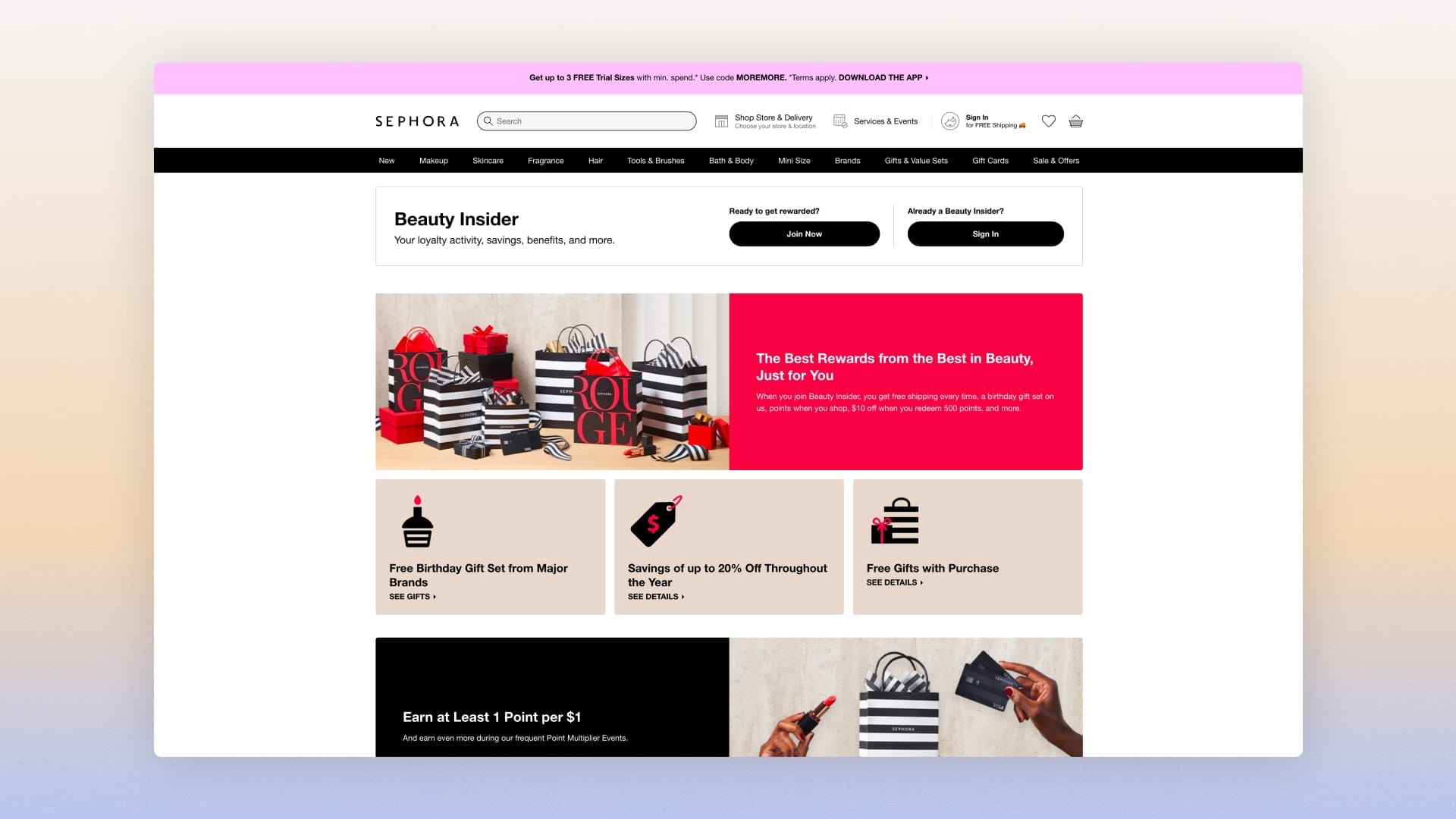
UGC then works as social proof. It shows that other people I can relate to have had positive experiences with a product or service. Humans instinctively tend to simplify their choices. It's a well-known cognitive bias!
When I see the opinions and experiences of my peers, I tend to simplify my decision-making process.
In short: since I identify with Sophie, Robin or Ahmed and they're happy with their choice, I'll be happy too. It's a gift for a brand, as long as customers are actually satisfied, of course!
More broadly, by encouraging customers to create and share content, brands can foster a sense of belonging. I'm no longer just comparing options. I become an ambassador for a brand I love. I feel part of a community, and I commit to it.
To spark that interest, brands compete on creativity with hashtag challenges and photo contests, like the "66 Days to Change Your Life" challenge Gymshark launched on TikTok.
The appeal is unmistakable, and it brings brands another sizable advantage: the chance to cut costs.
By using content customers create, brands can keep a steady flow of authentic material for marketing. GoPro understood this early. It even runs a contest inviting users to share the most incredible video for a chance to win $100,000!
That's the real strength of UGC: it creates a virtuous circle. New users identify with those who took the first step before them, then get involved in turn.
Brands, for their part, invest marketing effort to build a lasting system, then capitalize on the value it creates to win over new users. The loop is complete!
The 3 Main Pillars of UGC
In practice, the ways to spark interest and encourage UGC are fairly well known. A campaign's impact usually comes from its ability to surprise people with a unifying idea. Here are a few examples for inspiration.
Hashtag campaigns that hit home
If I say #IceBucketChallenge, I'm sure I don't need to say more for plenty of images to come to mind.
In 2014, three young men living with ALS dumped a bucket of ice water over their heads. It was a simple, unexpected and funny gesture. Since then it has inspired more than 17 million people and raised nearly $115 million for research and care organizations.
Whether charitable, political or commercial, hashtag campaigns have rallied people around distinctive messages. In marketing, some notable ones include:
- #ShareACoke (Coca-Cola)
- #ShotonIphone (Apple)
- #WorthSaying (L'Oréal Paris)
- #CestQuiLePatron (La Marque du Consommateur)
- #FentyFace (FentyBeauty)
- #Unbottled (Unbottled)
- #VenezVerifier (Lidl)
- #ParisJeTAime (Tourist Office)
Verified customer reviews
Beyond awareness, the role of UGC in e-commerce is to guide shoppers toward a choice and a purchase. Customer reviews are an excellent way to provide social proof, and they can greatly influence the buying decision.
They can reassure shoppers, and they're also a reliable source of information on what a product is really like. A customer review can say what a product description doesn't: sizing, material quality, weight, how it feels to wear, and so on.
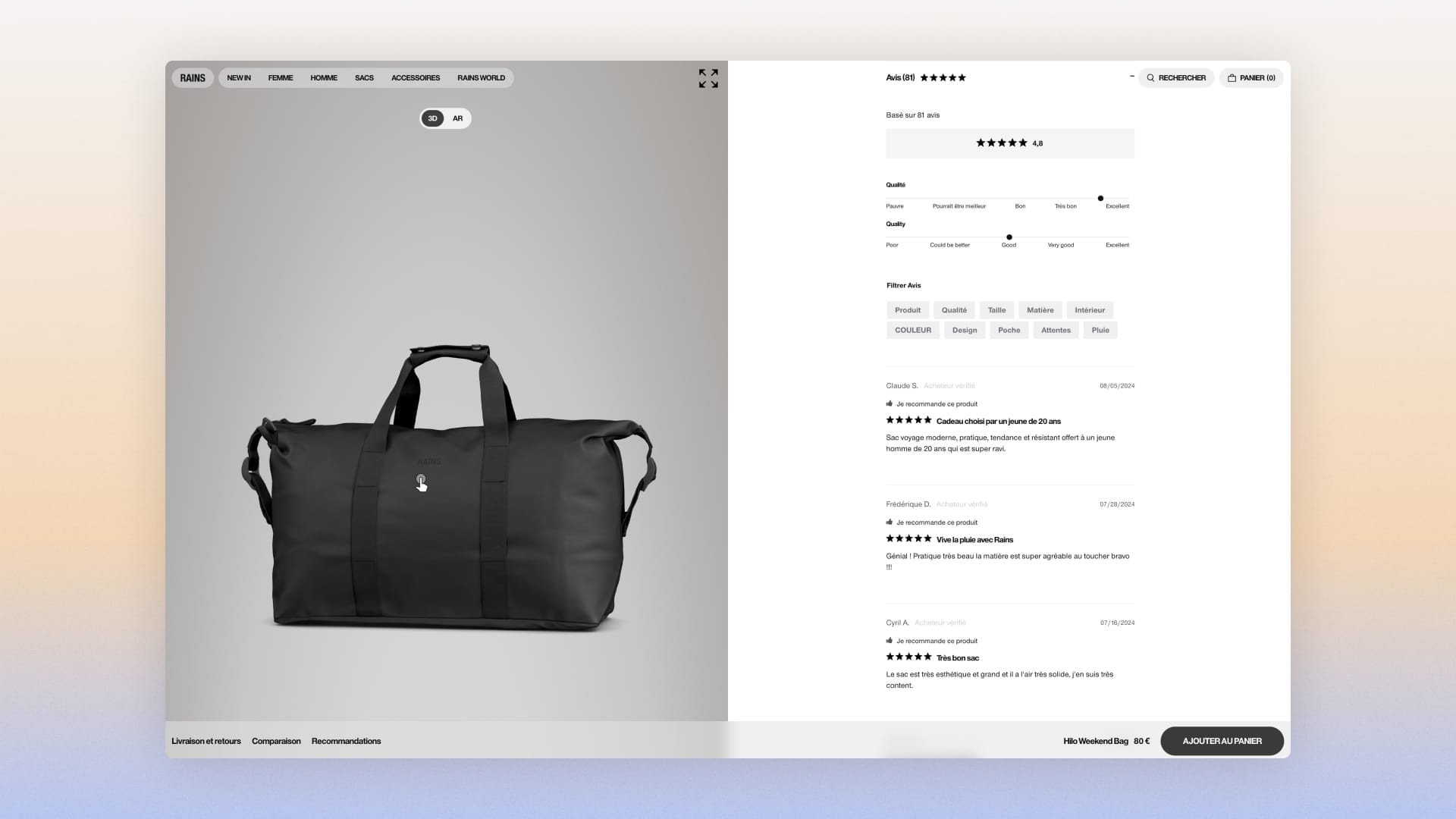
A great example of how to use customer reviews is on the Rains website. You'll find:
- An overall rating
- A rating of perceived quality
- The ability to filter reviews by attribute (quality, size, water resistance, weight, etc.)
- Verified (and dated) testimonials
- Review summaries
Sharing content around your products
At first glance, it seems odd that someone opening a box could make for interesting content. Seriously, who could have predicted that this little tech gem (from 18 years ago, admittedly) would kick off a worldwide trend:

And yet, when Vincent NGuyen (the author of the video below) unboxes his new toy, it's not the act of unboxing that resonates. Dig a little and it suddenly makes sense: when you're passionate about a subject, anything new becomes a source of excitement and anticipation.
The anticipation builds, peaks, and when the release finally comes, it floods the person who had been patiently waiting for weeks with pleasure. (OK, it's not exactly visible in the video below.)
A lot has changed since then, and unboxing has become a genre of its own. Above all, it has opened up a whole new way for passionate communities to express themselves.
Unboxing, tutorials, real stories… Users want to see everyday life as it is, and preview their own future experiences through the content of those who came before them.
The brand FentyBeauty, founded by the iconic Rihanna, promises to speak to all women by creating products for every skin tone. Its vision is, above all, to inspire:
"Makeup is meant to be fun. It shouldn't feel like an obligation or like wearing a uniform."
By opening the door to play and self-expression, the brand gives all its users a clear space to express themselves, and it's happy to reuse that content on its e-commerce homepage:
Example of UGC use on the Fenty Beauty site
There's a carousel of videos featuring customers. Each one shares her opinion, tastes, routine and favorite products. Subtly, a link to the product page is included, which quickly guides the shopper:
- Identifying with a persona
- Reviewing the content and confirming interest
- Clicking through to the product page
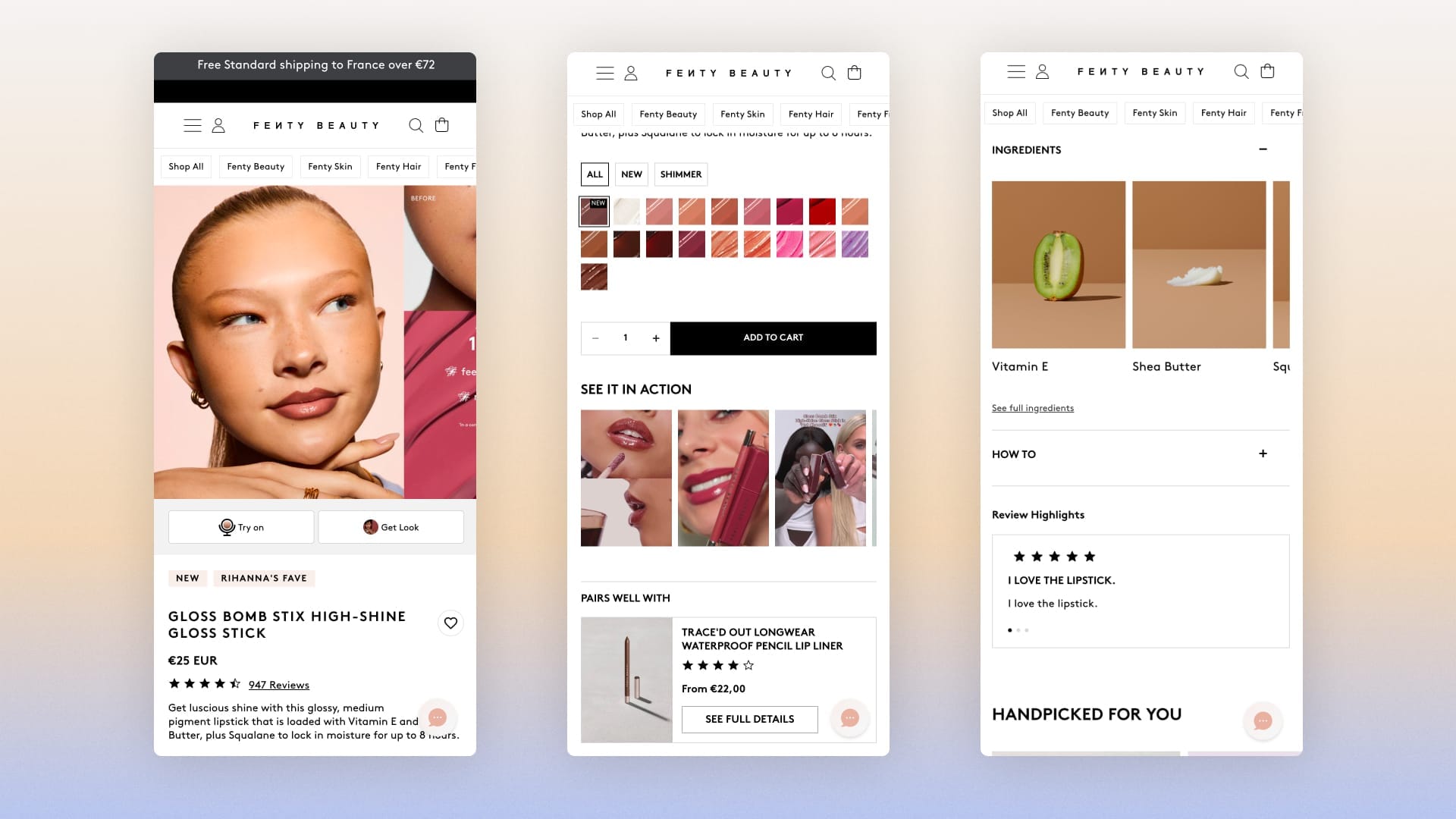
Of course, the same principle runs across the whole site, including the product page:
So what's the real impact of UGC?
In practice, UGC builds on how people perceive a brand and how much they trust it. Putting it to good use plays a decisive role in e-commerce engagement and conversion rates.
Good use of user-generated content can raise your conversion rate by nearly 29% compared with an e-commerce site that doesn't use it.
It's no accident that FentyBeauty made this choice: when it's well showcased on the product page, UGC lifts the conversion rate by 10%.
More broadly, a staggering 93% of consumers find UGC useful when making a purchase decision, and nearly 92% trust this content more than traditional advertising.
It's also a well-known driver for improving ad campaigns, and it works: ads featuring UGC generate 73% more positive comments on social media… and cut cost per click in half compared with traditional ads.
Conclusion
There's no denying it: UGC is an invaluable resource for any e-commerce brand that wants to improve its conversions.
When a brand lets consumers share their authentic experiences and opinions, it strengthens its trust and credibility, and little by little builds an engaged, loyal community… as long as it uses this driver well!
Because yes, it can also be a total flop, or even a massive sh*tstorm. Before you launch, think carefully about the program, what it implies and the reach you want it to have.

You can also build your approach over time, based on the content your users create and post on their own.
Listen closely. Their perceptions and wants are what you need to capture!