You'll find newsletter signup invitations on almost every e-commerce site today, and that's no accident: it's a powerful tool for engaging your customers, driving sales and building brand awareness.
Sending an email is something we all do every day. But when it comes to newsletters, there are plenty of best practices to follow to run an effective strategy. And by effective, I mean:
- An email that reaches its recipient
- That gets opened
- That gets read
- That engages
- That converts
Newsletters are one of the keys to a successful e-commerce strategy, and for good reason: 60% of consumers prefer to be contacted by brands via email. On average, every euro spent on email marketing returns €36, an ROI of 3,600%!
Your newsletters deserve care. This article covers all the key points: UX and CRO, of course, but also technical constraints and engagement strategy, with concrete examples to take you from theory to practice.
Let's dive in 👇
How do you invite users to subscribe to your newsletter?
For a newsletter strategy to pay off, you first need to collect signups effectively from your e-commerce site. A few key rules apply.
First, place the signup form where people can see it.
The most common approach is to show it in the site header and/or footer. This placement creates a natural entry point for users who have browsed all the content.
You can also add the form inside blog posts or after a purchase. Or test original formats like pop-ups, floating bars or embedded forms.
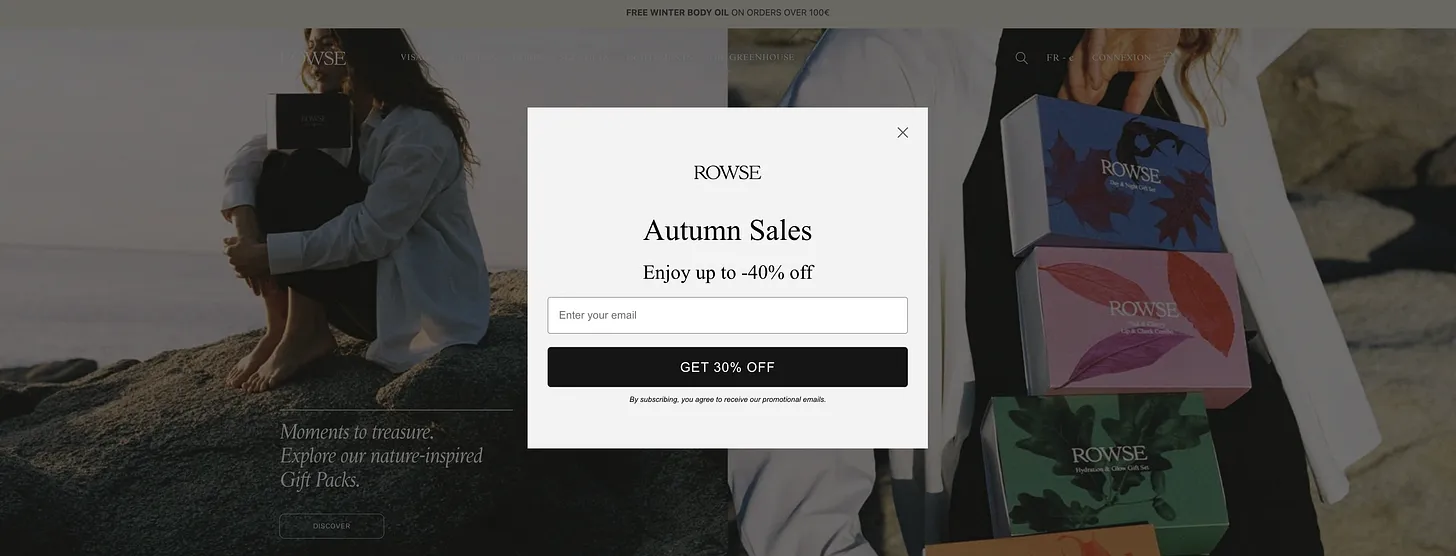
As for the design, don't try to be flashy. A simple, clean design that blends into your site will do the job perfectly. Keep fields to a minimum (email, and possibly first name) and use clear, motivating CTAs like "Subscribe" or "Join the community."
The value proposition does all the work here: think about the concrete benefits of subscribing and state them plainly.
You can offer exclusive deals (even an immediate discount) or inspiring content like behind-the-scenes looks. What matters is that users feel they get something in exchange for their email.
To tip the balance, don't hesitate to use messages that play on urgency or exclusivity.

A word of caution, though: transparency is the watchword of your customer relationship. Collecting emails through underhanded tactics, besides violating GDPR, will only cause anger and frustration.
Instead, explain clearly how often you'll send emails and what type of content to expect, reassure people about data privacy, and display your subscriber count to build credibility.
Run A/B tests on different elements of the form (design, CTA, incentives) and measure the results. No recommendation is worth much without data to confirm it.
The (minor) technical constraints to follow
With more than half of emails opened on mobile devices, a responsive design is essential. A few key points:
- Limit the width to 600 pixels maximum to avoid horizontal scrolling (source)
- Use easy-to-read fonts and a large enough text size
- Optimize images for fast loading
- Test how emails render on different devices and email clients
Before you even think about open rates, make sure your emails are deliverable. Otherwise, they'll inevitably end up in spam.
The first step is simple: keep your subscriber list clean by regularly removing inactive addresses. The fewer delivery errors you have, the fewer negative signals reach the servers, and the more often your newsletter lands in the inbox.
Use a reliable sending service like Klaviyo or Mailchimp, which handle blacklists and spam filters properly. Two last points:
- Aim for a ratio of 40% images to 60% text
- Avoid spam trigger words in your subject lines and content
Everything can change if… 🥁 (a.k.a. maximizing open rate)
The average open rate for e-commerce newsletters is around 23%. That's huge compared to other channels, and a few tweaks can noticeably improve it:
- Personalize the subject line with the recipient's first name, a word that can boost open rates by 26%
- Segment your database into micro-groups based on purchase behavior, preferences and past engagement. AI is your friend here!
- Use FOMO (Fear of Missing Out) to create urgency, for example with a countdown in the email subject line
- Test relevant emojis to catch attention in a crowded inbox 🚑
- More broadly, create curiosity and use hooks that are as intriguing as they are engaging!
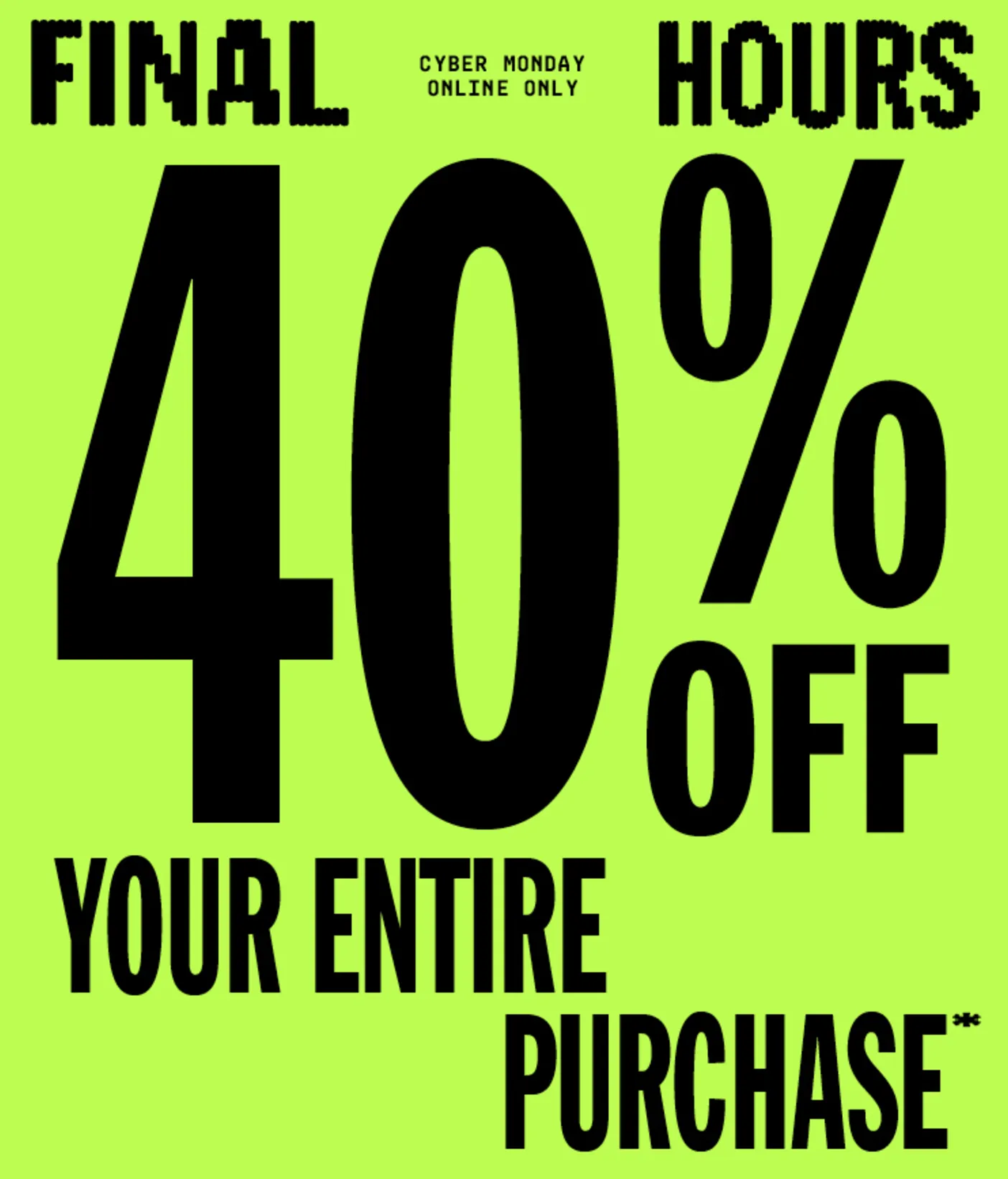
I've read here and there that Tuesday at 10 a.m. is often considered a good time to send emails.
Like all best-practice advice, including the advice in this article, it's up to you to make it your own. Test different days and send times to find the ideal moment for your audience. Only results and data can validate a solution.
Use UX copy to deliver valuable content
Bad emails are like junk mail in your mailbox: they pile up and end up in the trash.
For your subscribers to care about your content, you need to create value, and value isn't just discounts. A 10% discount is attractive the first time. After 25 reminders, it's annoying and hard to believe.
Find a tone that reflects your brand while staying accessible and engaging. Simple, direct language makes for quick understanding: your readers are drowning in emails, and if their eyes land on your lines, you have to win them over fast.
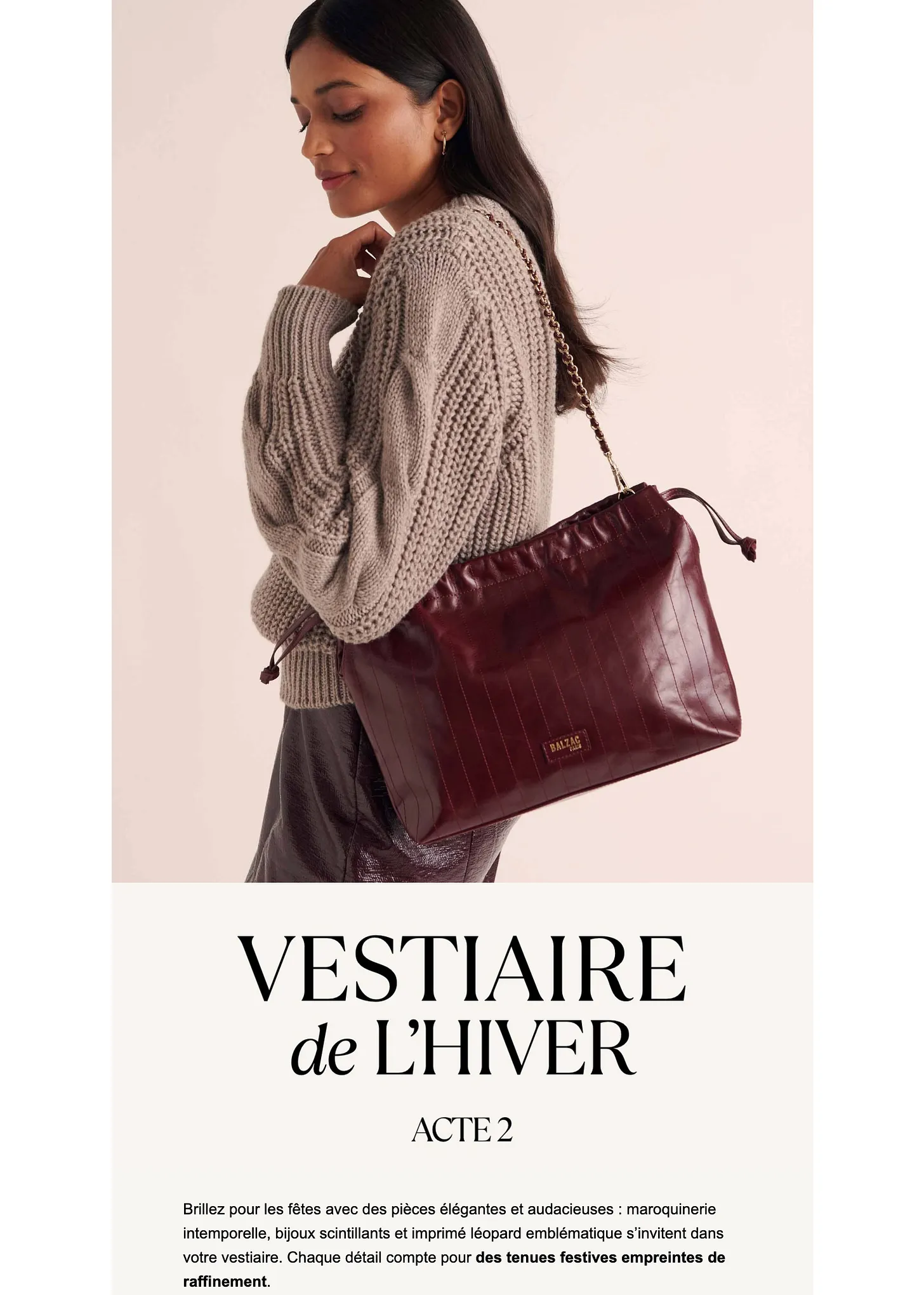
A few ideas to explore:
- Personalize content based on your subscribers' preferences and past behavior. If your range has several major product families, share news based on products from the same family (the ones that sparked interest) or on complementary products.
- Bring it back to the user experience by offering special deals for birthdays and engagement milestones.
In every case, content should be precise and punchy: aim for about 200 words per newsletter. Well-structured headlines and subheadings really speed up reading, so don't rush them.
Email clients don't yet support video directly in the body of an email, but you can use animated GIFs sparingly to add a bit of rhythm.
When it comes to content, get creative: exclusive promotions, relevant blog posts, behind-the-scenes looks, early invitations to events, customer testimonials, product tutorials, UGC (User Generated Content) showcases.
You can also add embedded quizzes or polls that engage your subscribers while giving you valuable data on their preferences.
To help you out, here are some subject lines I recently received from a major e-commerce brand:
| Email subject | Description |
|---|---|
| Let's have a heartfelt conversation | Email ahead of Valentine's Day inviting the brand's audience to join a donation effort for charities |
| Be your own Valentine | Invitation to treat yourself |
| Our mission is possible | Reminder of the brand's values |
| Fallen out of love? | Spotlight on the brand's secondhand program |
| The color you can't go wrong with | Product recommendation based on customer history |
| Color us happy | New colors available for a recently purchased product |
| It's officially the "what should I wear?" season | Style guide with detailed, personalized suggestions |
| Only for dreamers | Product selection |
| If spring were a color | Spring/Summer lookbook launch |
Polished subject lines, real editorial variety, real care for the relationship. The only catch? 19 emails received in less than a month. I unsubscribed right after!
Improving the click-through rate of your e-commerce newsletters
The average click-through rate for e-commerce campaigns is around 2%. To improve it, the process is always the same: form hypotheses, work in iterations and measure the results.
To maximize engagement, the top priority is improving your calls to action (CTAs). After all, they're what invite people to learn more.
Use clear, visible (and easy-to-read!) CTAs with strong action verbs, and place them strategically throughout the email, especially at the top.
Don't forget to try different colors and wording, and adapt your offers over time based on user behavior or time spent on the email.
Earlier I mentioned FOMO. Another driver worth exploiting is gamification: you can build game elements into your emails to encourage interaction, if and only if it fits your brand positioning, of course.
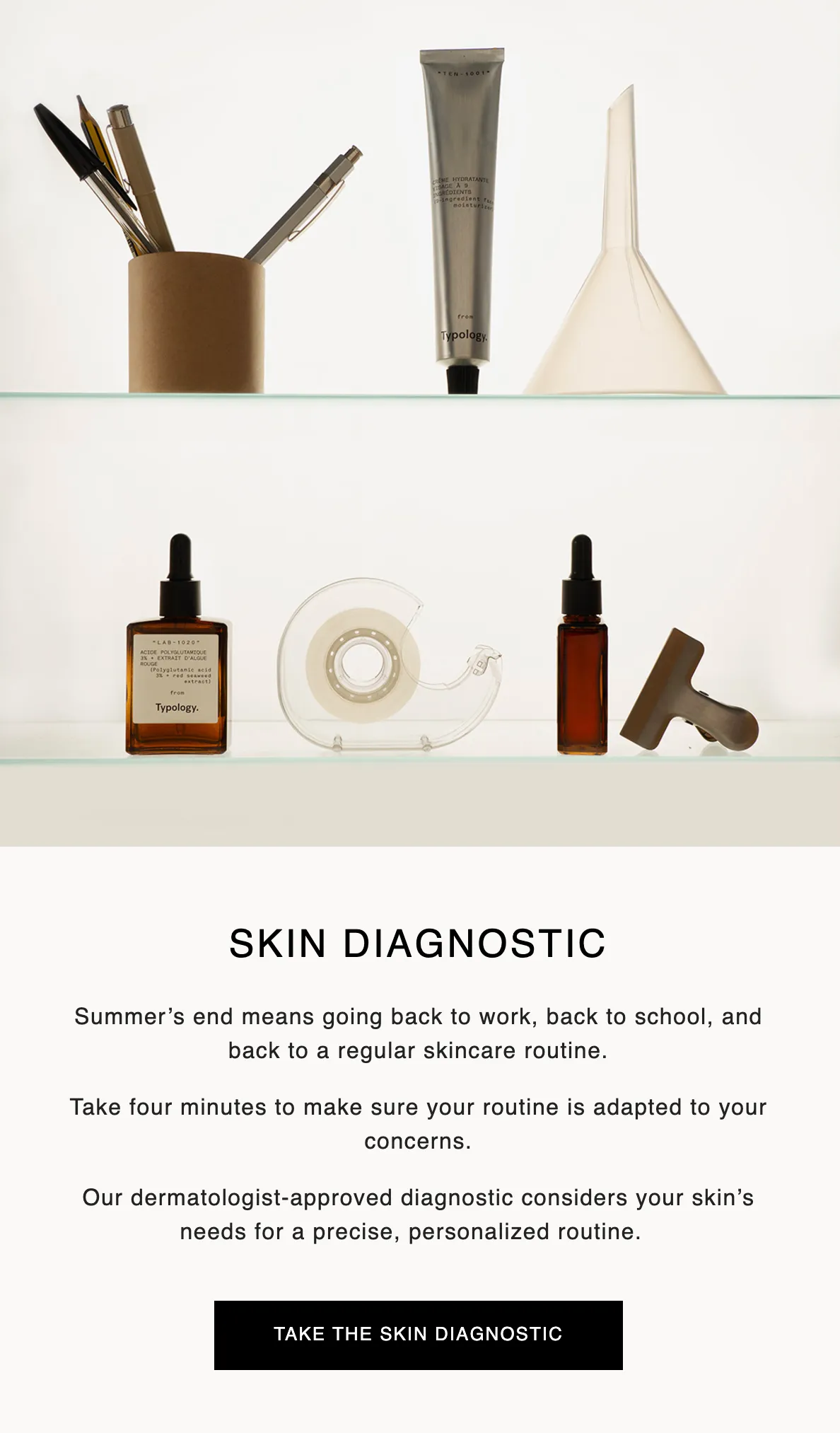
Once again, engagement will depend on how relevant your content is, and a CTA isn't necessarily a button. It could be, for example:
- A clickable product selection
- A configurator or the first question of a diagnostic, right in the email
- Testimonials or customer reviews
- UGC content
Try to offer CTAs that aren't intrusive. Get creative, and dare to use humor or surprise. Ultimately, put yourself in the customer's shoes: would you have clicked?
Why email marketing remains profitable
Email marketing is one of the most profitable channels for e-commerce merchants. One statistic illustrates this well: welcome emails generate 320% more revenue than other types of campaigns (source).
| Industry | Average open rate | Average click-through rate | Average conversion rate |
|---|---|---|---|
| Fashion and apparel | 18.39% | 2.4% | 2.9% |
| Electronics and tech | 21.25% | 3.22% | 1.8% |
| Food and beverage | 38.58% | 0.98% | 3.6% |
| Beauty and cosmetics | 16.65% | 1.92% | 3.1% |
| Home and garden | 21.36% | 1.87% | 2.3% |
Beyond the immediate return on investment, the long-term benefits are especially significant. A well-calibrated approach drives sales, builds customer loyalty and increases lifetime value (LTV).
Conclusion and outlook
Newsletters, and email marketing in general, play a crucial role in the e-commerce landscape, with an ROI often higher than other channels.
Engagement, personalization and CRO work are the three areas that, done well, turn an ordinary newsletter into a lasting sales and loyalty tool.
AI refines segmentation and personalization at a speed manual work can't match. Interactive formats like diagnostics and polls boost engagement while generating valuable data on your subscribers, data that feeds your next campaigns.
A targeted message is more likely to be opened, read and acted on. It's as simple as that.