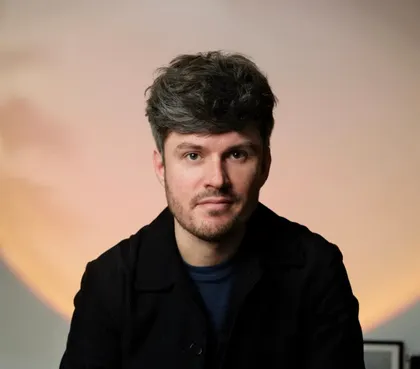

For 10 years, the Strasbourg-based agency Ben & Jo has built visual identities and campaigns for brands that want to stand out and turn what makes them unique into a real communication driver.
Benjamin Mira, art director and co-founder, has also spent the past year running a lab dedicated to producing images and videos with AI. For now it is part of Ben & Jo, but it may become a standalone company.
Before every new project, the team systematically tests the technical feasibility of the expected results.
"It's getting better every day. Each time, we feel more reassured."
We met him to talk about what this really changes in the day-to-day work of an art director building brands for e-commerce clients.
Has AI changed the nature of the briefs you receive?
Not so much for us, at least not in the logic of the brief itself.
What really changes is what we can offer within a given budget, and here I think we need to start by correcting a common misconception:
AI doesn't necessarily save time.
What you gain is the ability to do more things. Iterating and retouching can take quite a while if you want a high-quality result, one that doesn't obviously look like ChatGPT.
At Ben & Jo, we sort projects into three categories:
- On an A project, we have a real creative ambition and the client's trust to carry it out.
- On a B project, we stay within the budget without compromising on quality.
- On a C project, the client mainly wants speed and precise execution. AI is used differently in each.
On an A project, it opens up possibilities we didn't have before. If an idea called for 3D rendering or a nationwide photo campaign, we often had to choose between ambition and budget reality.
That question comes up far less today.
Instead, we ask ourselves: are we committing to something that will require too much iteration down the line?
It also reshapes some collaborations.
Take photographers. For shoots where we'd already done all the art direction and the photographer was executing a tightly defined vision, that changes. For those with a real artistic signature, a sensibility beyond the frame we gave them, it's different. They're not just executing; they really bring you something. I think some photographers will specialize in AI and bring that sensibility with them.
What AI reveals is a distinction that already existed: between the skills provider and the creative collaborator. It just pushes that line higher.
There's also a limit to keep in mind: the more visually distinctive the direction, the higher the risk of artifacts. For now, the two are still fairly linked.
Read:
 Robin Marzin
Do clients come in expecting AI to lower your prices?
It happens, and it's a conversation we decided to have early, right when we take the brief.
We tell them upfront that we can use AI, and we take the time to understand whether there's any sensitivity, rejection, or fear.
Some don't want AI on their project, for reasons of positioning or personal conviction. No problem, we can do without it.
For those who are open to it, it all depends on how demanding they are about the finished product. If someone comes with 1,500 photos that all need a perfect render, I may have as many retouches to do as I would with a photographer. AI doesn't necessarily cut the work time on that type of order.
There's also the question of format and how long the content lives. For an ephemeral post, the tolerance for imperfections is different from a product page that stays visible permanently. We're starting to see clients doing AI themselves for simple things, figuring they won't pay an agency for that. You can tell it's AI, but so far they haven't had any complaints.
The market is still feeling its way on that threshold.
What's certain for us: we've never been faster than we anticipated on a project. But we've been able to offer things we couldn't have offered otherwise. That's where the value is.

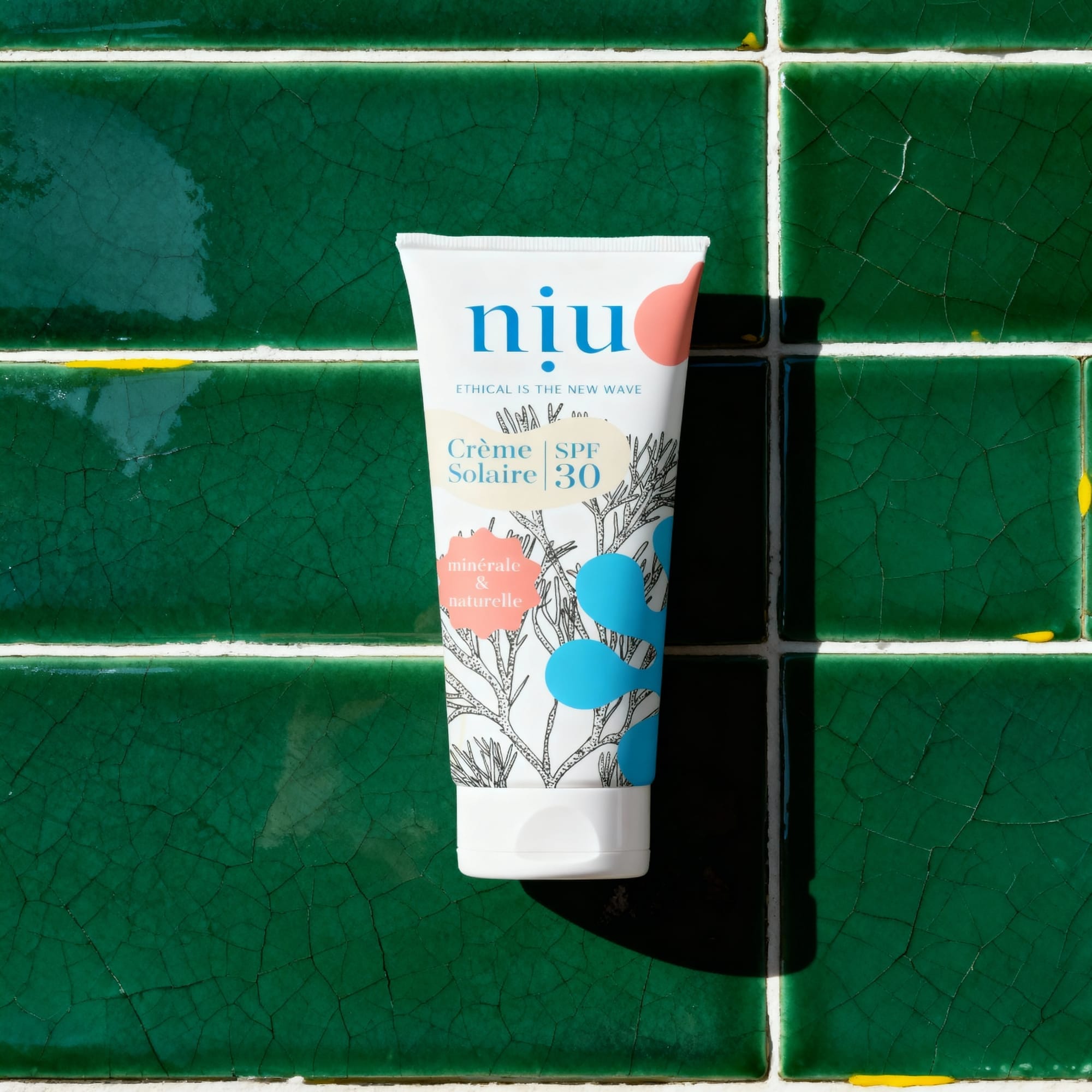
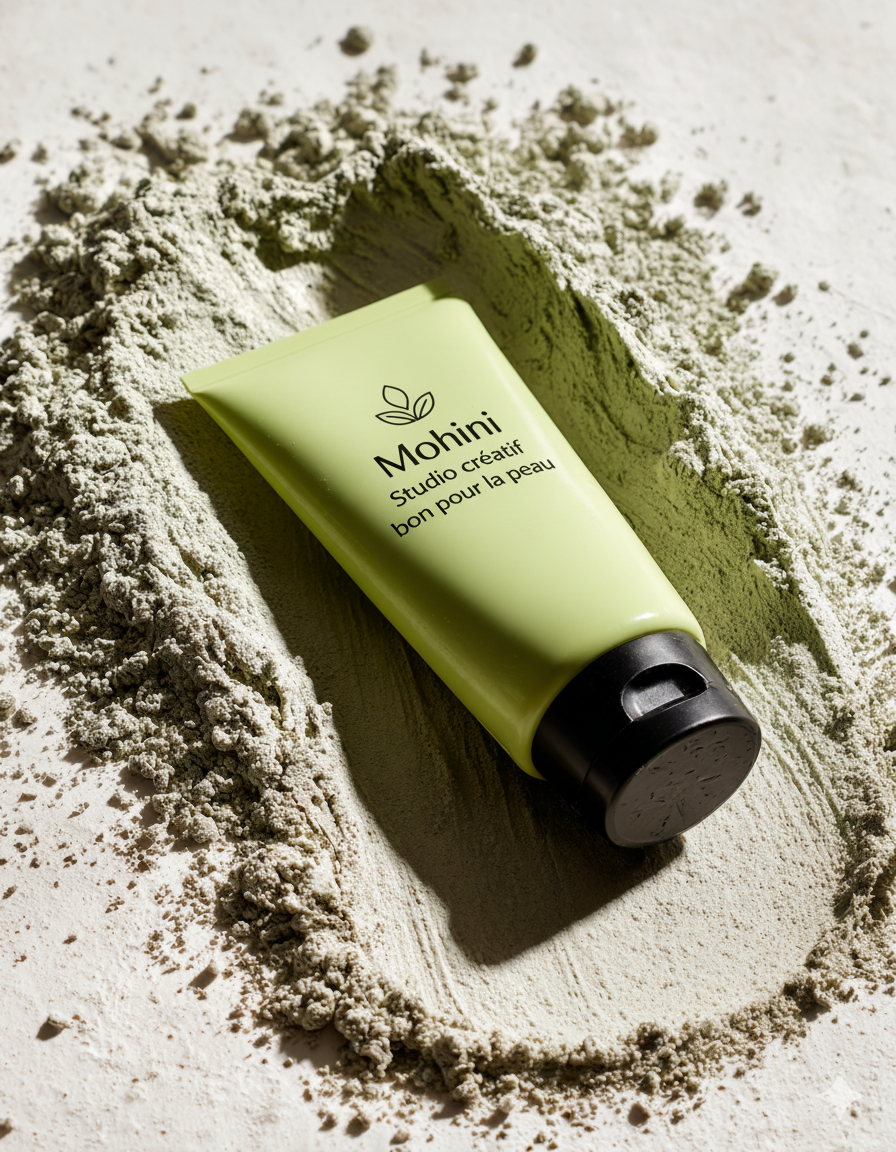
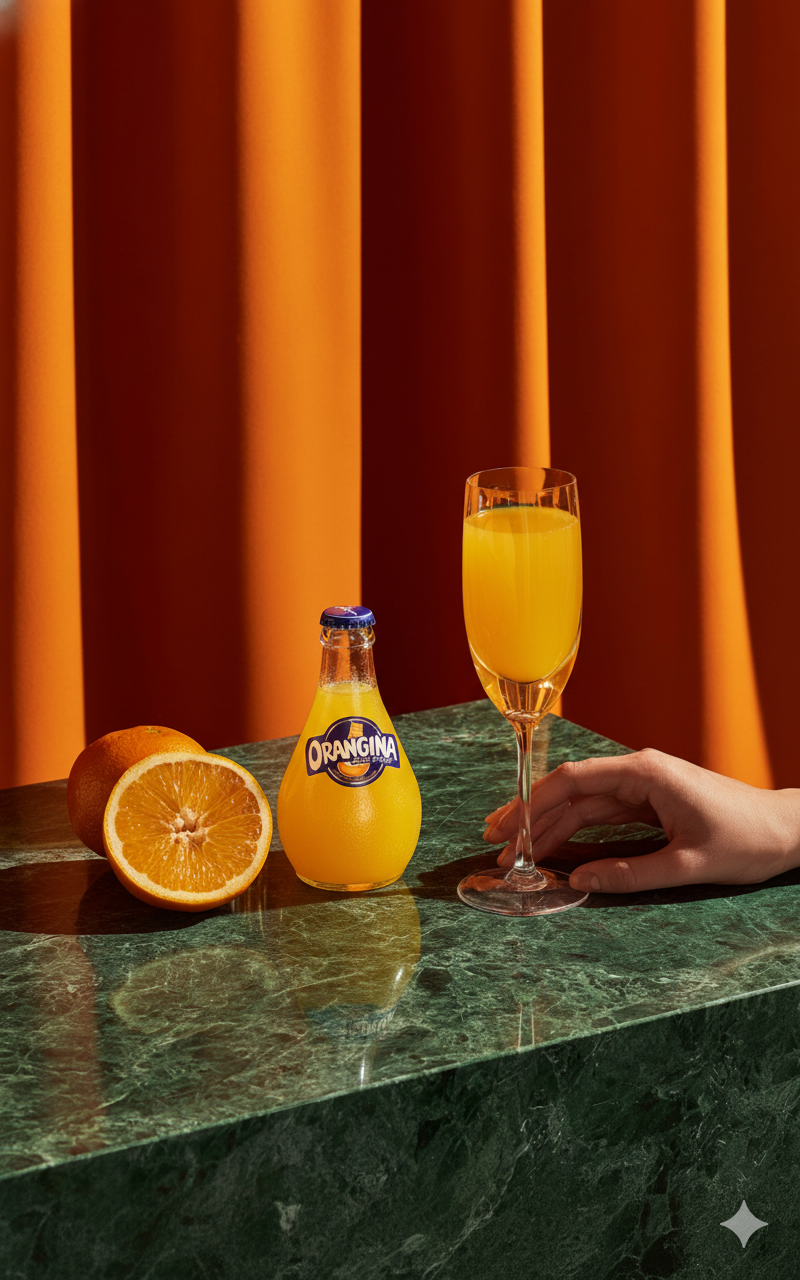
Visuals generated by Benjamin Mira
How do you build a consistent visual identity with tools that generate one image at a time?
The answer is what I call world-building.
The idea is not to start from zero with every generation, but to build upstream an environment of parameters that the AI draws from.
In practice, it starts by analyzing what is truly distinctive in a brand's photographic identity. Is it a way of framing? A quality of light? A particular color temperature? All of that can be formalized and built into the parameters. It can go down to precise details: a slightly bluer light, a specific grain.
You can really build a world that the AI draws from to create consistently. But that requires having analyzed what is truly distinctive in the brand's photographic identity.
After that, there's still some color grading work, the way a photographer would do in post-production in Photoshop. But the result is a recognizable photographic identity that you can adapt across different formats.
What you need to keep in mind is that models work more easily in visual territories that are well represented in their data. The more classic the world, the smoother it goes. The more you look for distinctive directions, the more effort it takes and the higher the risk of artifacts.
Read:
 Jérémie Werner
There's a lot of talk about aesthetic homogenization, with brands starting to all look alike. Do you see that in the field?
ChatGPT is easy to spot.
There's a slightly yellowish tint and a very smooth illustration style with no rough edges. Anyone who looks at a lot of visuals can spot that filter almost immediately.
But I want to temper the talk we keep hearing, which suggests we're going through "the worst era of graphic design."
Before AI, village festival posters meant Word, five badly assembled photos, and Comic Sans, because the person in charge at city hall did what they could with what they had. Technically, composition rules are better respected today in mainstream production.
Today's questionable aesthetic may be kitsch in thirty years, the way Skyblog images have become.
Aesthetic cycles have their own rhythms.
What really interests me is what AI makes possible when you work with it using real visual culture. I'm thinking of Processing, the code-based generative graphics tool from the 2000s in art schools. When it was approached that way, with real creative intent, people made unusual things nobody else was making, and AI can work the same way.
If you use it well, you won't find a consistent reference when you run a reverse image search on your image. That's because you can feed it so much inconsistent data that it gets pulled in one unique direction.
What really bothers me is when brands with the means settle for the first result. It reveals a lack of visual culture and intent. The tool isn't the problem; the way it's used is.

The question of authorship comes up often in discussions about AI. How do you position it in your practice?
I really like the analogy with the shift from painting to photography.
When photography appeared, some painters felt threatened by it, and some refused to see it as art because the machine was doing the work. Today it's one of the most recognized disciplines, because we understood that behind it there's a point of view and human decisions at every step: the camera, the light, the moment, and with film, all the accidents you can introduce during development.
For me, AI is exactly the same. I see it as having a ninth-grade intern who is a technical genius.
It can do everything; it trained on everything. But it was so obsessed with technique that it never thought about having a point of view, a conviction.
It's just raw technique, without necessarily having anything to say.
That's what makes it so interesting: we have this potential, but it's up to us to guide it with a clear direction to get where we want.
There's a danger I've been watching more closely for a while: AI shapes ideas toward an average. I ran tests on creative topics, and the answers converge on similar things from one model to another. It can help build an idea and be someone to talk to when you're roughing out your thinking.
But staying the one who takes a position, the one who thinks critically about what they put out, that's irreplaceable.
For us, it reinforces a conviction we've had from the start at Ben & Jo: our value isn't in execution. AI just makes that more visible, and more urgent.
Right now, I'm thinking about references. The traditional mood board, built from existing images on Pinterest, locks you into a visual territory created by other artists. My idea is to use Midjourney in a parametric way to generate deliberately imperfect, ugly images that serve as a starting point rather than the end result.
We'll have our own database of references that belongs to us. A visual territory we couldn't have built any other way.

How do you see the future of the profession for young art directors graduating today?
Honestly, I get asked that a lot, and I don't have a firm answer.
I have no idea how the profession will evolve. I don't even know if my job will still exist in three years. We assume it will, but really, nobody knows. It's moving so fast.
What I see is a structural tension: lots of design schools, agencies shrinking their teams, advertisers hiring less. There's a lot of pressure on graduates, and I can't honestly tell students how to find their way.
There's also an economic issue few people raise: subscription costs for the models are going to rise. Some talk about a 7x increase in token costs in the coming years, and we could quickly end up with subscriptions at €2,000 a month.
Will a single client be able to absorb that? For an agency that spreads the cost across several projects, the equation is different.
What's certain is that the pressure is shifting entirely toward the art director's stance and away from production.
AI executes better and better. What remains irreducibly human is the way of seeing, the obsession, the eye. We have to be even better, go even further. It means I have to stay on top of everything and follow what's happening constantly.
For young people coming in, I think that's the answer: build a visual obsession. Not software skills, which will change anyway, but a way of seeing things.
What would you advise an e-commerce brand starting out on a tight budget?
The first question I ask is "What's your budget?" and right after that: "What's your ambition?"
We set a scope and look honestly at what we can do within it.
If you have €3,000 for an identity, a website, and a campaign, we can't do anything serious. I'd rather say so clearly.
But what I've learned from these conversations is that budget is often a secondary issue compared to deployment.
We have clients with a beautiful identity, they even made polos for their team, and it's still not deployed because they don't have the time. You can have the best visual identity in the world: if it doesn't live, if it stays in a closet, you've just paid for an identity for nothing.
There's no possible return on investment in that case. The conversation that really has value is the one about deployment: which channels the brand will live on, with what ongoing production capacity. That's where we can really help, as a long-term partner rather than someone who delivers a file.
What I deeply love about this work is the idea that a well-deployed identity can become part of people's daily lives without them having to make any effort to discover it.
We worked with Brasseries Trois-Mats, where we invited illustrators to express themselves on the packaging. The result is a presence in supermarkets, visible every time someone walks by, accessible to people who would never have walked into a gallery.
Today, I'm happy when I go to someone's place I don't know and see a guest bringing a bottle of Trois-Mats for drinks.
It's there, they spent their money, they chose it, and I think: OK, what I do makes so much sense.
Making everyday life more beautiful, including in supermarkets, including in markets where visibility is hard to win. That's been our mission for ten years, and AI doesn't change that.
Also read:
 Jérémie Werner
🎁 Benjamin's recommended resource:
On YouTube, "Bienvenue au Cabinet", a channel run by a certified accountant who breaks down business cases using publicly available legal and financial documents: the history of Domino's, how franchises work, hidden costs in company structures.
A very accessible way to learn about topics that many founders go through without ever having the keys to them.
Thanks to Benjamin for this interview. You can find Ben & Jo's work on their website. ✌️