Gymshark is the British brand that has become one of the giants of the fitness world since its launch in 2012.
In just ten years, it has built an impressive global community, thanks to a distinctive, engaging brand backed by an innovative strategy that puts community at its center.
Gymshark's founder, Ben Francis, started out at just 19. A student and Pizza Hut delivery driver at the time, Ben was also a fitness enthusiast.
Frustrated by the lack of suitable clothing options, he decided to launch his own brand. With few resources but plenty of ambition, he bought a sewing machine and a screen-printing press and started making clothes in his parents' garage, even learning to sew from his grandmother.
What a story.
Gymshark's big break came in 2013 at the BodyPower Expo, where its clothes caught the public's attention and boosted sales, positioning Gymshark as a leading player in the fitness apparel market.

Ben Francis's journey from pizza delivery driver to CEO of a multimillion-dollar company perfectly illustrates his innovation, his determination and his ability to build a brand and a community that inspire fitness enthusiasts around the globe.
This article explores Gymshark's brand strategy and tone of voice, the overall user experience of its website and its e-commerce strategy, highlighting the key elements behind its remarkable growth.
A brand built around its community
Gymshark's brand strategy is a unique case study in how to build a strong, engaged community of enthusiasts (fitness, in this case).
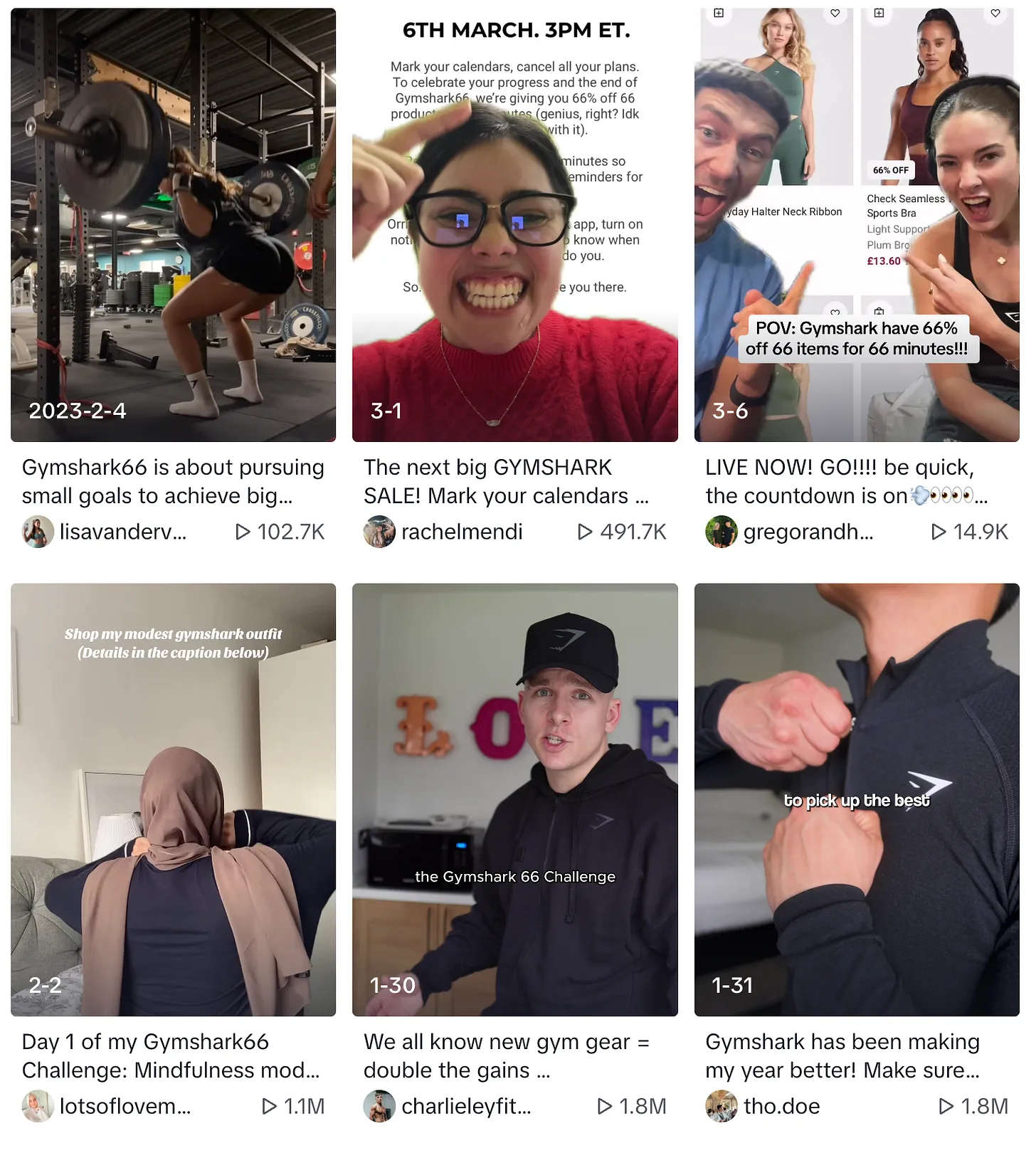
The community-centric approach shows in its heavy use of UGC (user-generated content), but above all in its ability to create a sense of belonging among its customers.
By encouraging users to share their fitness journeys and their experiences with Gymshark products, the brand has fostered a supportive, inclusive community.
The most striking example is the "66 Days: Change Your Life" challenge launched on TikTok.
The brand encouraged users to post their physical transformations as they progressed. This generated a flood of UGC that not only promoted the brand but also created a powerful sense of shared purpose and motivation among participants.
Smart use of influencer marketing
Influencer marketing is without a doubt the cornerstone of Gymshark's brand strategy.
The brand works with well-known influencers and athletes, presented as "Gymshark Athletes," to amplify its message and reach new audiences.
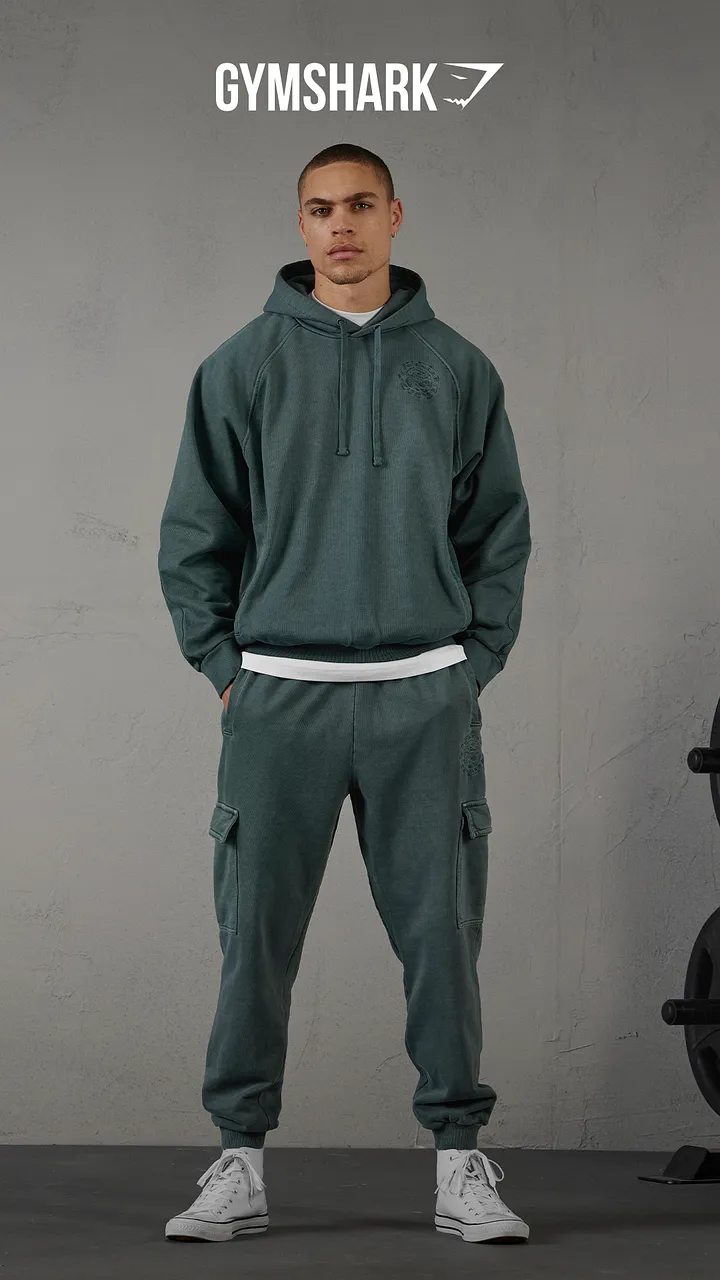
The people who embody the brand are carefully selected to align with Gymshark's values and resonate with its target audience. These partnerships on platforms like Instagram and YouTube have significantly increased the brand's visibility and credibility.
By leveraging the authenticity of influencers' posts and their reach, Gymshark connects with potential customers in a more personal, approachable way.
We know that influencer recommendations are a strong support for a sales strategy precisely because they're seen as genuine recommendations, with the creator putting their own image on the line, rather than as sponsored promotions (even though they are!).
Of course, this strategy drives sales by simplifying the user's decision-making through cognitive biases, but it also helps build a trustworthy, authentic brand image.
A strong presence at the top of the funnel
Gymshark's social media strategy is especially effective, adapting to the unique audience and conventions of each platform.
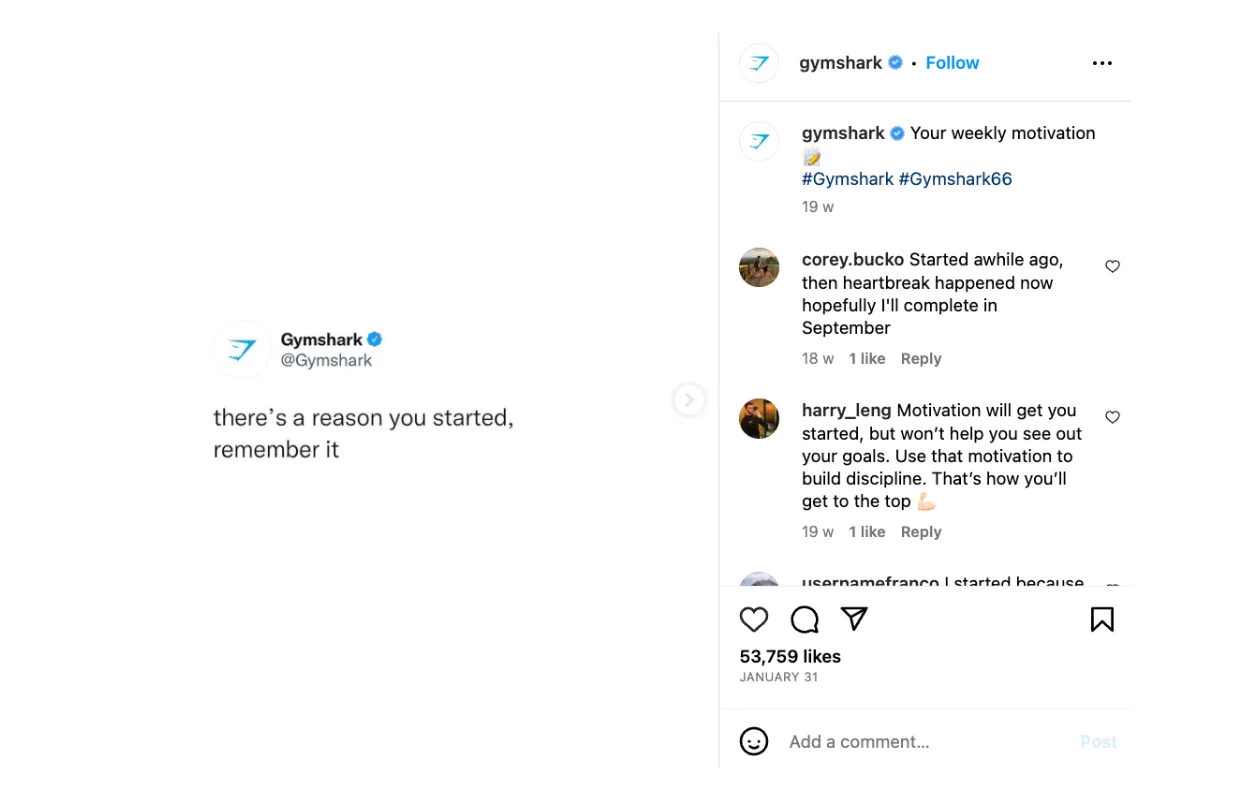
On Instagram, for example, the brand focuses on motivating, empowering content, whether it features Gymshark athletes or promotes user-generated content.
This approach helps create a sense of aspiration and strengthens the community among followers. By extension, Gymshark also taps into motivational angles closer to the traditional codes of sport.

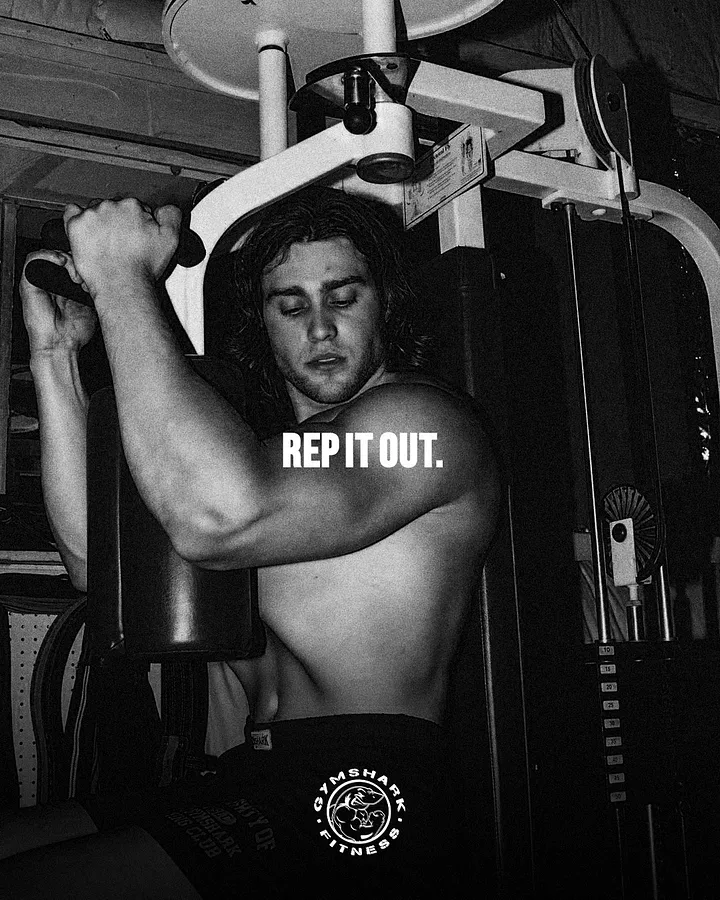
On TikTok and Instagram, Gymshark creates entertaining, relevant content: training tips and funny gym stories and encounters, which often resonate with the platform's young audience.

By understanding the nuances and conventions of each social media platform, the brand creates content that is not only engaging but also highly shareable.
This strategy has helped the brand build a massive online audience and maintain high engagement levels across channels.
A unique tone of voice
What really hits home is the brand's tone of voice: ambitious, motivating, relevant, sincere and sometimes funny.
The brand speaks in a way that resonates with its young, fitness-obsessed audience, and doesn't hesitate to lean on "true stories" to strengthen its message:
Gymshark sports bras: more trustworthy, supportive and reliable than your ex.
This distinctive sensibility, which blends motivational quotes with success stories, inspires followers and encourages them to pursue their goals. The approach is consistent and authentic, and it strengthens the connection.
When customers feel a brand understands and supports their aspirations, they're naturally more likely to develop a strong emotional attachment to it.
In its ad campaigns, Gymshark plays on simple, authentic hooks and CTAs like "Never skip pay day" or "Treat yourself." This messaging is complemented by more traditional positioning on product quality and its variations.
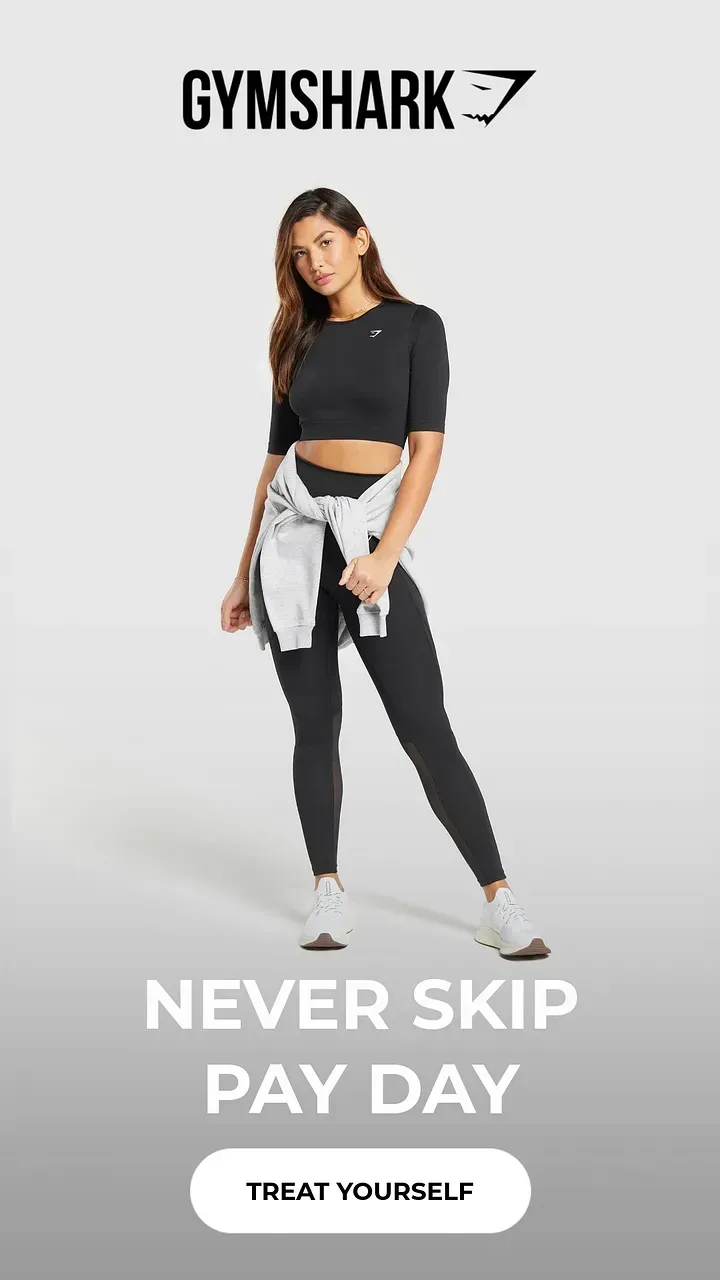
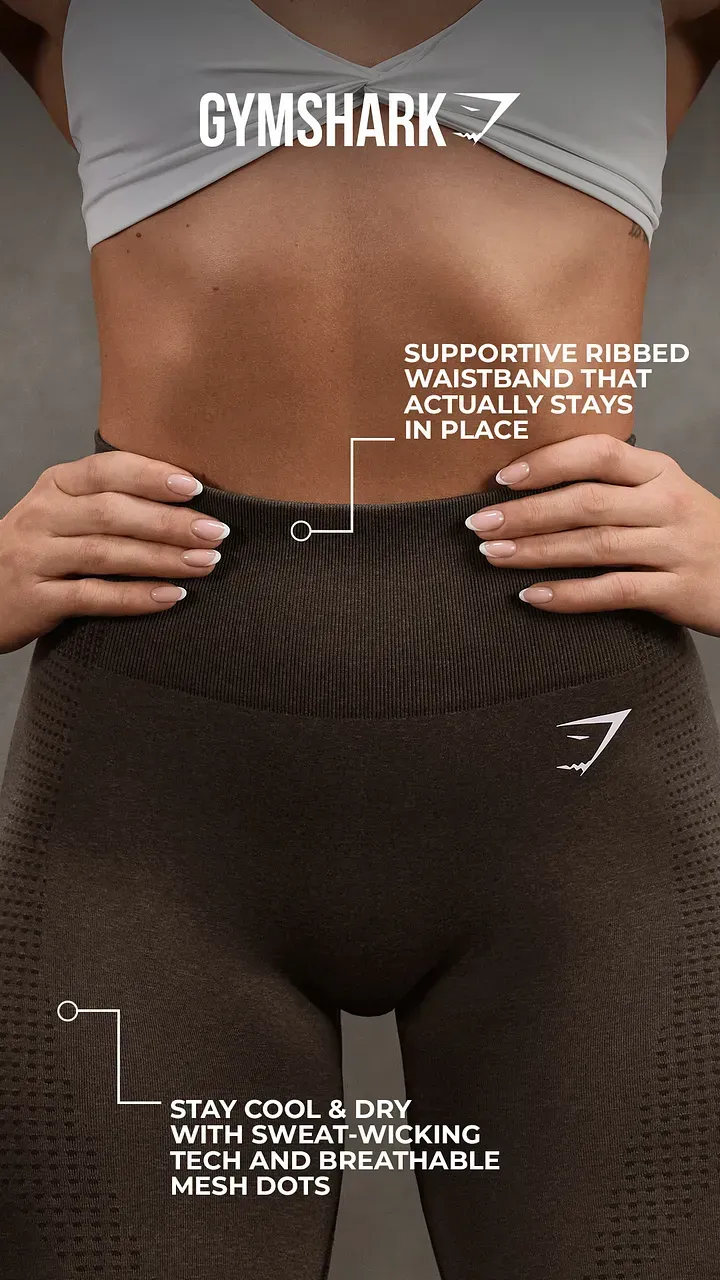
Examples of the brand's CTAs
Gymshark's e-commerce strategy rests on four key pillars that have driven its incredible success.
A DTC (Direct to Consumer) sales model
By adopting the DTC model, Gymshark keeps full control of its brand while building strong customer relationships, notably by collecting valuable CRM data and running a competitive pricing strategy.
Using Shopify Plus as its e-commerce platform has been crucial for handling high traffic volumes and keeping the site stable during peak periods.
Limited-edition drops and flash sales
Gymshark creates a sense of urgency and exclusivity through limited-edition releases and flash sales.
Its exclusive The Dropset program offers an app that gives monthly access to limited-stock offers, which pushes customers to act right away and boosts community engagement.
This club approach, and the fleeting, privileged nature of the offers, clearly strengthens brand loyalty.

A customer experience at the heart of the approach
Gymshark prioritizes customer satisfaction through responsive support, hassle-free returns, personalized experiences and community building.
It engages with customers across several channels, including social media, events and its app, creating a sense of belonging among its customer base.
Nothing revolutionary in substance, but very strong execution that turns this into one of the pillars of its strategy.
Data-driven decision-making
One key detail about the brand is that it has built a team of about 40 data analysts.
This data is of course used for marketing strategy, but also to inform the development of products, new ranges and new collections.
Inventory management, particularly through The Dropset, is sharp, and good e-merchandising lets the brand optimize its website to the fullest.
By combining purchase data with social media engagement and app usage, the brand builds very complete customer profiles, which in turn enables near-tailor-made marketing (and product development)!
So how does this play out in practice on the e-commerce site?
Less is more: Gymshark's website shows a simple, user-friendly design that prioritizes easy navigation through guided choices and a clean look.
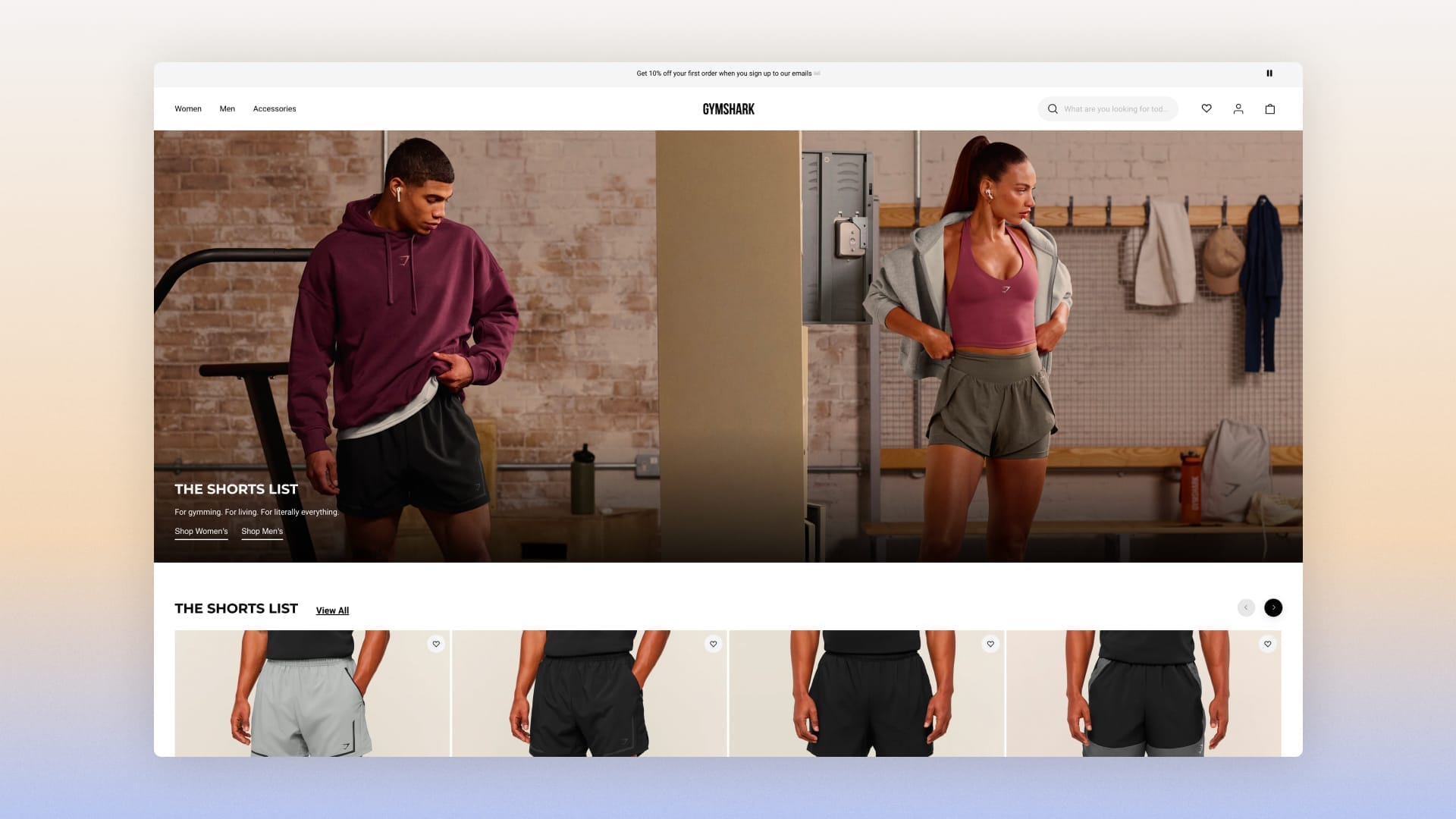
The homepage, for example, has a minimalist layout with a prominent hero and clear calls to action, similar to many successful e-commerce brands.
One key detail: Gymshark curates this space very well, highlighting promotions or the month's new arrivals.
This approach follows UX best practices. Studies show that 94% of first impressions of a brand are design-related, and that users form an opinion in just… 50 milliseconds! Boom.
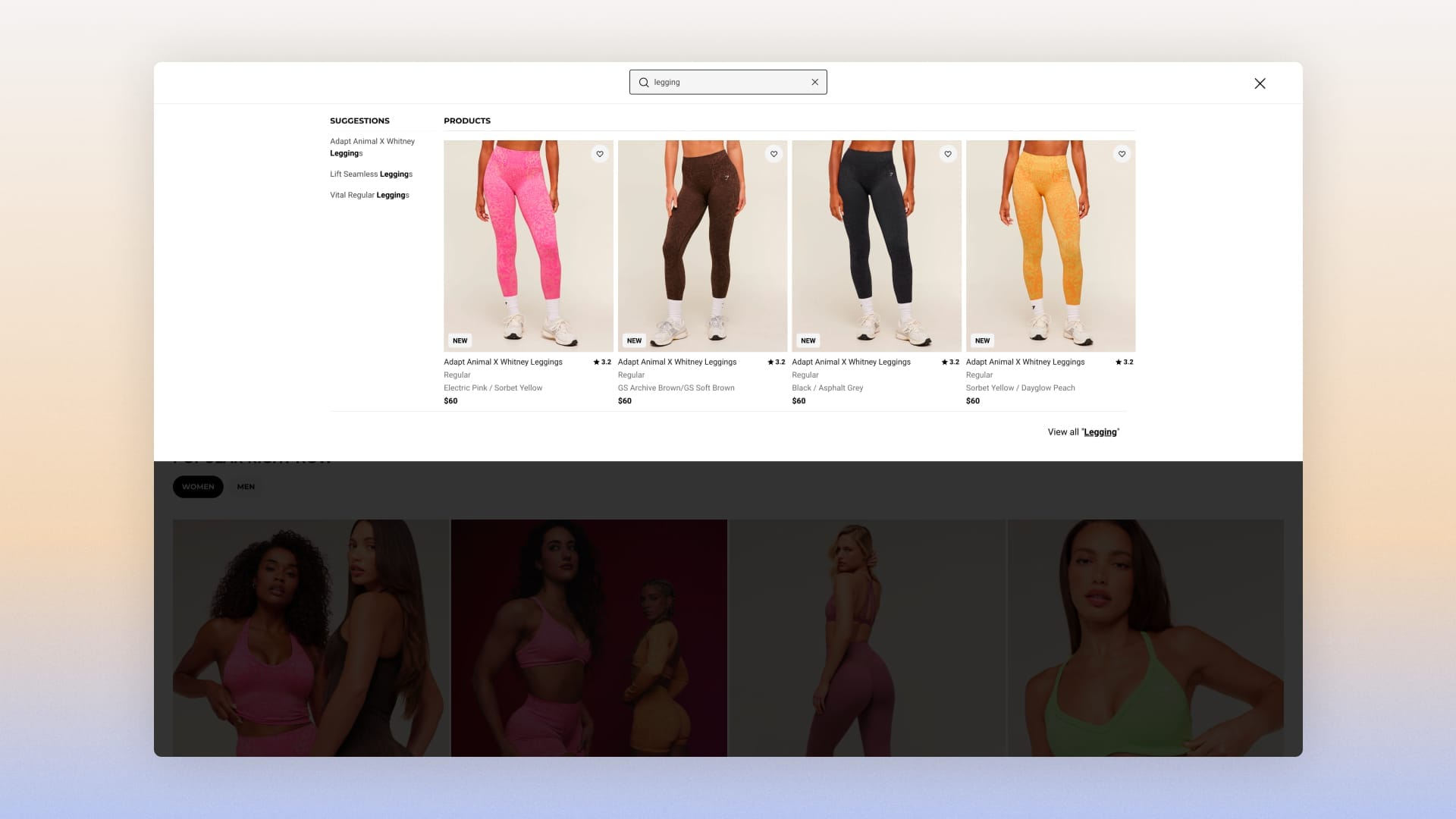
The key elements of the homepage design (and of the site more broadly) include:
- A sticky header with clear navigation categories
- High-contrast color schemes for easy readability
- A highly visible search bar for fast product discovery
- Flawless mobile execution
Products showcased well
Clearly, Gymshark excels at product presentation, using high-quality images and videos to showcase its apparel ranges. This matters because 83% of shoppers cite product images as the most influential factor in their purchase decisions.
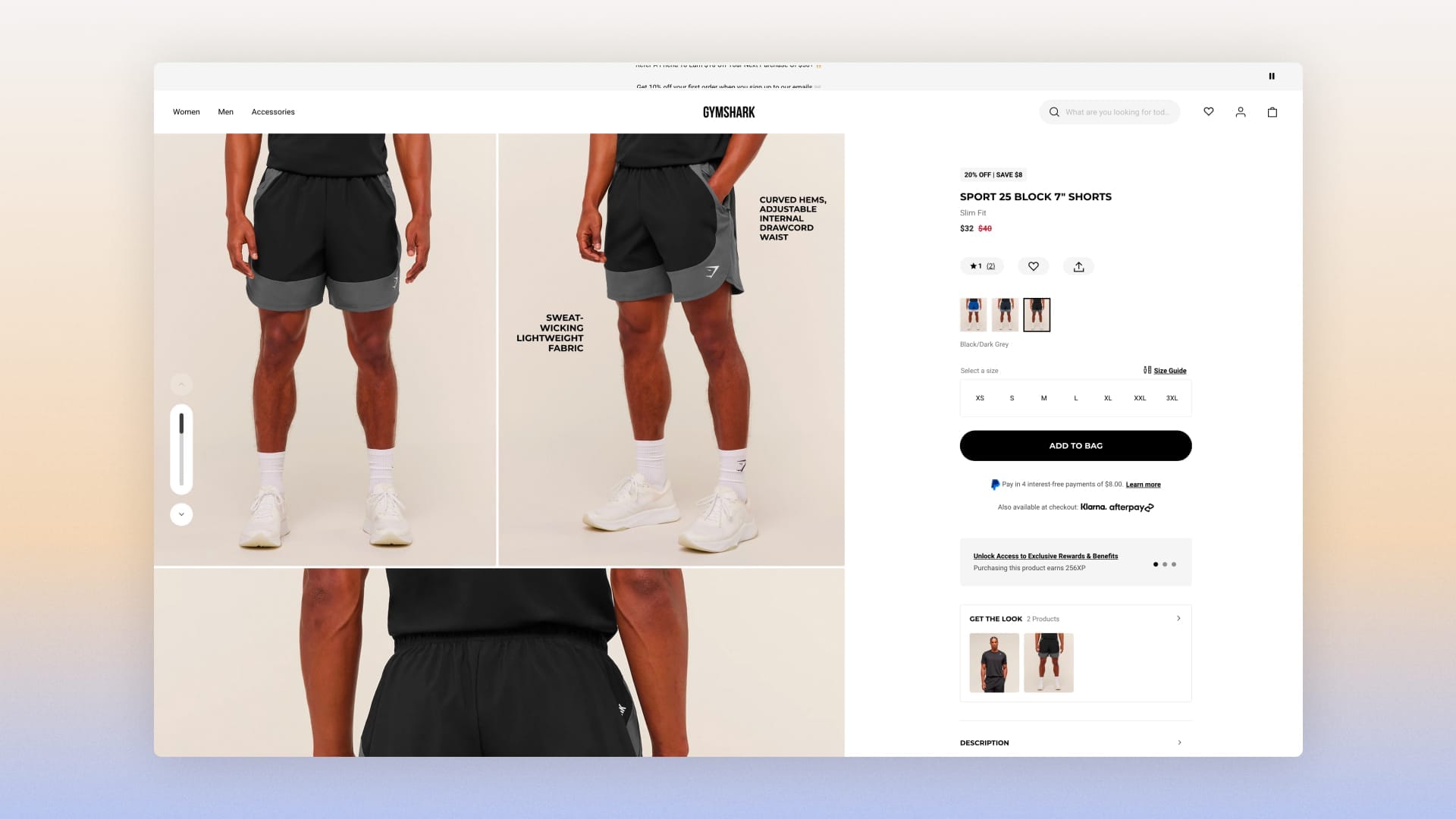
In practice, Gymshark's product page is a roundup of best practices:
- Multiple product images from different angles
- Video content showing the products in use
- A detailed size guide and fit information
- User-generated content featuring real customers wearing the products
This approach uses high-quality visuals and UGC to make products more appealing and build customer trust.
Personalizing the experience
Gymshark has built a community, but even more impressive, through smart use of data and an effective strategy, the brand has rolled out personalization features that improve the user experience and generate more conversions.
Personalization has been shown to increase e-commerce conversion rates by up to 15%.
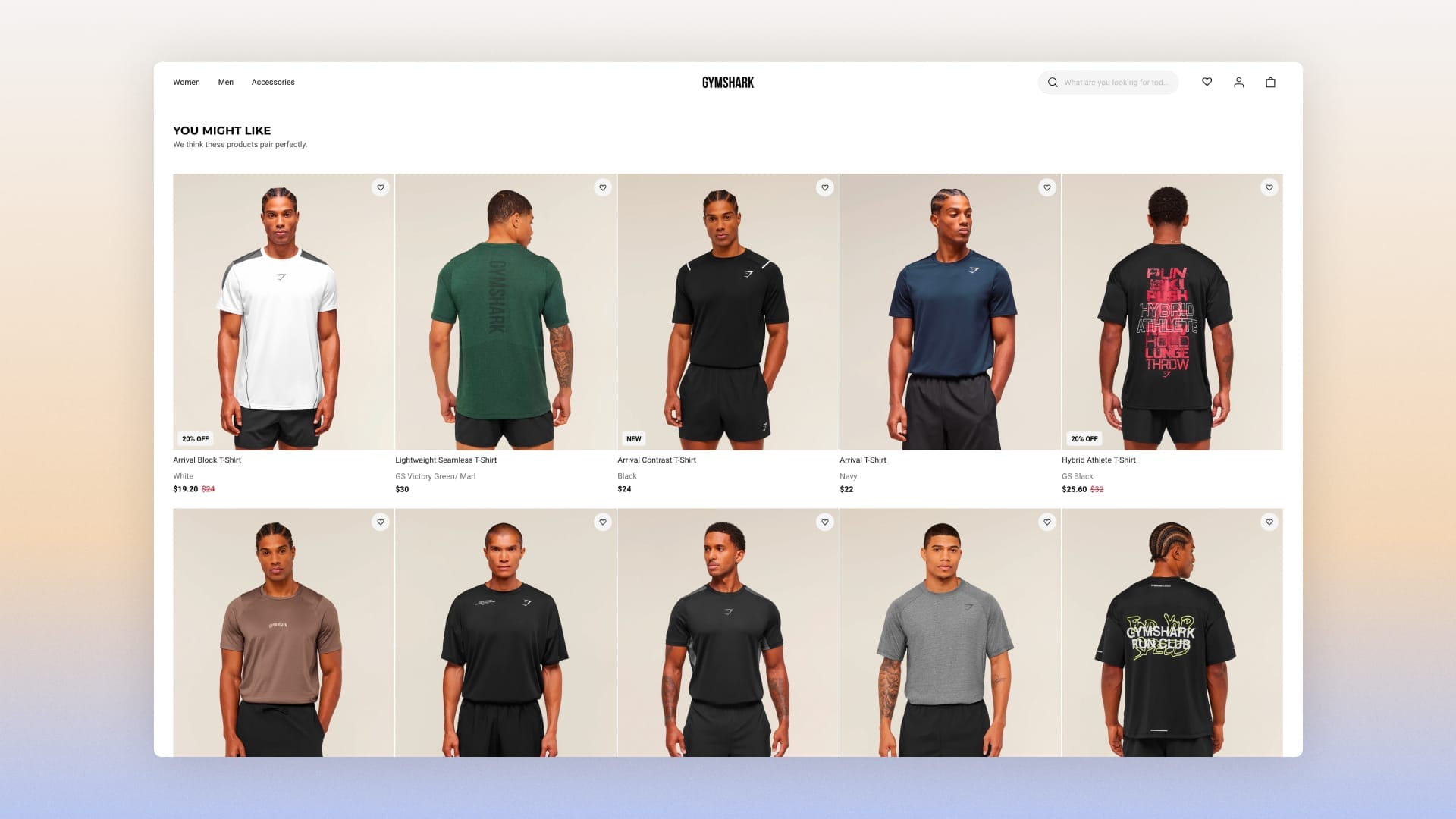
Personalization shows up at different levels of the funnel and in different forms:
- Tailored product recommendations based on browsing history
- Personalized email marketing campaigns
- Personalized homepage content for loyal customers
- Size and fit recommendations based on previous purchases
This level of personalization is comparable to what brands like ASOS offer, which are known for their tailored UX.
Driving engagement
Gymshark effectively weaves relevant content throughout its website to engage users and offer value beyond its product lineup.
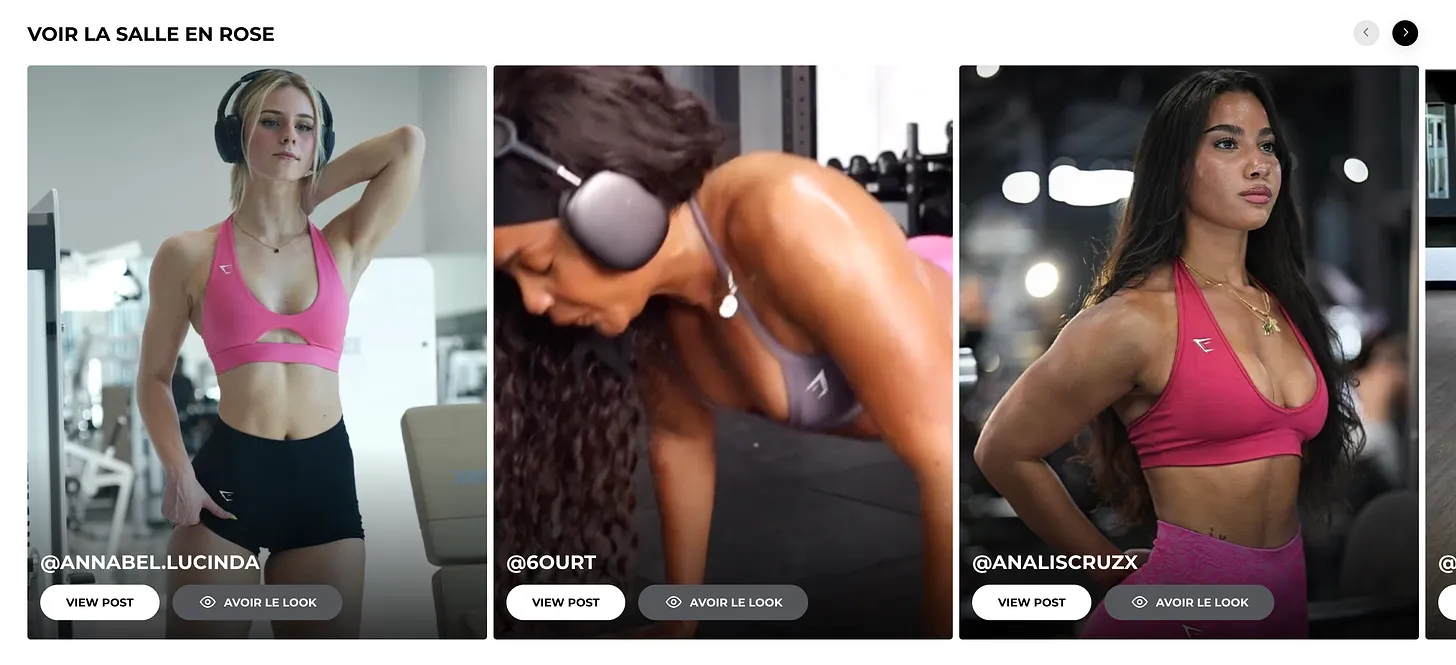
This strategy follows content marketing best practices, and it pays off: 70% of consumers prefer to learn about products through content rather than traditional advertising. The content features on Gymshark's website include:
- A blog section with fitness tips and workout routines
- A focus on athletes and their achievements (see the community angle covered above)
- Educational content on product technologies and materials
- Seamless integration of social media content, including UGC

This approach is similar to that of Under Armour, which also uses content marketing to engage and educate its audience.
By putting these UX strategies in place, Gymshark creates an experience that not only makes shopping easier but also reinforces its identity as a community-driven company.
Conclusion
Gymshark's meteoric rise in the fitness apparel industry reflects its innovative, customer-centric approach. By leveraging a Direct-to-Consumer (DTC) model, the brand has kept control of its image and customer experience, fostering strong relationships and collecting valuable data to inform its strategies. Limited editions and flash sales have created a sense of urgency and exclusivity, driving immediate customer action and strengthening brand loyalty.
Looking ahead, Gymshark's focus on community engagement and content integration will continue to play a crucial role in its success. By creating valuable, engaging content, the brand not only educates and inspires its audience but also strengthens its community of fitness enthusiasts.
It's clear that Gymshark's strategic focus on community, personalization and data-driven decision-making is in line with the new norms of the fashion industry.
Going forward, the brand still has plenty of challenges to tackle, and it will be interesting to see how it plans to innovate. Several questions arise, notably about its future sustainability initiatives and the new technological advances in its products, with the obvious risk of losing its way along the road.
When the time comes, it may be worth recalling one of its own quotes: