High-end fashion has always known how to count its customers. For the past ten years, it has also been learning to count its pieces.
For a long time, scarcity was a byproduct. Brands made little because they made well. Price did the sorting, the workshop set the ceiling, and the brand handled the rest. Shortage was a consequence. It wasn't decreed.
Today it's the opposite. Shortage is written, choreographed, A/B tested. Scarcity has gone from constraint to tool. Brands no longer endure it. They write it.
Jacquemus writes its singularity into the landscape: a lavender field in Valensole, the gardens of Versailles, the Salar de Uyuni.

For twenty-five years, Supreme has turned Thursday at 11 a.m. into a weekly sacrament.
Phoebe Philo reopens her site four or five times a year, without warning, and everything vanishes in thirty minutes. Meanwhile, Louis Vuitton hands out access NFTs priced at €39,000 the way other brands hand out loyalty cards.
In short: everyone has found their angle.
Beneath the surface of the techniques (countdown, virtual waiting room, raffle, waitlist), I believe you can sort scarcity into four main families.
They coexist for deeply different reasons, and unfortunately half the brands that imitate them lack the inner resources to sustain them.
This article tries to name them. Not to make an inventory, but so that at the next meeting, instead of asking whether "we're doing a drop," you can ask the right question: a drop of what, carried by what, for whom?
Where does scarcity come from?
Before it's a tactic, scarcity is a source. It flows from four distinct places, and where it comes from changes everything.
Structural scarcity
Hermès illustrates the oldest kind: structural scarcity.
A Birkin takes forty hours of handwork. Multiply by the number of artisans trained in the workshops, divide by the number of stores to supply, and you get a ceiling.

That ceiling doesn't move because the house refuses to move it, at the cost of years of waiting and VIC lists to which nobody holds the public key.
Patek Philippe holds the same line in watchmaking, with the added detail that it sometimes buys back its own watches on the secondhand market to control the collector market. Scarcity doesn't need to tell its own story. It's right there, visible in the hand that stitches.
Event-driven scarcity
At the complete opposite end of the spectrum is event-driven scarcity. Jacquemus has turned it into an art. A Jacquemus show means several million euros spent on an improbable location and an hour-long runway show streamed live on Instagram.
The clothing is almost secondary. What the brand produces is a cultural moment that tops the trends in four countries within twenty-four hours. The Chiquito bag, fresh off the runway, finds buyers without Simon Porte needing to explain anything. The moment set the price.
Coperni plays the same score on a smaller budget: the dress sprayed onto Bella Hadid in 2022 wasn't even for sale, and it generated more desirability than a yearly media campaign.
Scarcity through absence
Subtler and harder is scarcity through absence. It presupposes prior authority. Phoebe Philo returns in 2023 after six years of silence, with no store, no wholesale, no press, no calendar.
Her collections are called "edits" (A1, A2, A3, then Collection B) to escape the grammar of seasons, which belongs to everyone.

The Row has kept the same discipline for fifteen years, with tight distribution and a public silence the Olsen sisters maintain without making a point of it.
This school only works if you've already written a chapter of fashion history. Otherwise, silence isn't scarcity. It's nothingness, and nobody buys nothingness.
Ritual scarcity
Last comes ritual scarcity, invented by Supreme in a basement on Lafayette Street in 2000. One drop a week, always on Thursday, always at 11 a.m. Eastern, always sold out in minutes.
This mechanism created a Pavlovian reflex on a global scale. Aimé Leon Dore imported it into a more restrained preppy aesthetic, with its SoHo café serving as a secular place of worship.
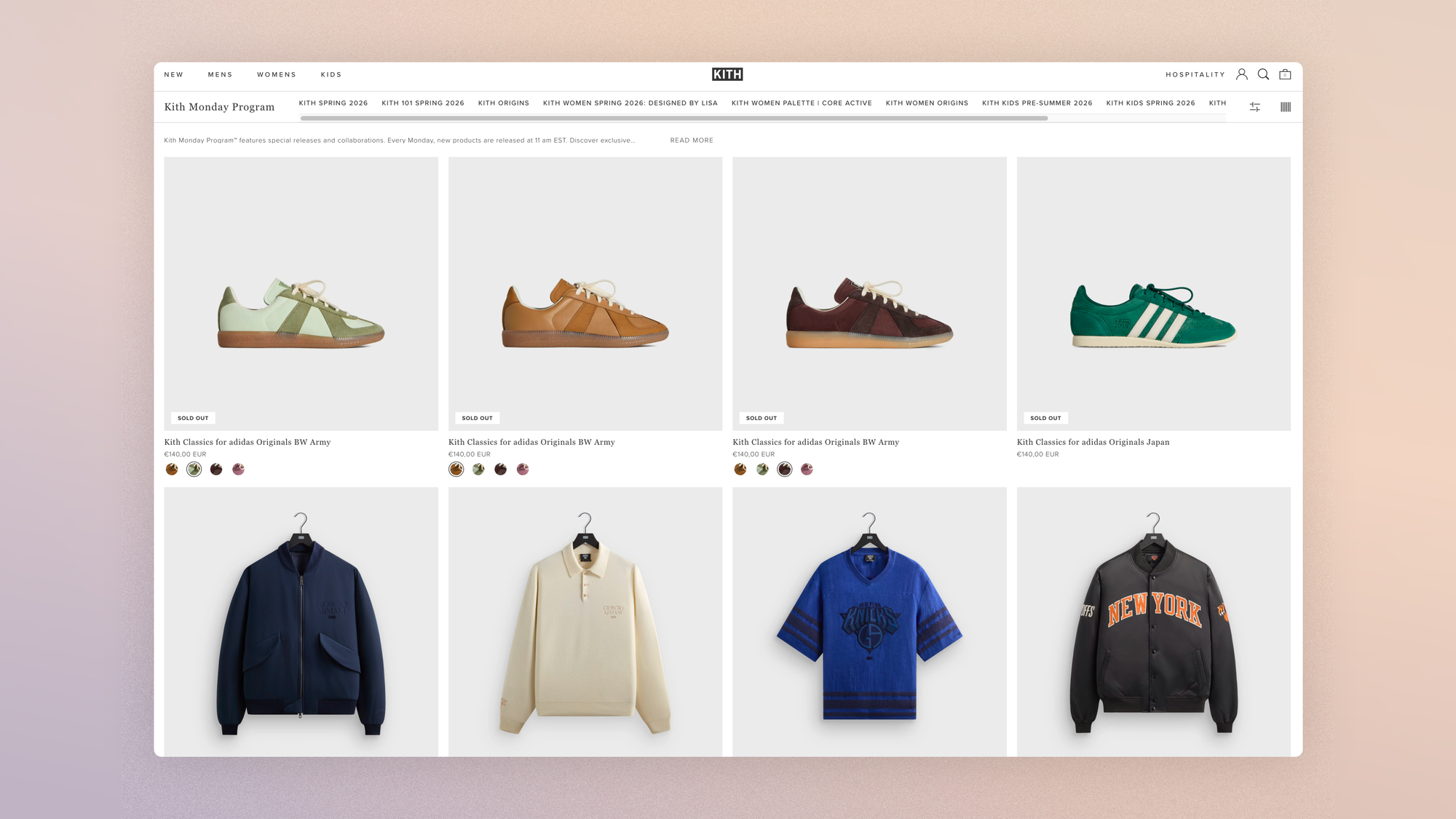
Kith keeps the same clock, only louder and more commercial. What holds it together isn't so much the scarcity of the pieces (there are often more than you'd think) as the regularity. The certainty that something will happen on Thursday. Customers make an appointment with the brand.
None of these four sources can be decreed.
You can plant a counter at the bottom of a product page, but it will never do on its own what a workshop, a show, a designer, or a community does. All it will measure is how long it takes a visitor to realize they're being taken for someone else.
Rhythm as a signature
Between two drops, there is silence. And silence, well held, isn't the opposite of noise: it's the condition for it. Brands that understand this build their cadence the way a composer writes rests. The others fill every gap, and end up not being heard.
Once you've identified the source, you still have to choose the tempo. Your cadence says as much about who you are as your logo, your palette, your art direction.
Four tempos dominate the premium segment.
Weekly drop: the scarcity codified by Supreme
Supreme codified scarcity, ALD refined it, and both stick to it with liturgical discipline. Every Thursday at eleven, something appears. On paper, predictability should kill scarcity. In practice, it does the opposite.
Knowing the appointment falls on Thursday turns the whole week into calibrated anticipation. Customers aren't caught off guard by the news. They prepare for it. They cultivate it.
On Tuesday, they watch for leaks. On Wednesday, they size up the reviews. On Thursday at 10:59, their mental cart is already full. That week is what separates a buyer from a fan.

Monthly drop: the pluralist scarcity of Moncler Genius
Moncler created Genius in 2018 to break the fashion calendar: one collaboration a month, a different designer each round (A$AP Rocky, Hiroshi Fujiwara, Craig Green, Pierpaolo Piccioli), keeping the cultural conversation occupied at all times.
The result: 87% of Moncler's revenue now comes through DTC. No slow season, always something to announce. The risk is visible from a distance: the conversation gets saturated and the creative runs out of steam.
Event drop: the ceremonial scarcity of Jacquemus
Jacquemus produces three to five cultural moments a year, each one massive. The show is the engine, e-commerce is the trace. See-now-buy-now drives conversion while emotion is still hot, in the hours after the show.
Between shows, spaced-out restocks of the Chiquito and Bambino icons keep the pulse going without ever faking an event. It's the most demanding tempo. Every moment has to match the intensity of the last. Every miss is costly.
Calendar-free drop: the absolute scarcity of Phoebe Philo
Philo reopens her site when she decides to. The absence of rhythm is itself a rhythm, and a more demanding one for both the brand and the customer: you need enough prior authority for the audience to stay alert without being nurtured. Without that authority, irregularity produces forgetting, not anticipation.
Phoebe Philo — E Preview
A drop that's too frequent turns back into stock under another name. A drop that's too rare ends up no longer being awaited. The right tempo isn't a matter of competitive benchmarks, it's a matter of an inner metronome. Every brand has its own.
E-commerce and drops: when scarcity becomes the interface
A premium e-commerce site that runs drops looks like no other online store. It does two things at once, and that's where most of the sector's failures happen.
It sells, obviously. But it also signals, constantly, what level of house you're dealing with. When the sale and the signal contradict each other, the signal has to win. You can't repair a price perception with a checkout form.
Supreme has arguably gone the furthest in one reading of the genre.
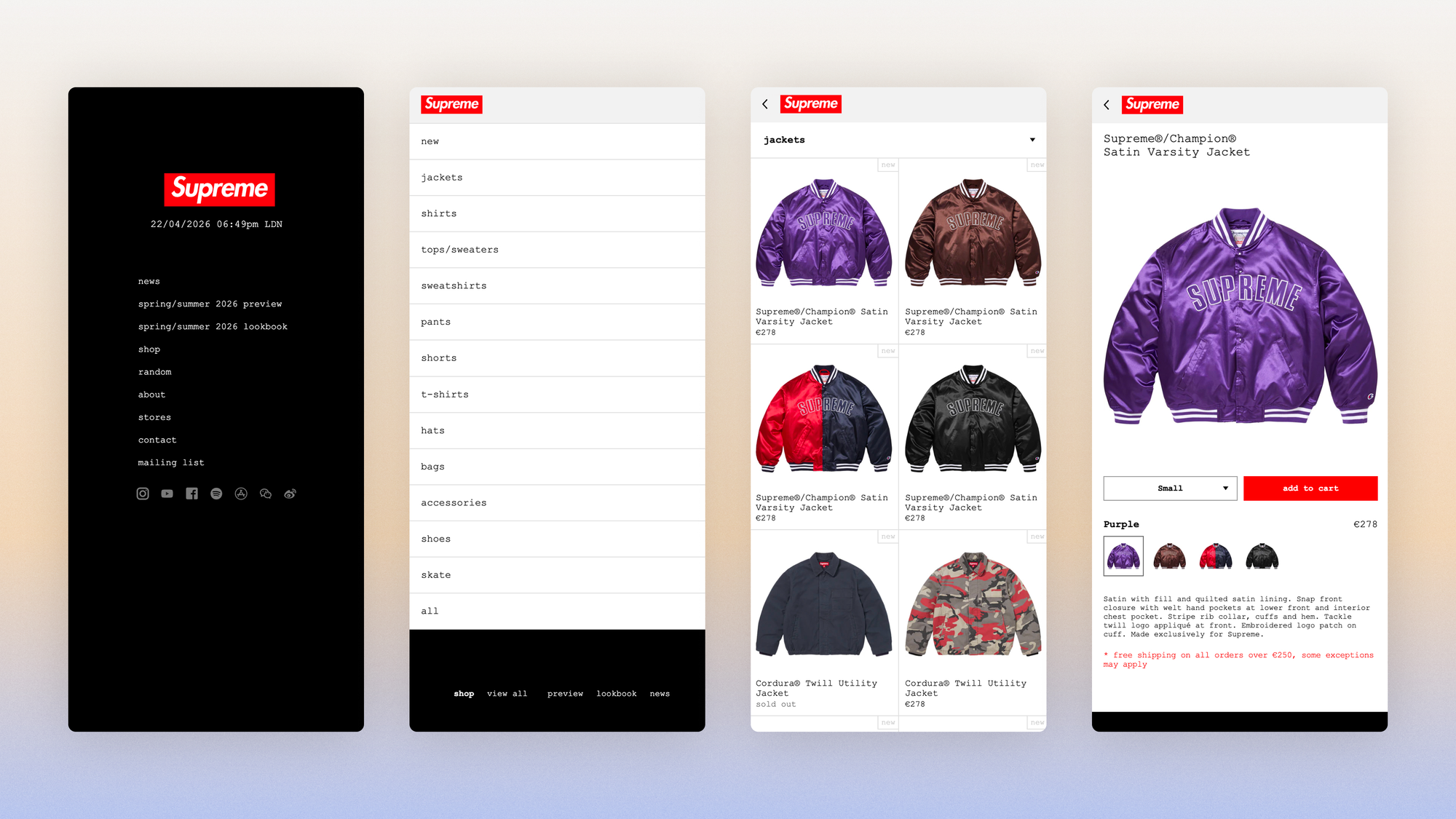
Supreme.com is deliberately bare:
- no persistent navigation
- no filters
- no recommendations
- no wishlist…
Product pages go live to the minute. Sold-out items stay visible like deliberate scars. The UX looks like a bug.
It isn't one. It's a border: insiders know how to navigate, everyone else gives up. The result is a $1 billion valuation and resale prices that regularly reach 500% of the original price.
Palace follows a similar discipline, with a humor all its own. Product descriptions are short, often ironic, sometimes absurd. Sold-out items vanish from view instead of lingering. The brand doesn't try to be understood by just anyone. It takes for granted that people will learn its rhythm.
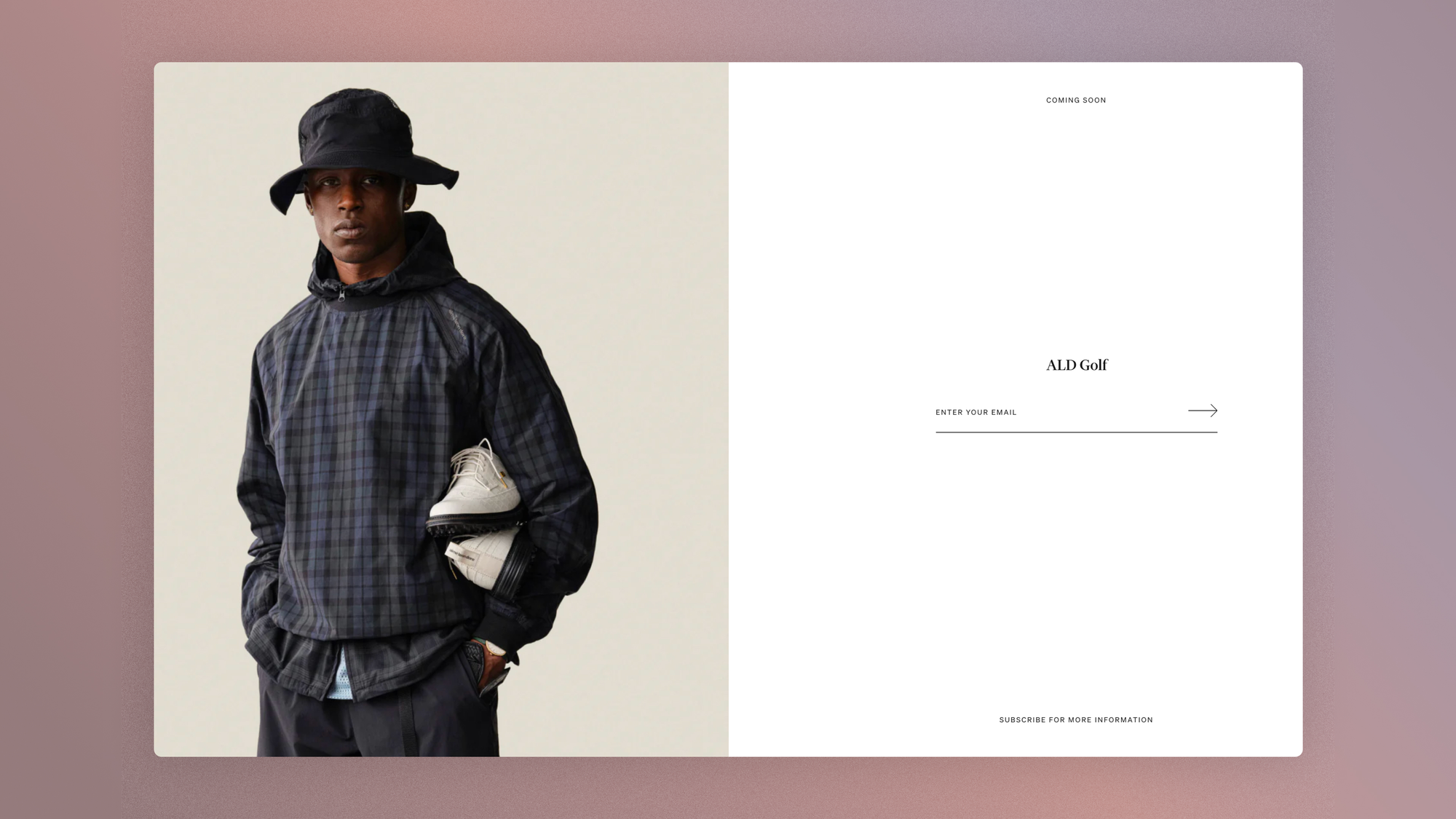
Aimé Leon Dore writes in a longer register. The site looks like a neighborhood magazine, 1990s Queens turned moodboard, with photography front and center and product pages built around a collection story before the product.
The New Balance, Porsche, and Woolrich collabs launch with full lookbooks, films, a whole world. Kith extends the same grammar with bigger budgets: high-resolution imagery, editorial product pages, built-in video. At both, e-commerce isn't dressed up as lifestyle. It's written like a magazine that happens to accept payments.
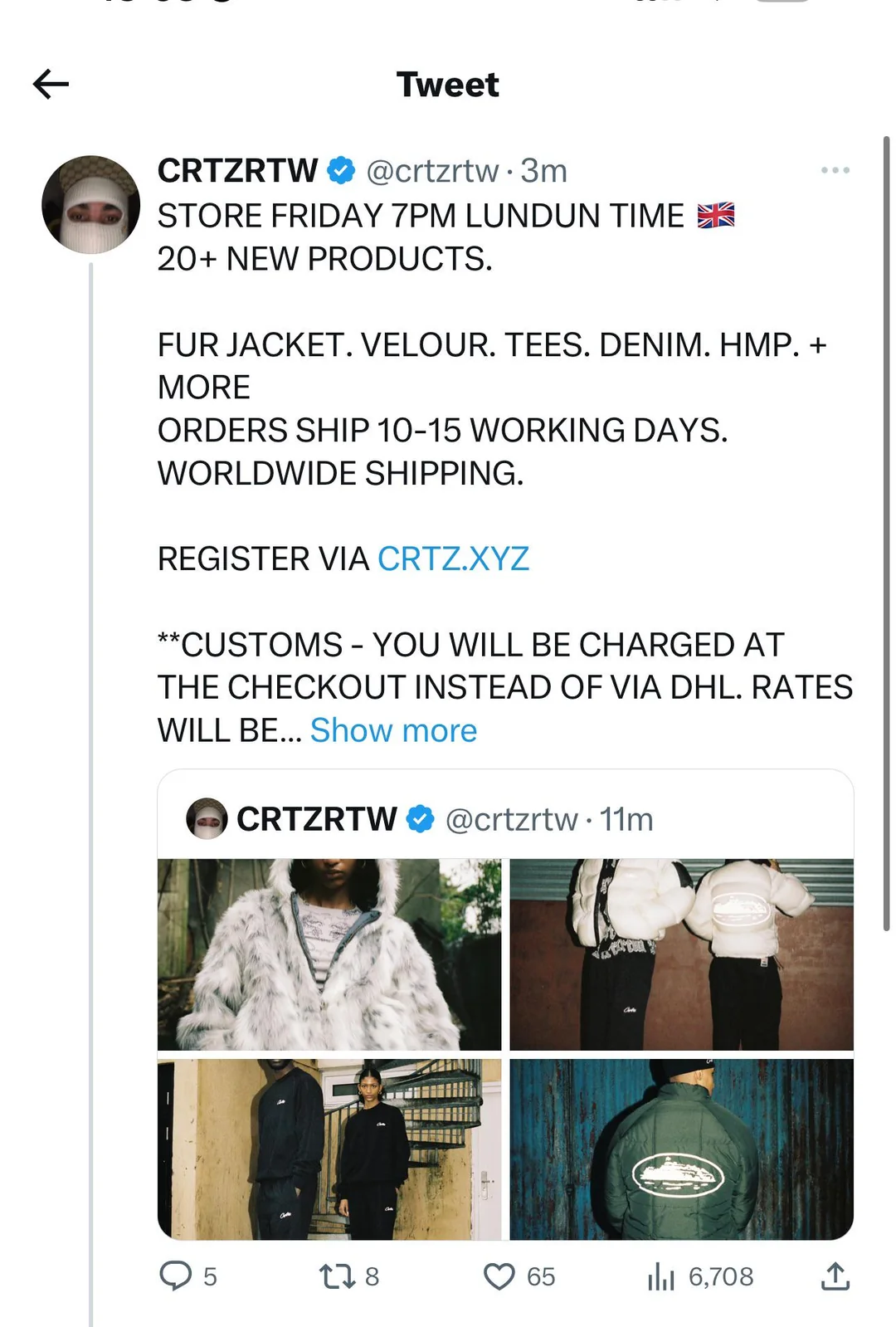
Corteiz shifts the gesture further, with a shop that locks during drop windows, the password circulating on X, Instagram Stories, or more inventive channels depending on Clint's mood.
Some drops pair the sale with a physical activation: "Da Great Bolo Exchange" in London in 2022, where customers swapped Canada Goose, Moncler, or Nike jackets for a Corteiz Bolo, with the jackets then redistributed to people experiencing homelessness.
Finally, I couldn't not mention MSCHF, a case apart. The Brooklyn-based collective releases a numbered "Drop" at regular intervals, each designed as much as a media stunt as a product to sell.
Astro Boy-style Big Red Boots, Jesus Shoes injected with water from the River Jordan, Birkinstocks cut from real, sliced-up Hermès Birkins: the objects are worth what the articles, posts, and legal debates they set off are worth.
MSCHF isn't a brand's storefront, it's the display of a workshop that sells what it exhibits.
CRM: staying present between shortages
When you sell little, or sell at long intervals, you have to speak precisely, and that comes down to one thing as exacting as it is valuable: balance. CRM for drops works against intuition: fewer sales don't allow for less relationship, they demand more.
Some brands may send four emails a year while others send almost one a week, and some even more! The rule isn't in the absolute frequency, it's in the consistency between frequency and brand promise.
Absolute scarcity
Every email is an event: no cheap promos, no impersonal cross-sells, no cart reminders. The whole format rests on editorial.
When the email arrives, customers know something is happening, and it's precisely this communication scarcity that directly mirrors product scarcity. Remove one and you weaken the other. You can't hold silence on the site and spam the list.
Lived-in regularity
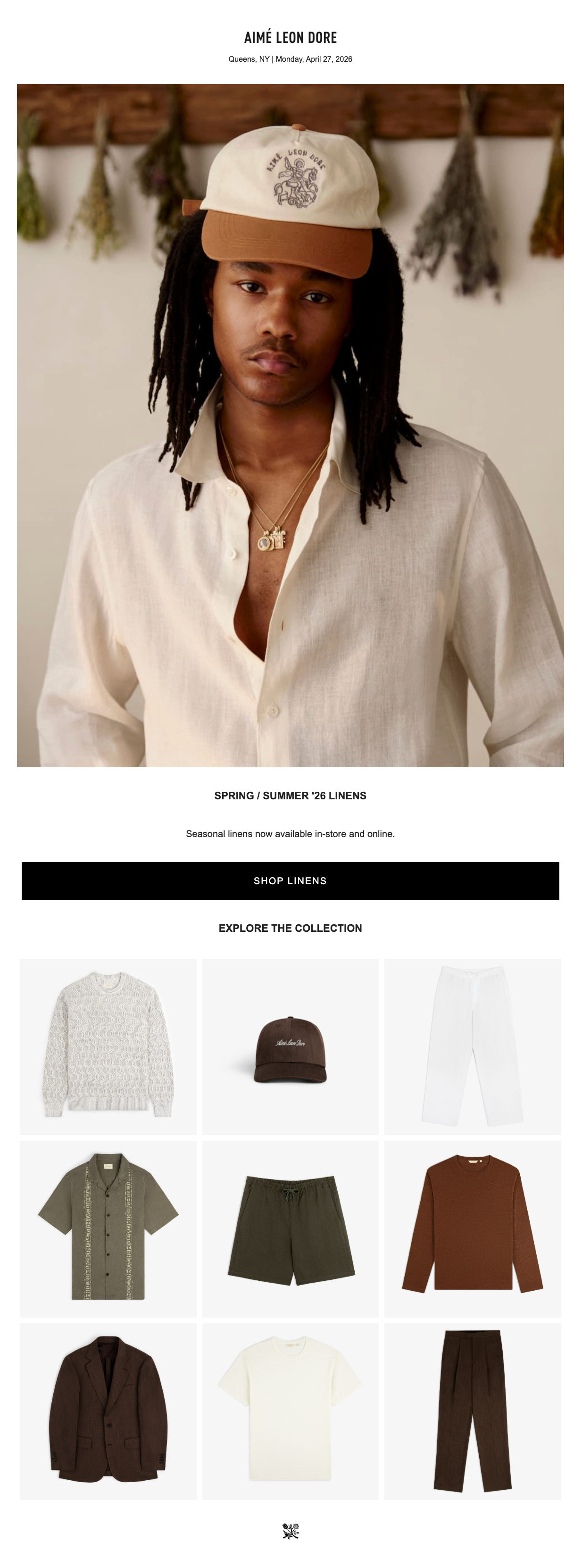
For other brands, communications run like a Swiss clock, and yet they don't necessarily fall into monotony. Take Aimé Leon Dore and Noah: both brands follow the same tempo (Thursday, weekly), and yet each approaches CRM strategy in its own way.
ALD works like a series:
- one email a week
- a preview the day before for subscribers
- early access on New Balance collaborations, where prior sign-up even determines whether you can buy
The email calendar becomes a product in its own right. Subscribers don't put up with the messages. They receive them the way you follow a season.
Noah works like a letter: the same weekly discipline, but Brendon Babenzien's voice carries the format.
Each email talks as much about textile overproduction or environmental policy as about the new piece. Subscribers don't get a product newsletter, they get a strong, committed point of view. Regularity sets the appointment. The voice makes people look forward to it.
The same goes for the approach to loyalty: one aims for calibrated anticipation, the other for cultural alignment, and neither can be replicated without the substance behind it. Copying the cadence without the series, or without the voice, just makes noise.
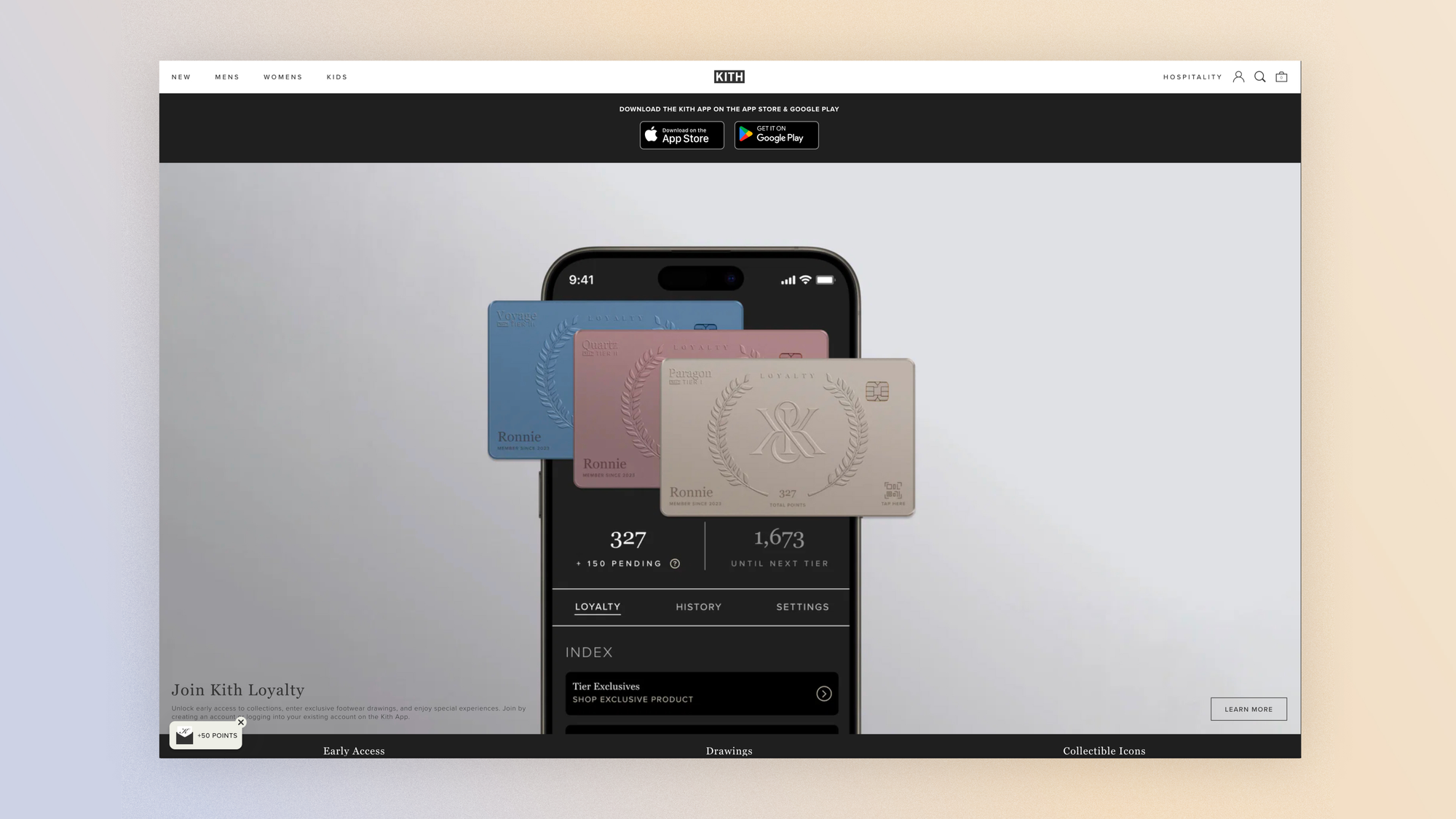
Going further, brands like KITH industrialize multichannel orchestration:
- flows via Klaviyo
- app push notifications
- Instagram posts
- Dedicated landing pages on the site
Everything converges on the same drop, at the same hour. The funnel becomes a choreography where each touchpoint makes the next one resonate.
This resonance is precisely what luxury brands seek when they maintain a direct relationship with their Very Important Clients. Automation steps aside for an advisor who offers a conversation to discover a specific piece, an eagerly awaited release, a well-thought-out surprise. That's where most of LTV at the top of the pyramid is won.
Still, whatever the level of communication and the drivers, every strategy converges on one simple idea: each interaction extends a dialogue that began between the brand and the user, a relationship of curiosity, desire, and seduction that evolves over time.
Three traps of drop and scarcity strategies
The model has predictable failures, and learning about them costs less than discovering them the hard way.
Too many drops kill the drop
Here's what happens, in order:
- customers get used to it
- the excitement fades before the sellout
- stock stays online for several days
- then several weeks
- the brand cuts prices to clear it
The positioning collapses quietly, that's all. A simple rule to remember: more frequency without more story equals less desire.
The resale market war
The more desirable a drop is, the more StockX, Grailed and every reseller capture the value instead of the brand. Three stances coexist today:
- Let it happen: Supreme understood this well. Sometimes resale amplifies desirability and helps feed the myth
- Contain it: Waiting room, raffle, verification — in short, limit bots without preventing resale
- Or simply close it off: purchase conditioned on physical presence, an access code, or geolocation. Community before market.
Lots of desire, few buyers
The subtlest trap, because it's a virtue that may have been pushed a bit too far: the harder a drop is to get, the more desirable it is. But the rarer it is, the more the base of real buyers shrinks. QED.
Supreme and Kith have long calibrated this game: hype pieces in ultra-limited runs on one side, accessible essentials that drive revenue on the other.
To go further, also check out:
 Jérémie Werner


Drops, scarcity, and AI agents: what's left of desire?
A drop relies on a precise chemistry: the wait, the shortage, the fear of arriving too late, the little shot of dopamine when the click goes through.
That leaves the question our era imposes: what happens to this chemistry when the customer doesn't feel it?
An AI agent can already monitor twenty sites around the clock, buy in 300 milliseconds, get through queues, and bypass weak CAPTCHAs. Imagine the prompt:
"Buy me this bag the moment it drops."
Two scenarios emerge.
Scenario 1. Access scarcity collapses
For years, scarcity was a matter of the clock. Thursday at 11 a.m., the countdown, the queue that swells at 10:59 and collapses at 11:02.
A whole architecture built to turn time into desire… and it assumes that on the other side of the screen, someone is watching the clock. Tick, tock. Remove that person, replace them with an agent that never sleeps, and the queue stops sorting.
It no longer separates the loyal from the curious, insiders from passersby. It just separates machines from each other. Boring.
Weekly ritual models will have to reinvent themselves, since the advantage will no longer be showing up on time but being recognized before the hour.
Verified membership, named token-gating, strong authentication: everything will need rethinking!
Scenario 2. Symbolic scarcity becomes the only kind that holds
As we've seen, there's another form of scarcity, subtler, slower, and harder to build. A scarcity that doesn't play out in the sales window but well before it or elsewhere, in a long timeframe the agent can't travel through.
The desirability of luxury brands doesn't depend on a release mechanic but on accumulated cultural authority: a point of view, a signature, twenty years of work or ten years of vision that have defined what wanting this piece means.
Maybe the great houses won't have anything to reconfigure, and the agent will simply speed up their transactions.
More broadly, human filters, notably curators (whether renowned or community-based), could be the cornerstone of a new dialogue that agents don't arbitrate. An authentic conversation between humans, far from automation and acceleration.
There is still so much we don't know:
- What is a drop to an agent?
- Does FOMO apply to a machine that has no regrets?
- When a brand optimizes for an LLM, is it still optimizing for human desire, or for something else that we'll have to name?
The vocabulary of scarcity (urgency, hype, FOMO, drop) is a vocabulary of emotion. We'll probably have to invent another one…
Unless
This whole line of reasoning assumes scarcity is a problem of access, but there is one thing (I sincerely hope!) that I believe will resist the agent, that no API will tame, because it plays out in something infinitely subtle and uniquely human: desire.
Desire is what remains when everything else is optimized. By its very nature, desire is what isn't optimized, and can't be, because artifice extinguishes it.
💐