
The niche brands in this panel don't share a category, but they share a score: 37 of 50 have a relevant value proposition, and only 13 put it in the H1.
Pizza ovens, preserved flowers, laundry detergent, dog food: when a brand creates or reinvents its niche, the promise is often sharp, and the hero shows it more often than average. Five brands show what a niche makes possible.
What makes a value proposition effective for a niche brand?
An effective niche value proposition names the known flaw of the original category (the flower that wilts, the detergent that irritates, the label that lies) and fixes it in one sentence, with a number or a guarantee. When the brand invented its category, the headline can name the professional result the customer wants to match.
What does the benchmark of 50 niche brands reveal?
74% relevance, 58% differentiation, 34% quantified benefit: niche brands beat the benchmark average on all three core criteria.
Placement follows, with 26% in the H1 and 30% in the title tag alone, the fourth-best ratio in the benchmark. A brand that had to explain its category to exist learned to write its promise.
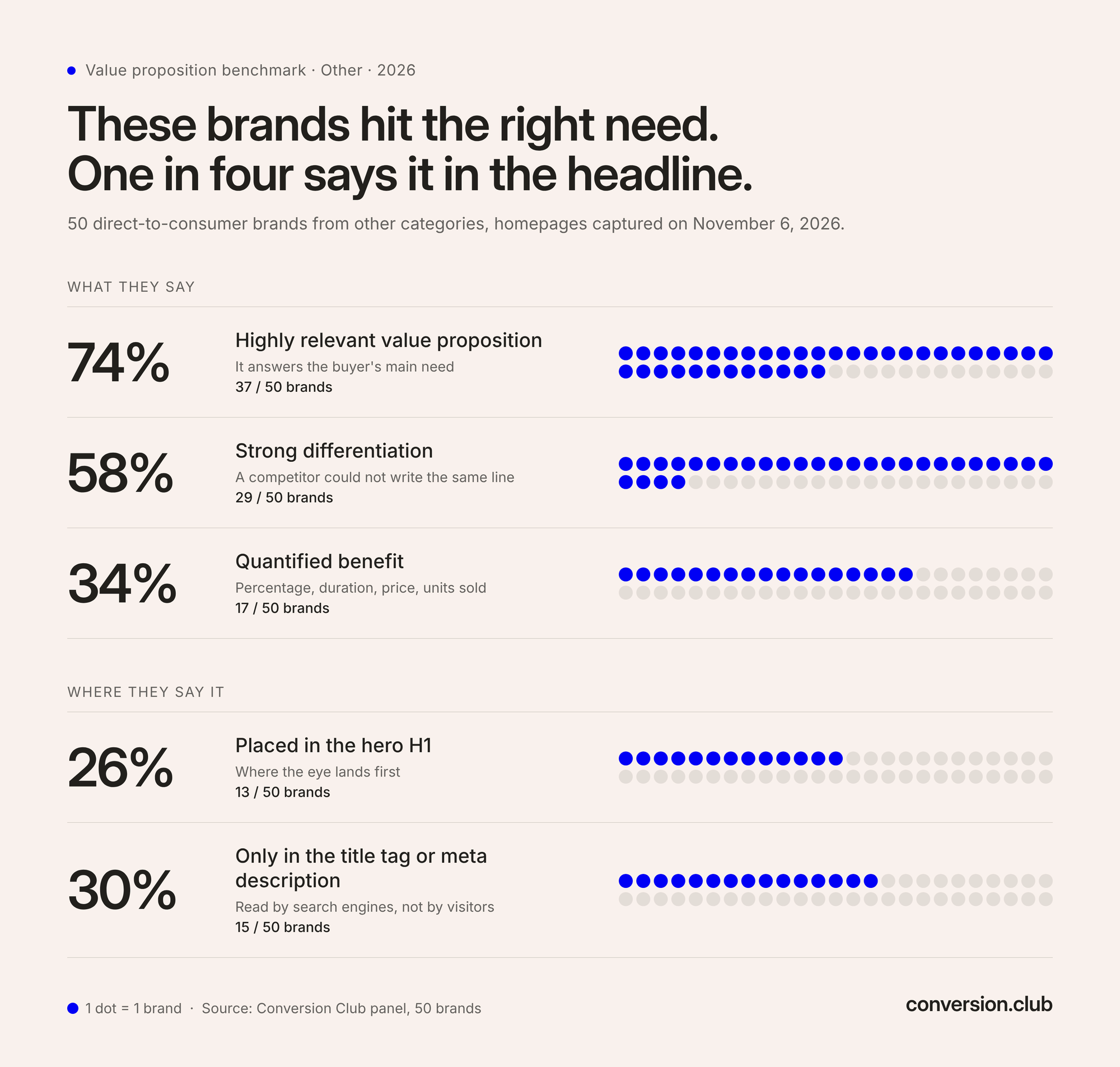
| Metric | Brands | Share of panel |
|---|---|---|
| Value proposition rated highly relevant | 37 / 50 | 74% |
| Strong differentiation (a competitor couldn't write the same sentence) | 29 / 50 | 58% |
| Value proposition placed in the hero H1 | 13 / 50 | 26% |
| Value proposition found only in the title or meta description | 15 / 50 | 30% |
| Quantified benefit (percentage, duration, price, number of sales) | 17 / 50 | 34% |
What are the best niche brand value propositions?
1. Ooni: the professional's result at home
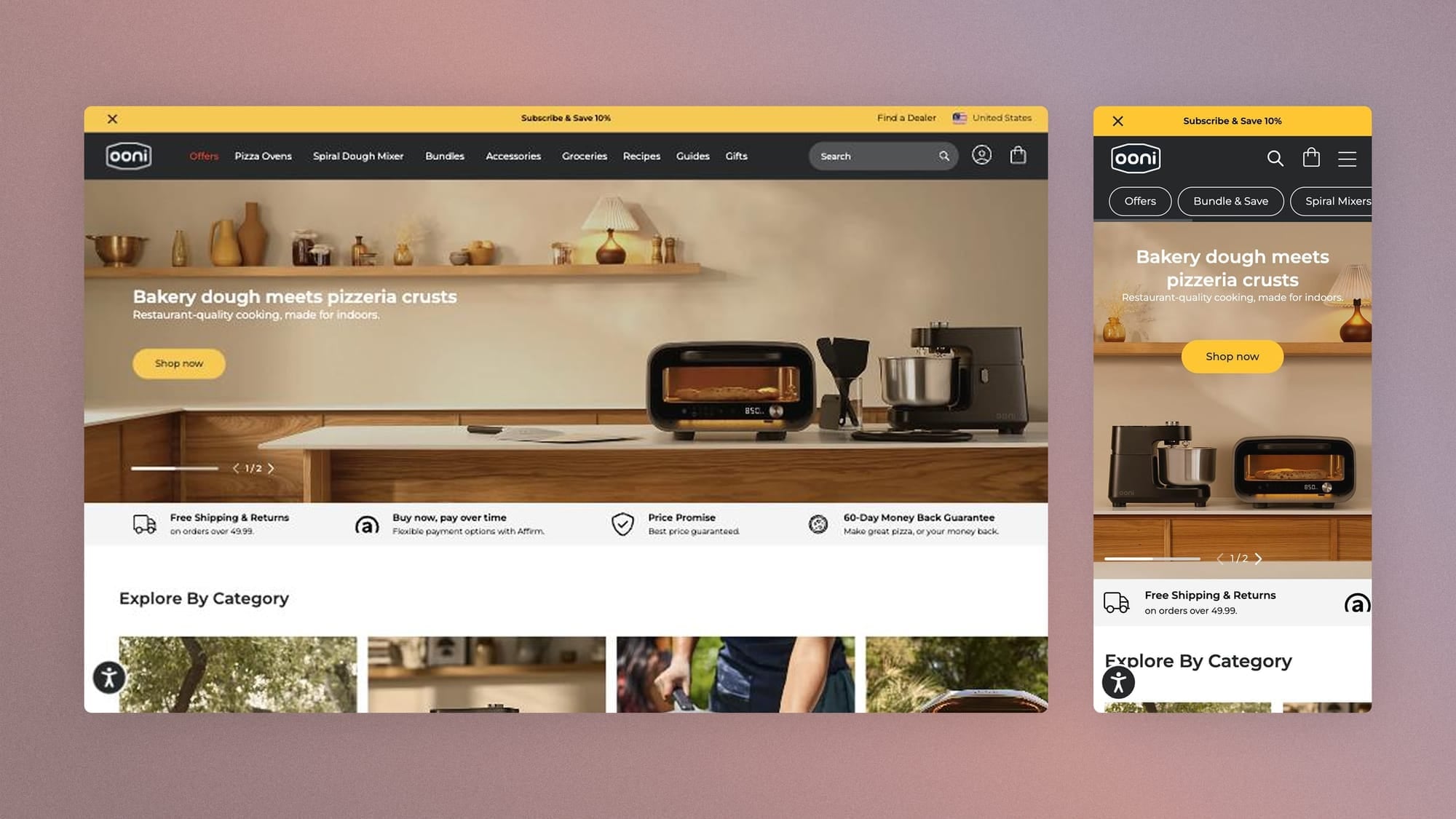
Ooni sells pizza ovens for home cooks. Its H1: "Bakery dough meets pizzeria crusts." The sentence isn't about the oven but about what comes out of it, compared with two trades the customer admires. The subtitle sets the frame: "Restaurant-quality cooking, made for indoors."
The proof comes in two steps. A guarantee first: "60-Day Money Back Guarantee. Make great pizza, or your money back." Then volume: "Creator of the world's no.1 pizza ovens with more than 3 million ovens sold worldwide."
2. Venus et Fleur: a quantified, trademarked duration
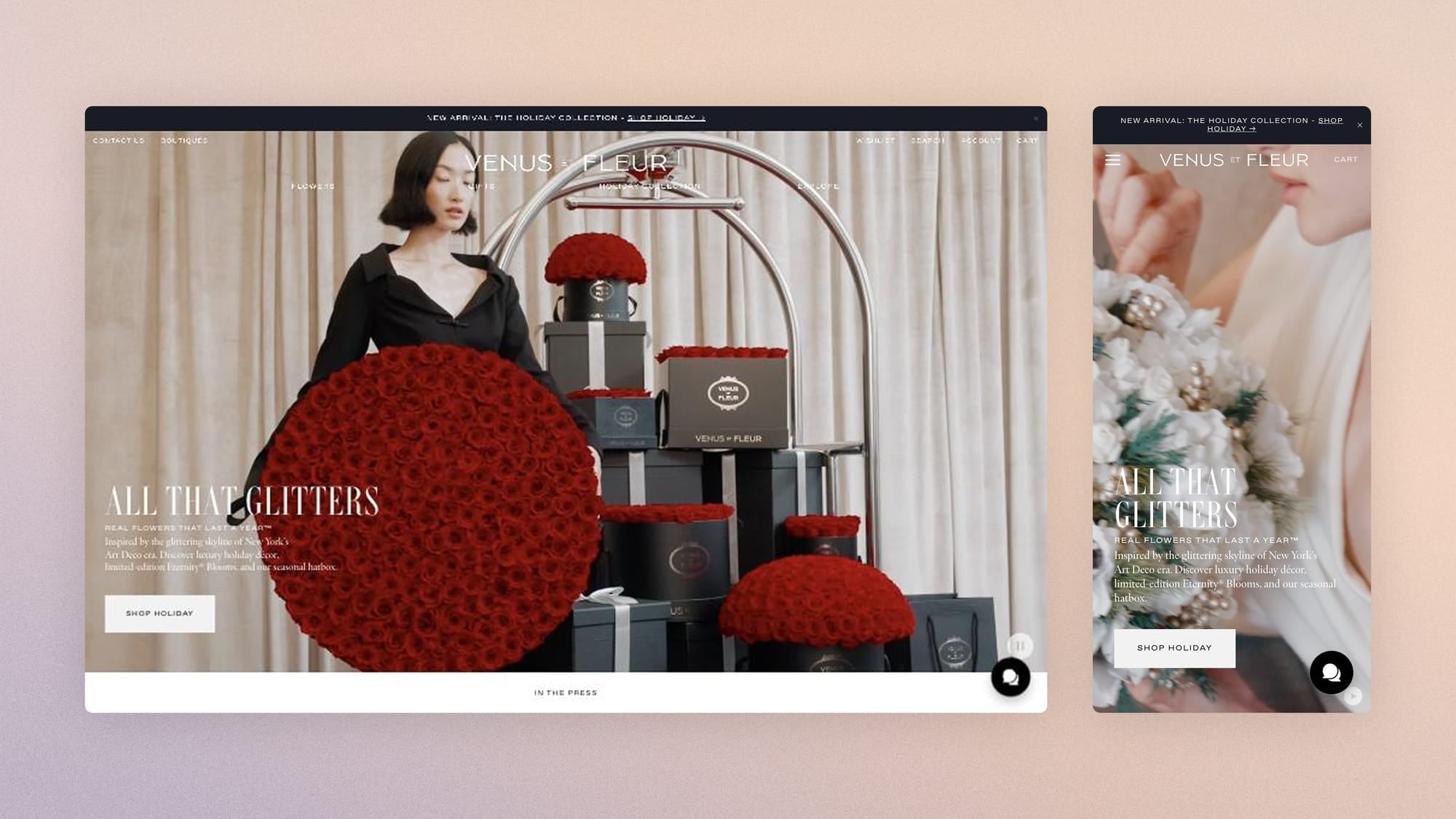
Venus et Fleur sells premium preserved flowers. The current H1 is seasonal, "All That Glitters," but the line just below carries the promise, trademark included: "Real flowers that last a year™." The brand turns the category's known flaw, a wilting flower, into a quantified duration.
What follows builds on the same idea: "Pioneers of Eternity Flowers," "Luxury That Lasts All Year," "Exclusively Made To Order." A section called "Loved by Icons" cites Gigi Hadid and Ashley Benson.
3. Dropps: holding the contradiction
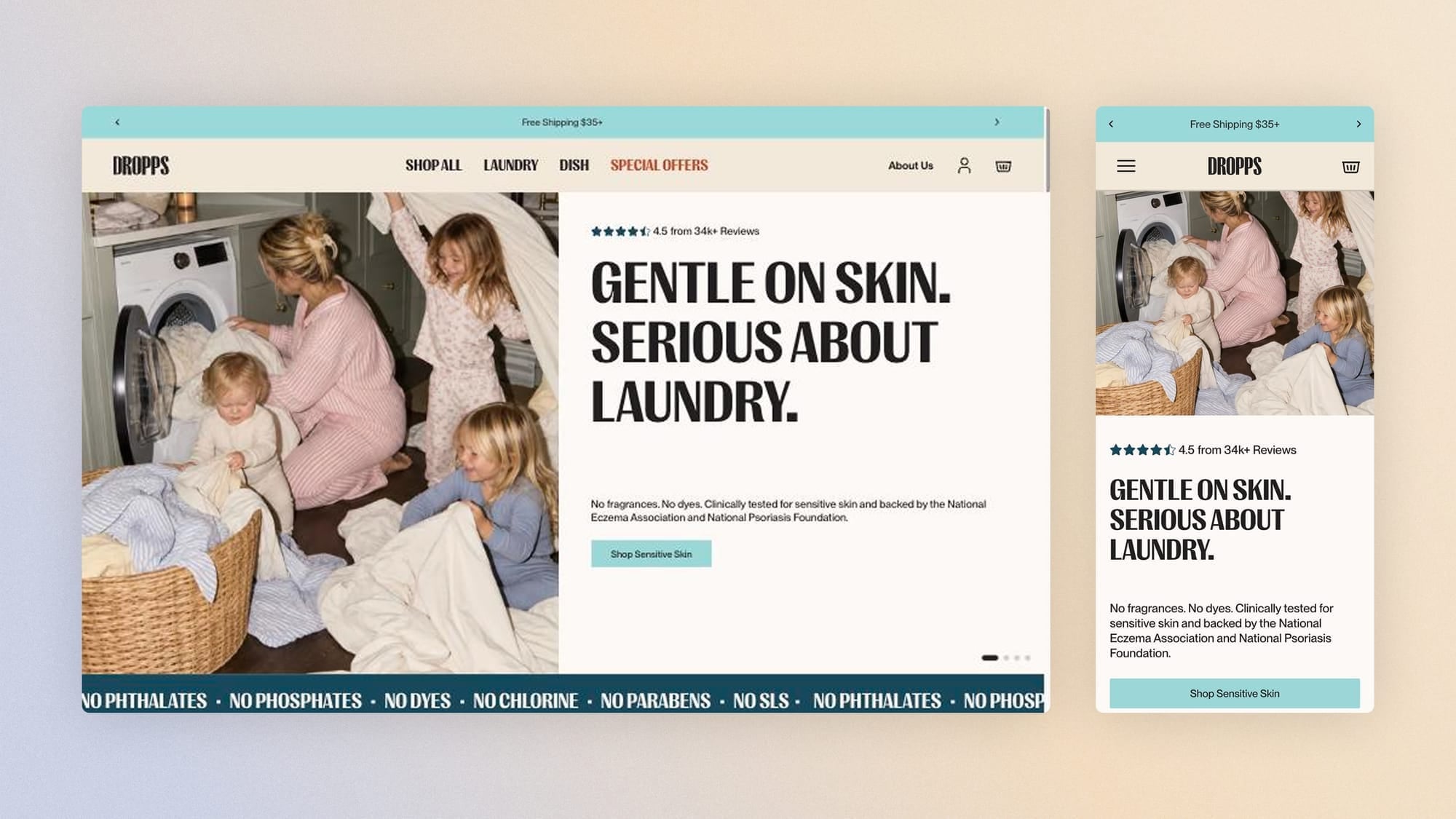
Dropps sells laundry detergent and dish soap in pods. Its H1: "Gentle on skin. Serious about laundry." Two parallel sentences answer the buyer's fear: trading effectiveness for gentleness. The subtitle proves the first half: "No fragrances. No dyes. Clinically tested for sensitive skin and backed by the National Eczema Association and National Psoriasis Foundation."
Customers prove the second half: 4.5 from over 34,000 reviews, sorted by stain type ("Set-in stains, gone", "Wine on the tablecloth, gone"). A banner lists what the formula leaves out: phthalates, phosphates, dyes, chlorine, parabens, SLS.
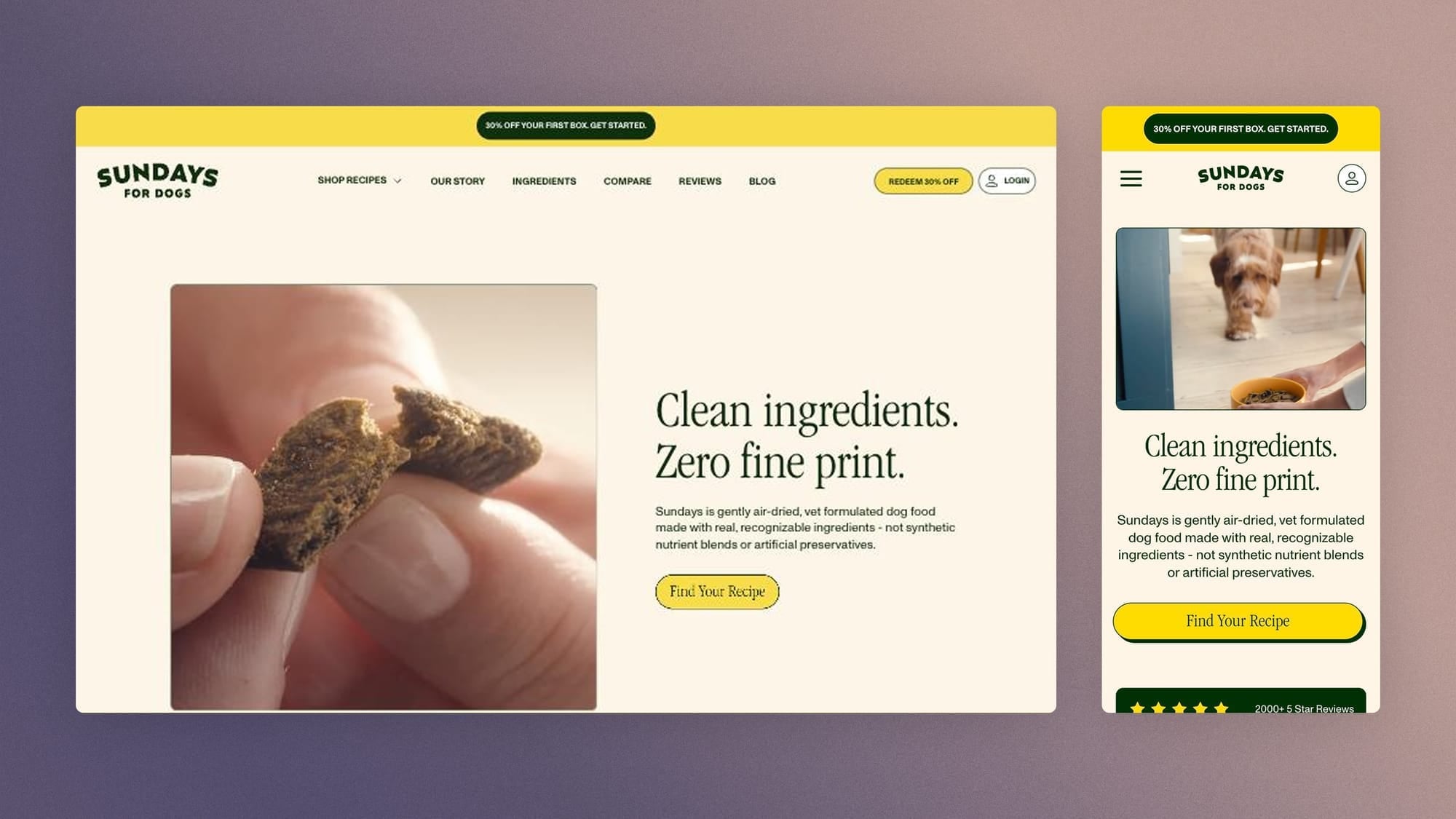
4. Sundays for Dogs: transparency, then an independent test
Sundays sells air-dried dog food. Its H1: "Clean ingredients. Zero fine print." The second sentence targets the category's misleading labels. The subtitle spells it out: "Sundays is gently air-dried, vet formulated dog food made with real, recognizable ingredients - not synthetic nutrient blends or artificial preservatives."
The proof is a score: "Dogs chose Sundays chicken recipe 39-0 over premium kibble." The page notes that an independent taste test showed it, and displays over 2,000 5-star reviews.
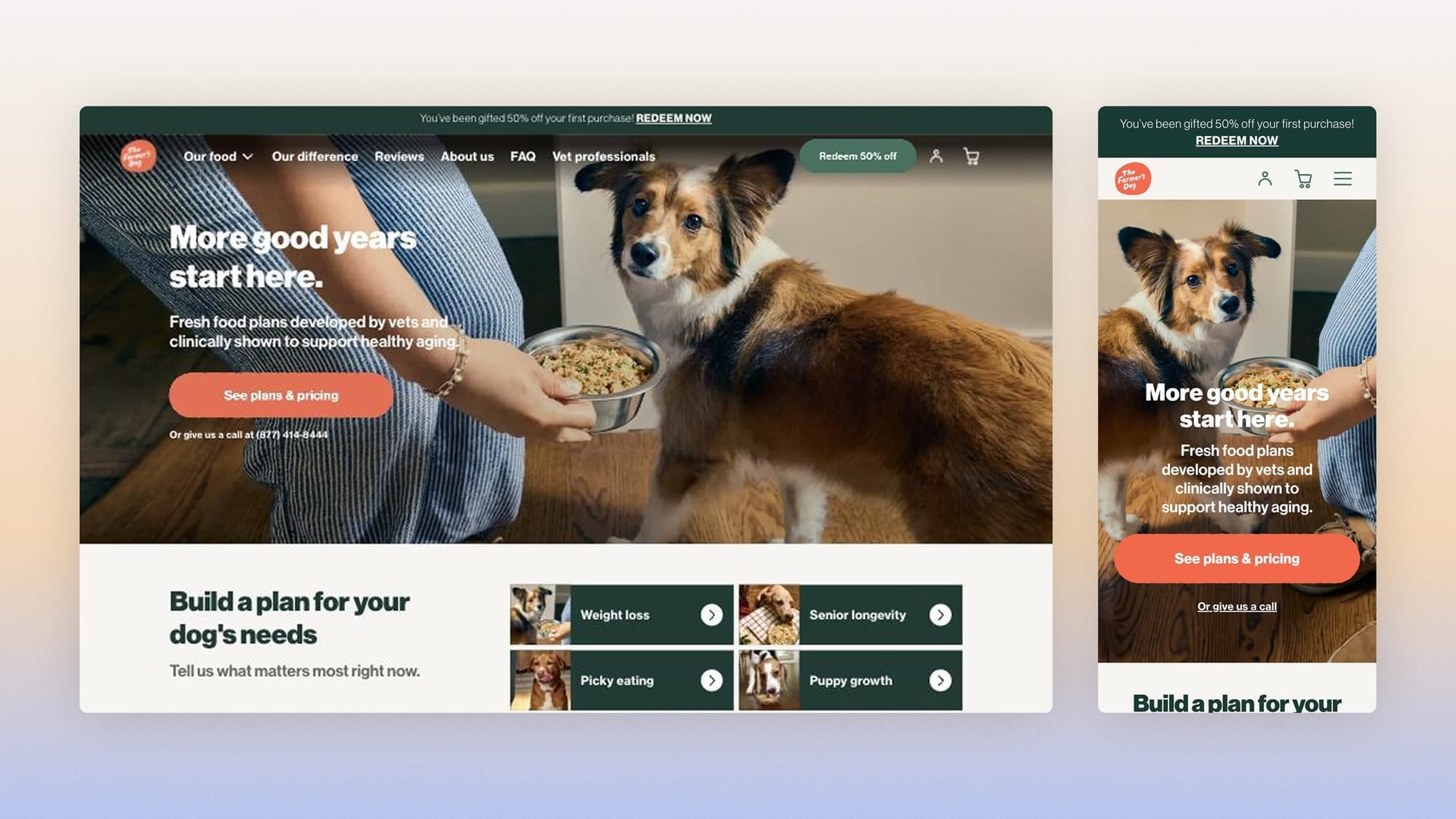
5. The Farmer's Dog: benefit measured in years
The Farmer's Dog sells fresh dog meals by subscription. Its H1: "More good years start here." The brand promises the ultimate benefit every owner wants: more time with their dog. The subtitle anchors it in science: "Fresh food plans developed by vets and clinically shown to support healthy aging."
The page then shows why the alternative can't keep that promise, exposing the traps of kibble: "'Made with beef' can mean only 3% beef." From the second screen, a selector offers a path by need: weight loss, senior longevity, picky eating, puppy growth.
How did we evaluate the 50 niche brands?
Panel: 50 direct-to-consumer niche brands that fall outside the benchmark's other ten segments (kitchen equipment, flowers, home care, pet food, and other niches), homepages captured in their English version, scored on 24 criteria.
For this panel, differentiation was judged against each brand's original category: a sentence that a traditional florist or a supermarket detergent could write was not counted as strong.
Frequently asked questions
How do you write a value proposition when you invented your category?
By comparing the result to a professional's that the customer admires, then guaranteeing it. Ooni writes "Bakery dough meets pizzeria crusts" and promises a refund within 60 days if the pizza fails.
How do you prove a promise when the buyer isn't the one consuming?
By having the user judge the product and publishing the score. Sundays for Dogs shows an independent test won 39 to 0 against premium kibble; The Farmer's Dog promises "more good years" and shows why kibble can't keep that promise.
What is the best niche brand value proposition in 2026?
Venus et Fleur, "Real flowers that last a year": the category's known flaw, the wilting flower, turned into a quantified duration and trademarked.
Get the full database of niche brand value propositions
This article breaks down 5. The database covers all 50 niche brands in the panel, each analyzed on 24 criteria: value proposition and placement, relevance, quantification, differentiation, USP, hero headline, main CTA (text, shape, color), dominant color, visuals, proof displayed, tone and key lesson.
Ten other segments follow the same grid: B2B, beauty, electronics, food, home, media, fashion, baby products, health and sports. 550 brands in total.
The database is for Le Club members only. Signing up is free.
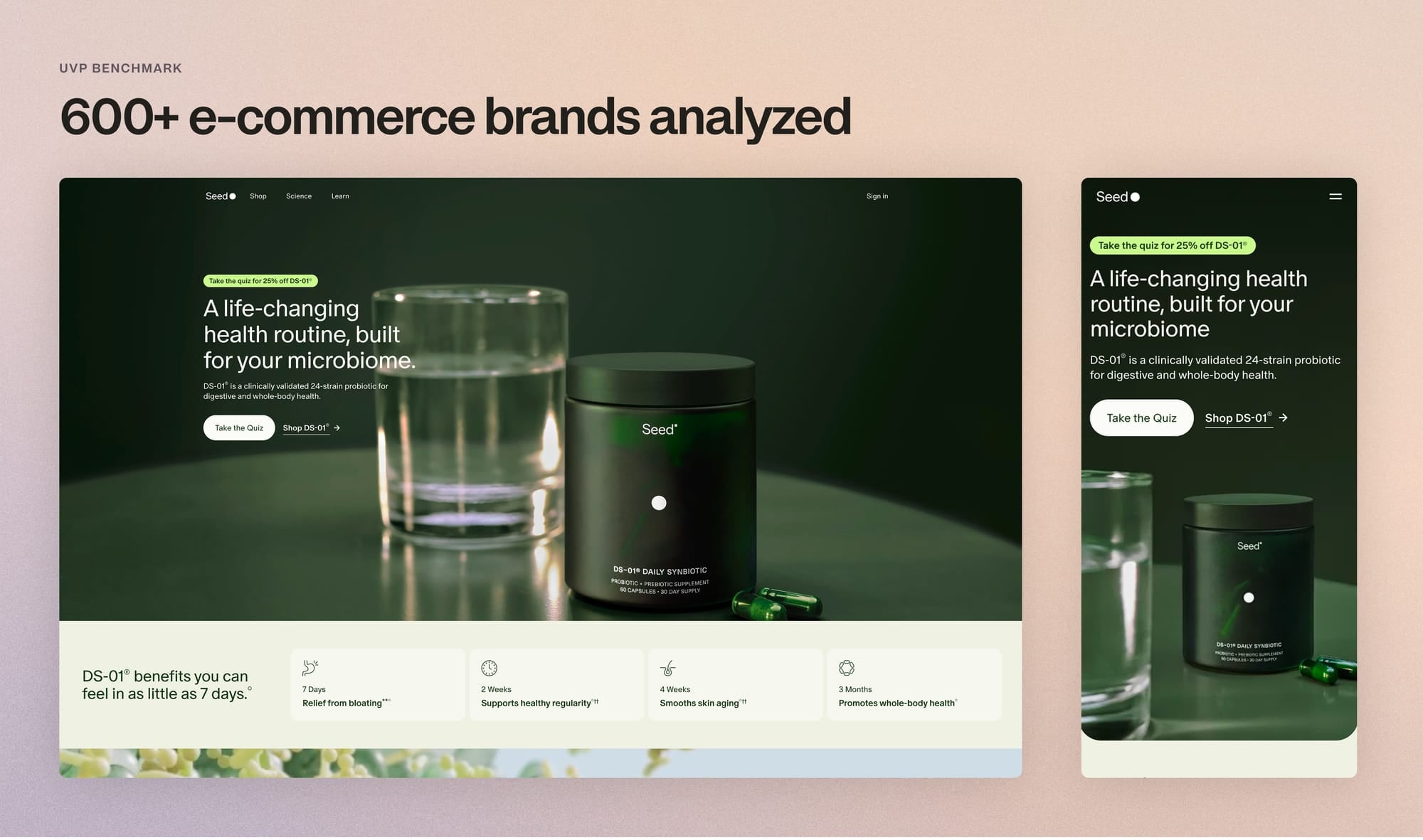
Unique Value Proposition — Full Comparative Analysis
600+ brands · 12 segments · 24 criteria · 14,400 segmented data points