
Baby brands have some of the most relevant promises in the benchmark: 36 of 50 state a benefit parents recognize: sleep, safety, child development.
Only six put it in the H1. 26 leave it in the title tag or meta description, where no parent will read it. Five brands place the promise where parents look for it: at the top, before the product.
What makes an effective baby brand value proposition?
An effective baby brand value proposition talks about the child or the daily routine, never the object: a baby who sleeps, a curious child, a diaper-change routine.
Parents buy for someone else and want proof that reassures them fast: a verifiable number, a certification, a count of excluded ingredients.
What does the benchmark of 50 baby brands reveal?
72% relevance and 56% differentiation: baby brands know their parents. The gap widens at placement, with 12% of promises in the H1 versus 52% only in the title tag, one of the lowest scores in the benchmark.
A number appears in 13 of 50 brands, and when it does, it often covers what was removed (ingredients, substances) rather than what was added.
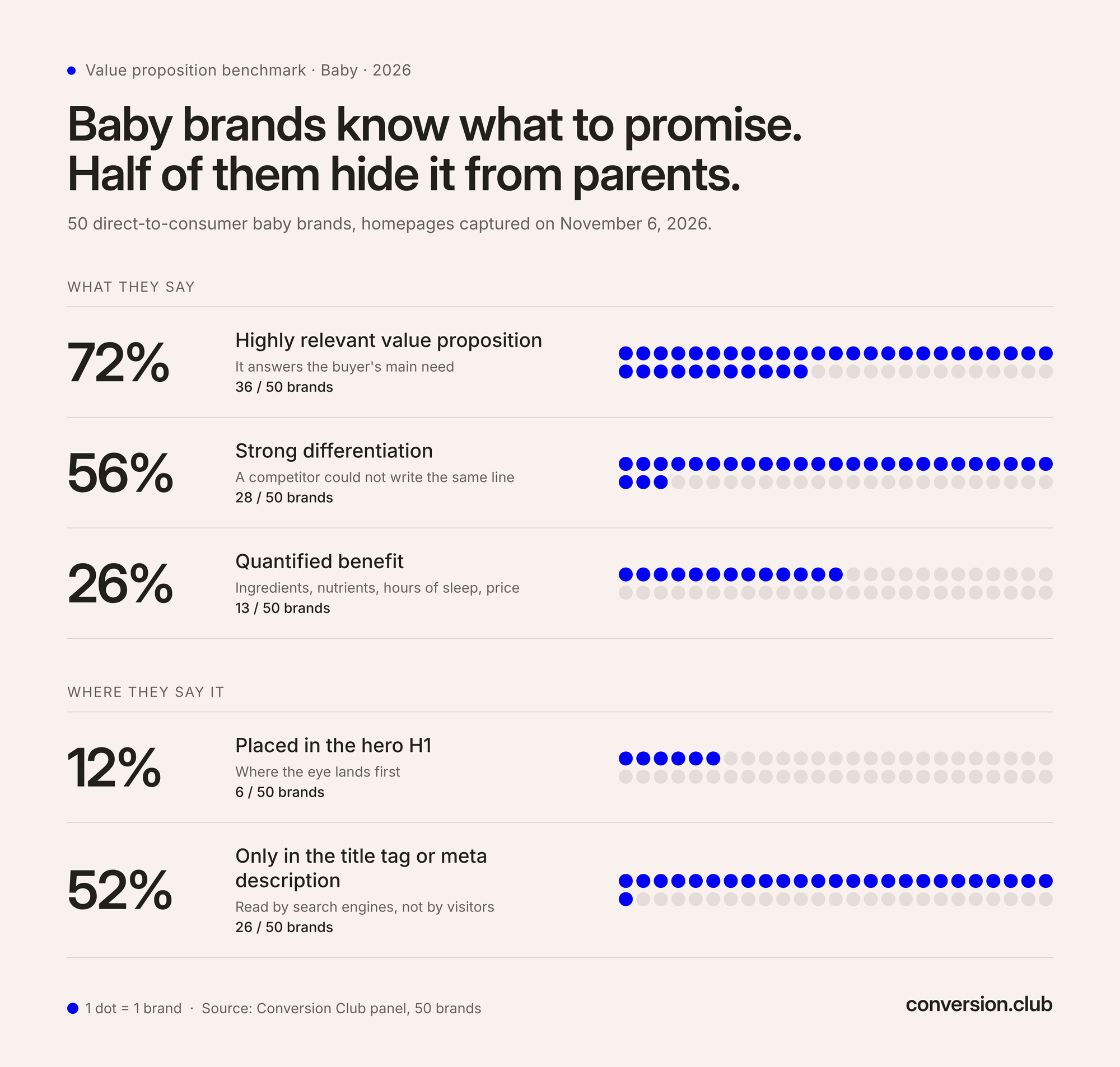
| Metric | Brands | Share of panel |
|---|---|---|
| Value proposition rated highly relevant | 36 / 50 | 72% |
| Strong differentiation (a competitor couldn't write the same sentence) | 28 / 50 | 56% |
| Value proposition placed in the hero H1 | 6 / 50 | 12% |
| Value proposition only in the title or meta description | 26 / 50 | 52% |
| Quantified benefit (ingredients, nutrients, hours of sleep, price) | 13 / 50 | 26% |
What are the best baby brand value propositions?
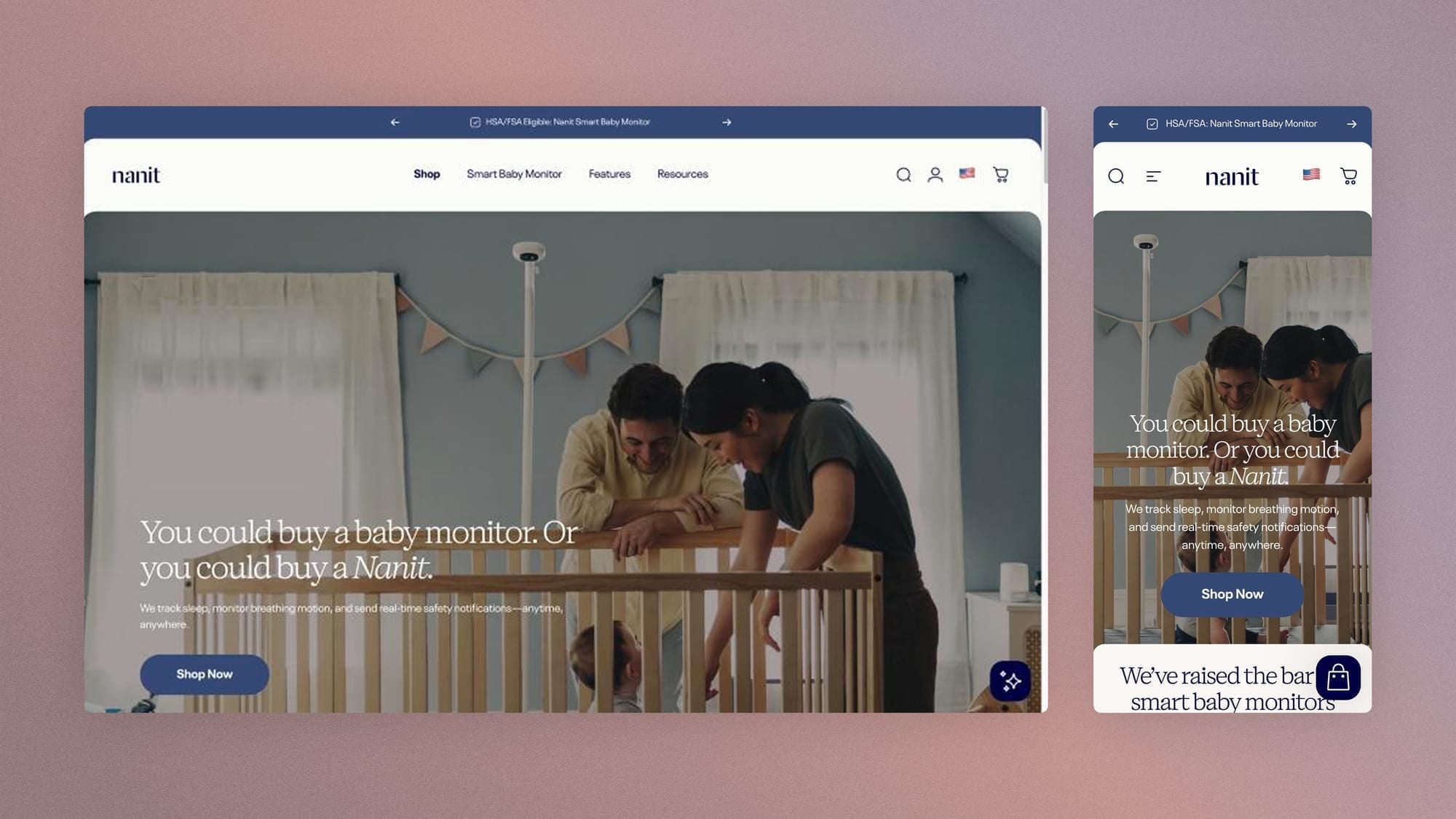
1. Nanit: The Category Versus the Brand
Nanit sells a connected baby monitor with a camera. Its H1: “You could buy a baby monitor. Or you could buy a Nanit.” The sentence sets the whole category against the brand and presents the name as a category of its own. The subtitle lists what a standard monitor doesn't do: “We track sleep, monitor breathing motion, and send real-time safety notifications—anytime, anywhere.”
The page's second headline drives the point home: “We've raised the bar for smart baby monitors.” Proof follows: “97% of Nanit parents recommend this monitor.” The price, from $289.99, is shown openly, in keeping with a product that positions itself above its category.
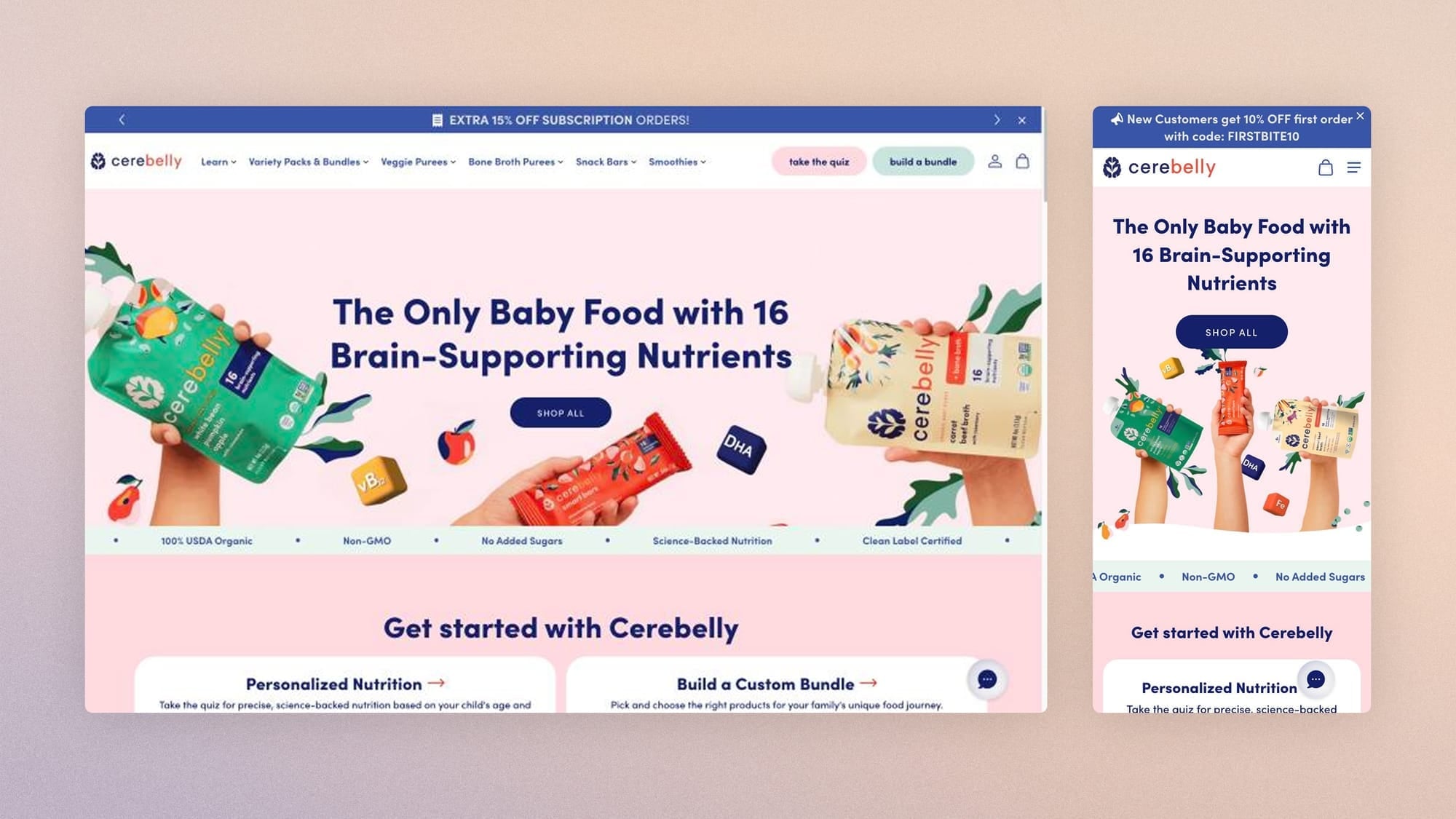
2. Cerebelly: Exclusivity With a Number
Cerebelly sells baby purées, smoothies and bars. Its H1: “The Only Baby Food with 16 Brain-Supporting Nutrients.” Two drivers fit in one sentence: “the only” claims exclusivity, “16” makes the promise verifiable. There's no subtitle: a banner scrolls under the hero with “100% USDA Organic,” “Non-GMO,” “No Added Sugars,” “Science-Backed Nutrition” and “Clean Label Certified.”
The proof comes from third parties. The page cites the Clean Label Project: Cerebelly “passed rigorous purity tests that look for chemicals of concern, heavy metals, pesticide residue and plasticizers.” Further down, a number underscores the stakes: “your baby's brain is nearly 80% fully grown by age 3.”
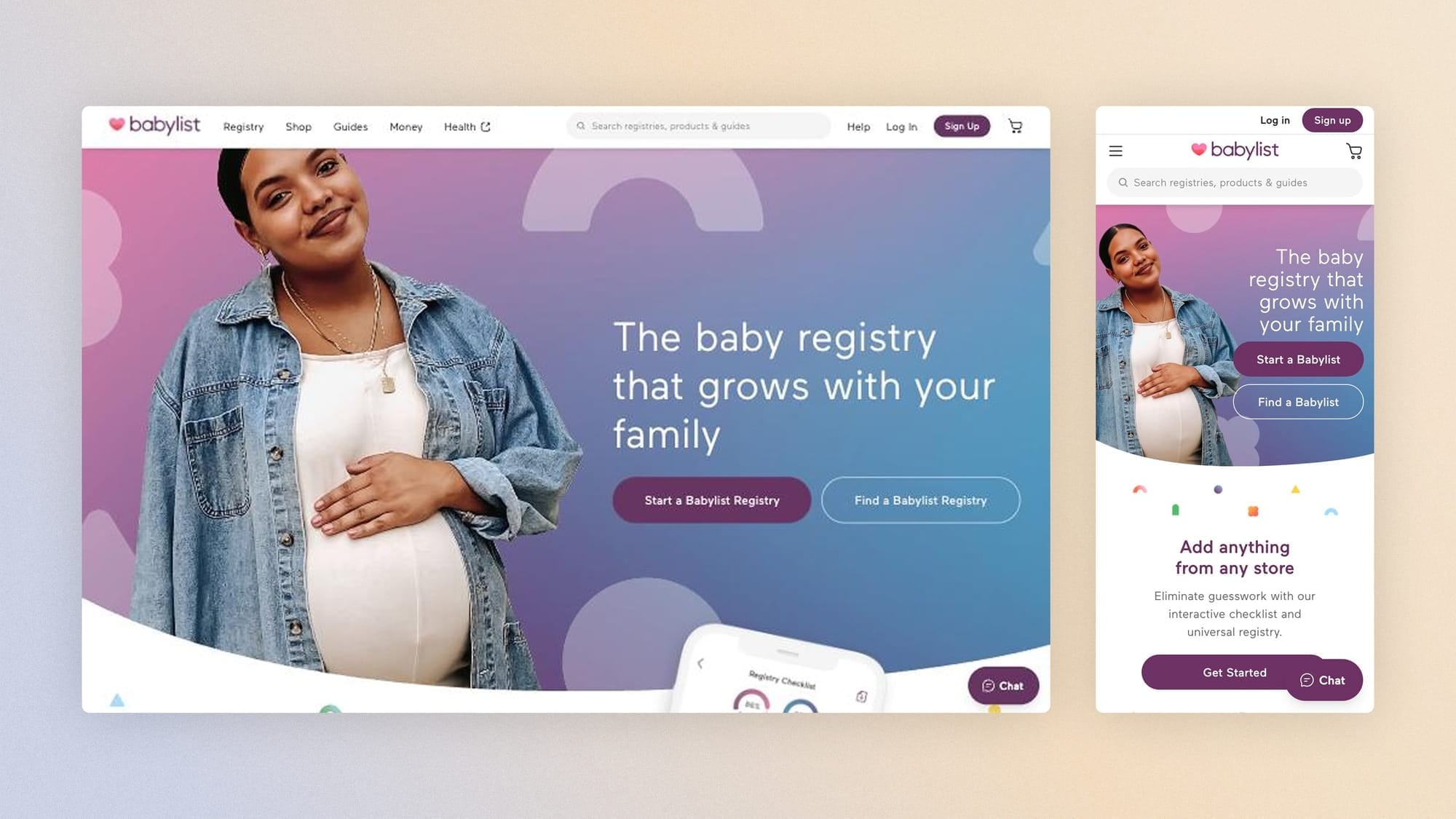
3. Babylist: The Product That Follows the Customer's Life
Babylist is a universal baby registry. Its H1: “The baby registry that grows with your family.” The promise answers the category's objection, a registry that only serves a few months, and presents the service as lasting. Two CTAs sit side by side: “Start a Babylist Registry” and “Find a Babylist Registry,” for parents and their loved ones alike.
The second screen spells out the benefit: “Add anything from any store.” The homepage FAQ quantifies the audience: more than nine million people buy through Babylist every year and more than 26 million parents read its guides. It also notes that the service is free and that a 15% discount applies to complete the registry.
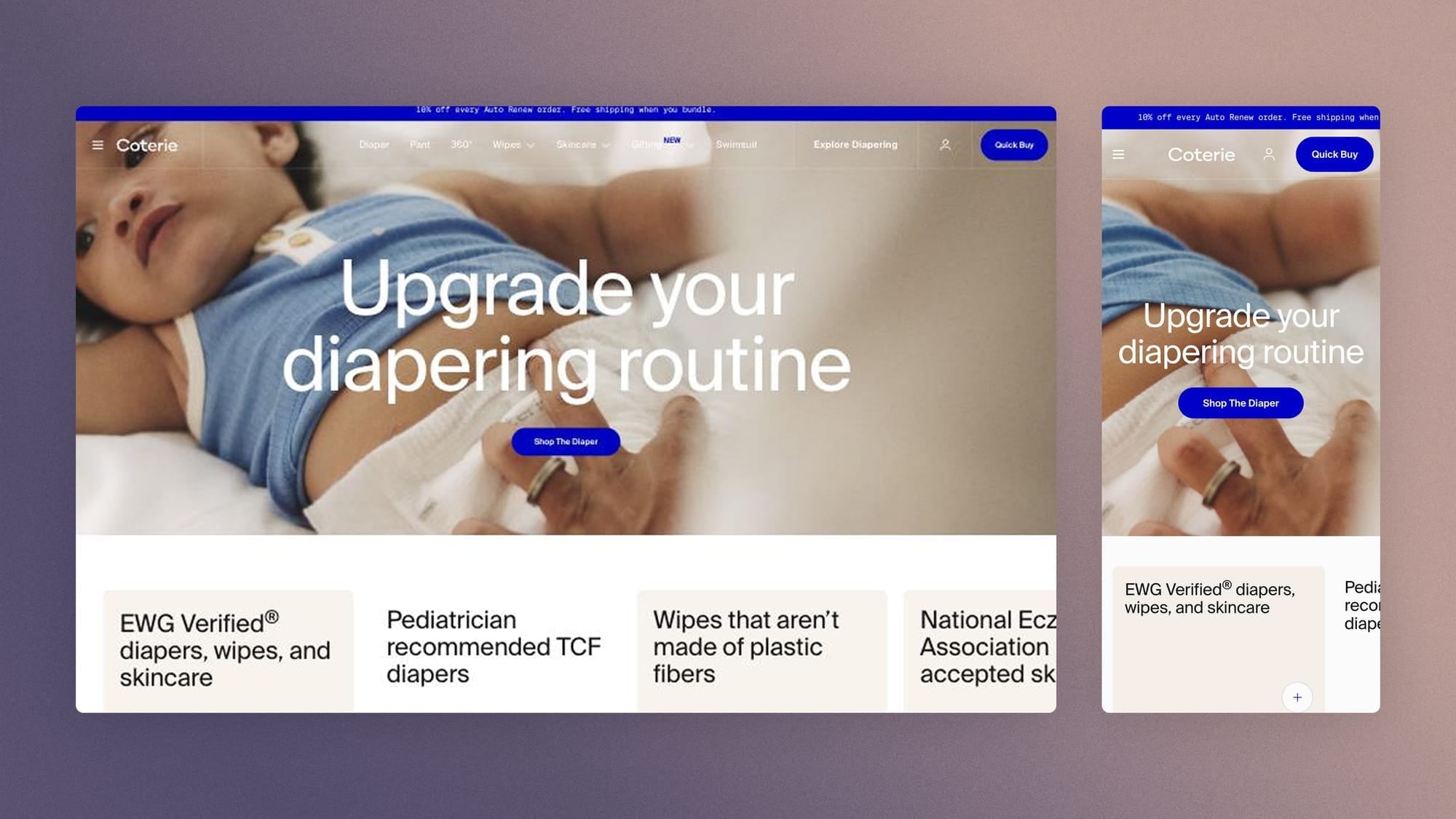
4. Coterie: Proof Through What Was Removed
Coterie sells diapers, wipes and subscription care products. Its H1: “Upgrade your diapering routine.” The promise targets the daily routine rather than the product and sets itself above supermarket options from the start. Only the “Shop The Diaper” CTA accompanies the headline.
Everything rests on the proof elements that follow. The first states: “Made without 3,900 ingredients of concern,” and comes with EWG Verified certification. Next come “pediatrician recommended” diapers, wipes “that aren't made of plastic fibers” and “Over 25,000 5-star reviews.”
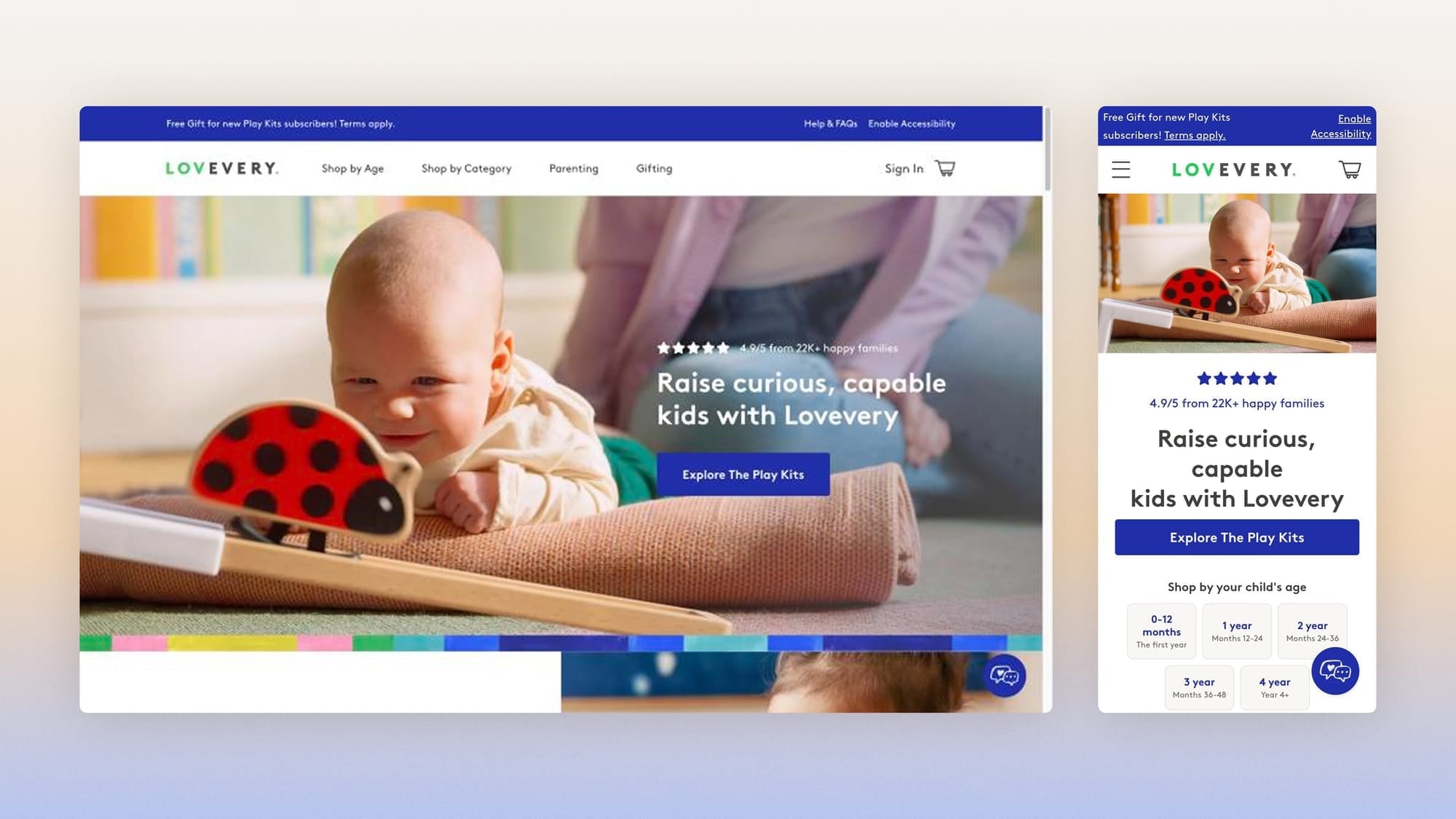
5. Lovevery: The Promised Outcome for the Child
Lovevery sells play kits matched to the child's age. Its H1: “Raise curious, capable kids with Lovevery.” The brand doesn't emphasize the toys, but the child the parent wants to see grow. Just above the headline is the line: “4.9/5 from 22K+ happy families.”
The rest of the page explains how it works: “playthings and books delivered every 2-3 months,” along with a play guide and development tips, week after week. A number justifies the investment: “Ninety percent of your child's physical brain growth occurs by age 5.”
How did we evaluate the 50 baby brands?
Panel: 50 direct-to-consumer baby brands (baby monitors, baby food, diapers and care, developmental toys, baby registries), with homepages captured in English and scored on 24 criteria.
For baby brands, we separated promises made to the child (sleep, development) from those made to the parent (time, peace of mind) and scored which come first.
A third-party certification shown in the hero was counted as proof, not as a value proposition.
Frequently asked questions
How do you reassure a parent from the homepage?
By quantifying what was removed or verified rather than piling on adjectives. Coterie writes “made without 3,900 ingredients of concern”; Cerebelly cites Clean Label Project testing. Parents look for a reason not to worry, not a reason to get excited.
Should the headline talk about the baby or the parent?
The child first, the parent second. Lovevery promises “curious, capable kids” and puts the customer rating right above it; Nanit speaks to the parent keeping watch and lists what an ordinary baby monitor doesn't do.
What is the best baby brand value proposition of 2026?
Cerebelly, “The Only Baby Food with 16 Brain-Supporting Nutrients”: a superlative made verifiable by a number parents can read on the packaging.
Get the full database of baby brand value propositions
This article breaks down 5. The database covers all 50 brands in the baby panel, each analyzed on 24 criteria: value proposition and placement, relevance, quantification, differentiation, USP, hero headline, main CTA (text, shape, color), dominant color, visuals, proof shown, tone and key takeaway.
Ten other segments follow the same grid: B2B, beauty, electronics, food, home, media, fashion, health, specialty and sports. 550 brands in total.
The database is for Le Club members only. Signing up is free.
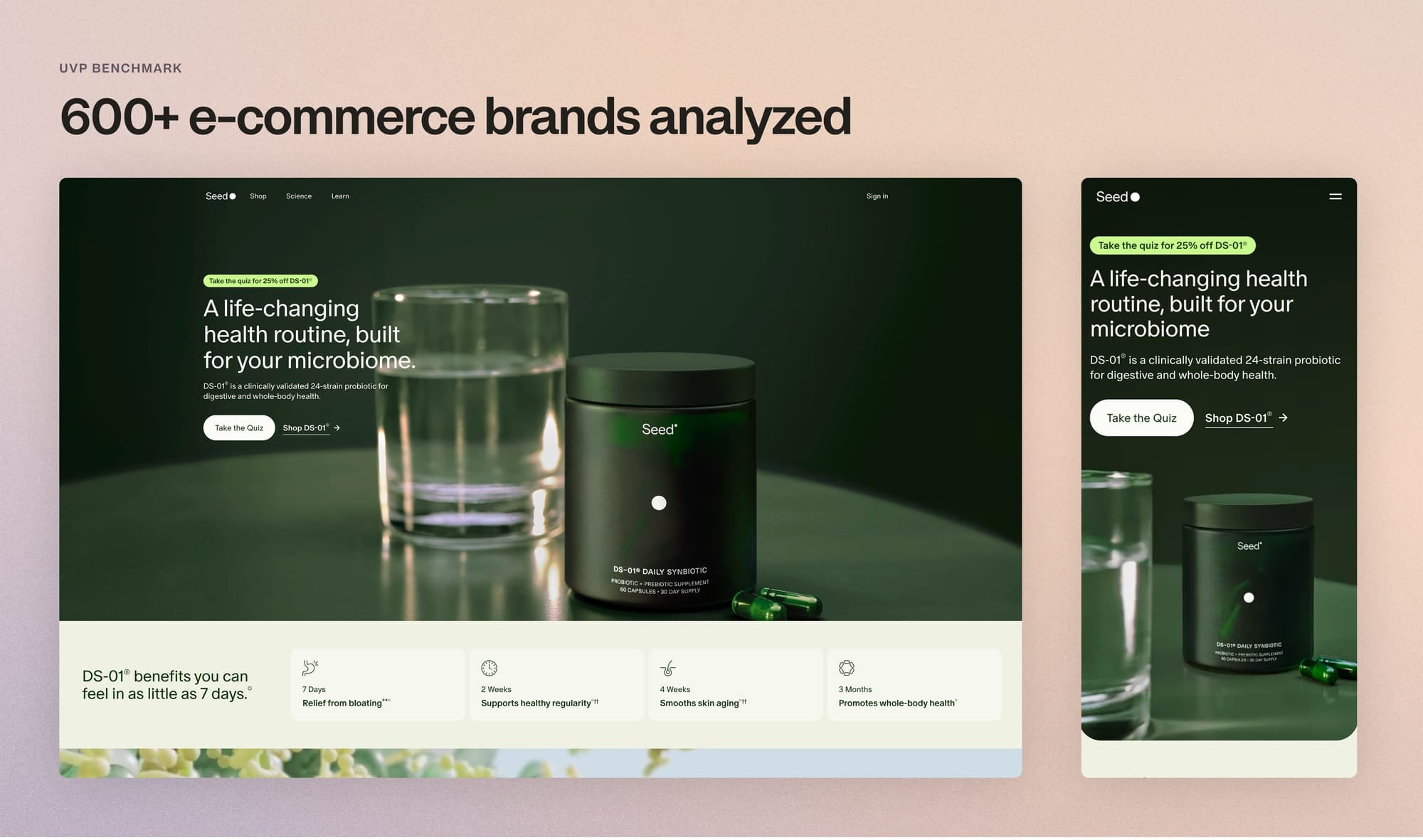
Unique Value Proposition: Full Comparative Analysis
600+ brands · 12 segments · 24 criteria · 14,400 segmented data points