
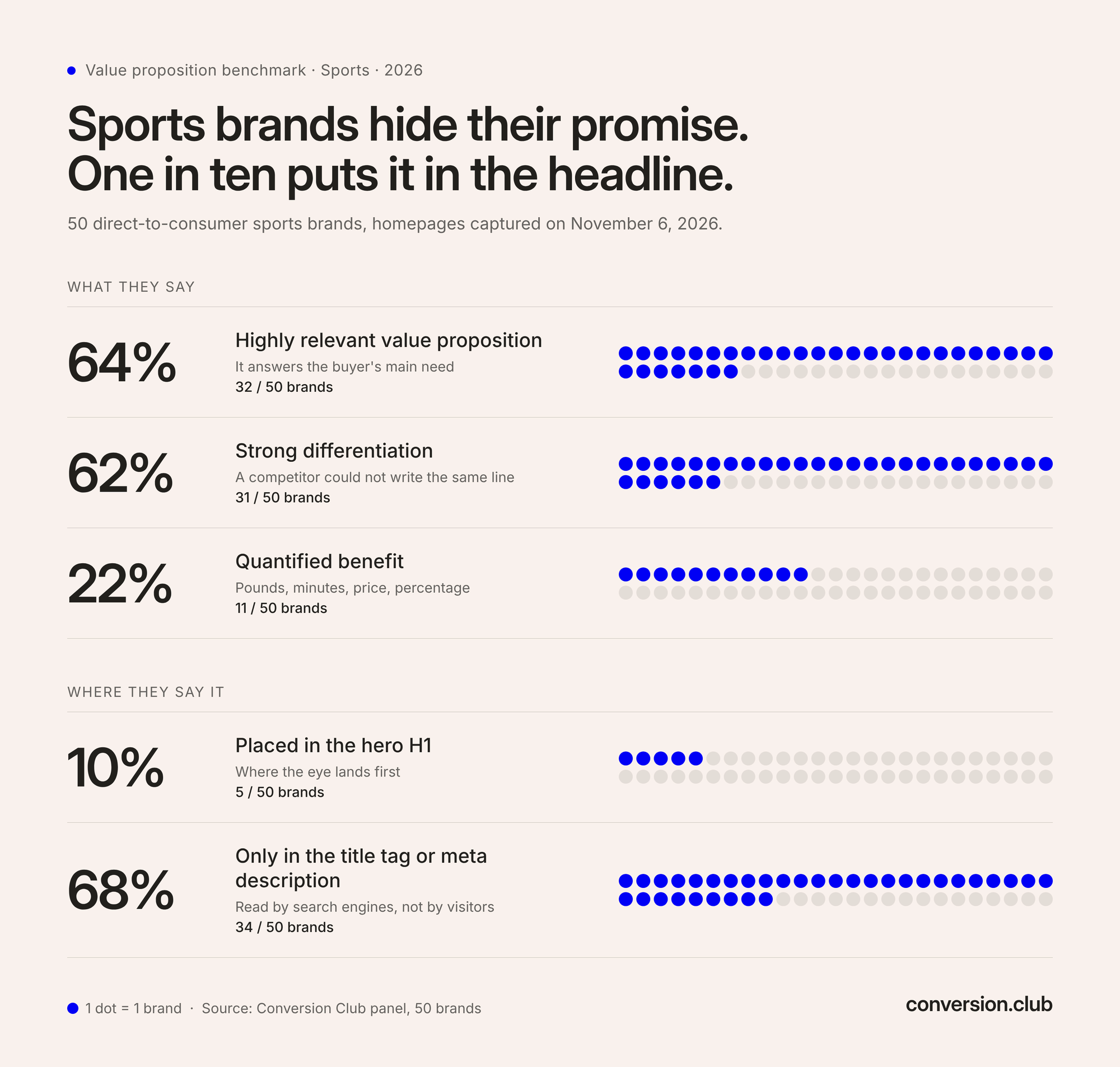
Sports is the segment that hides its value proposition the most: 34 of 50 brands write it only in the title tag or meta description, and 5 put it in the main headline. The paradox is that these promises are good.
31 of 50 brands have a sentence a competitor couldn't copy, the third-highest differentiation score in the benchmark. Only five brands show it, sometimes behind a sales carousel.
What makes a sports value proposition effective?
An effective sports value proposition names what training changes outside the workout (time saved, strength that helps in daily life, gear that lasts fifteen years) and proves it with a place, a workshop or a study.
Athletes already know the vocabulary of effort; they want a reason to pick this brand over the one next door.
What does the benchmark of 50 sports brands reveal?
32 of 50 brands state a relevant benefit and 31 a differentiating sentence: the sector knows how to stand out. It just doesn't know where to say it.
68% of promises live in the page code, 10% in the hero H1, which is often taken up by a promotional carousel. That figure is still a minority, 11 brands out of 50, even though gear is measured in pounds, minutes and years of warranty.
| Metric | Brands | Share of panel |
|---|---|---|
| Value proposition rated highly relevant | 32 / 50 | 64% |
| Strong differentiation (a competitor couldn't write the same sentence) | 31 / 50 | 62% |
| Value proposition placed in the hero H1 | 5 / 50 | 10% |
| Value proposition only in the title or meta description | 34 / 50 | 68% |
| Quantified benefit (pounds, minutes, price, percentage) | 11 / 50 | 22% |
What are the best sports value propositions?
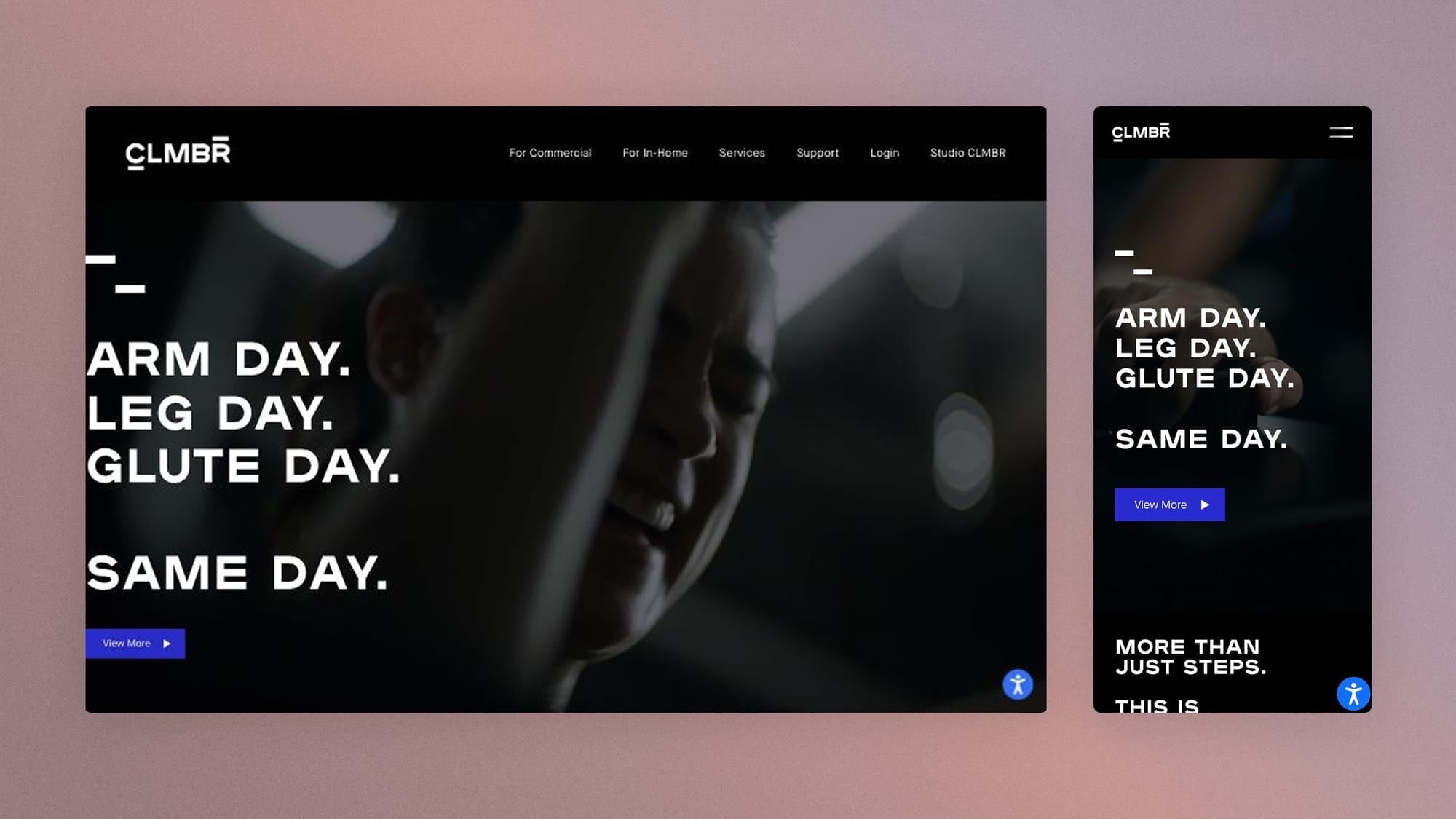
1. CLMBR: a whole workout in one headline
CLMBR sells a connected vertical climbing machine. Its H1 is four short sentences: "Arm day. Leg day. Glute day. Same day." The first three echo the split every athlete knows; the last one breaks it and reveals the benefit: saving time.
The proof is understated but well sourced. A Washington State University study (1995), cited in a footnote, finds that vertical climbing raises heart rate and oxygen consumption more than treadmill running or rowing. Further down, the site separates professional buyers from individual ones.
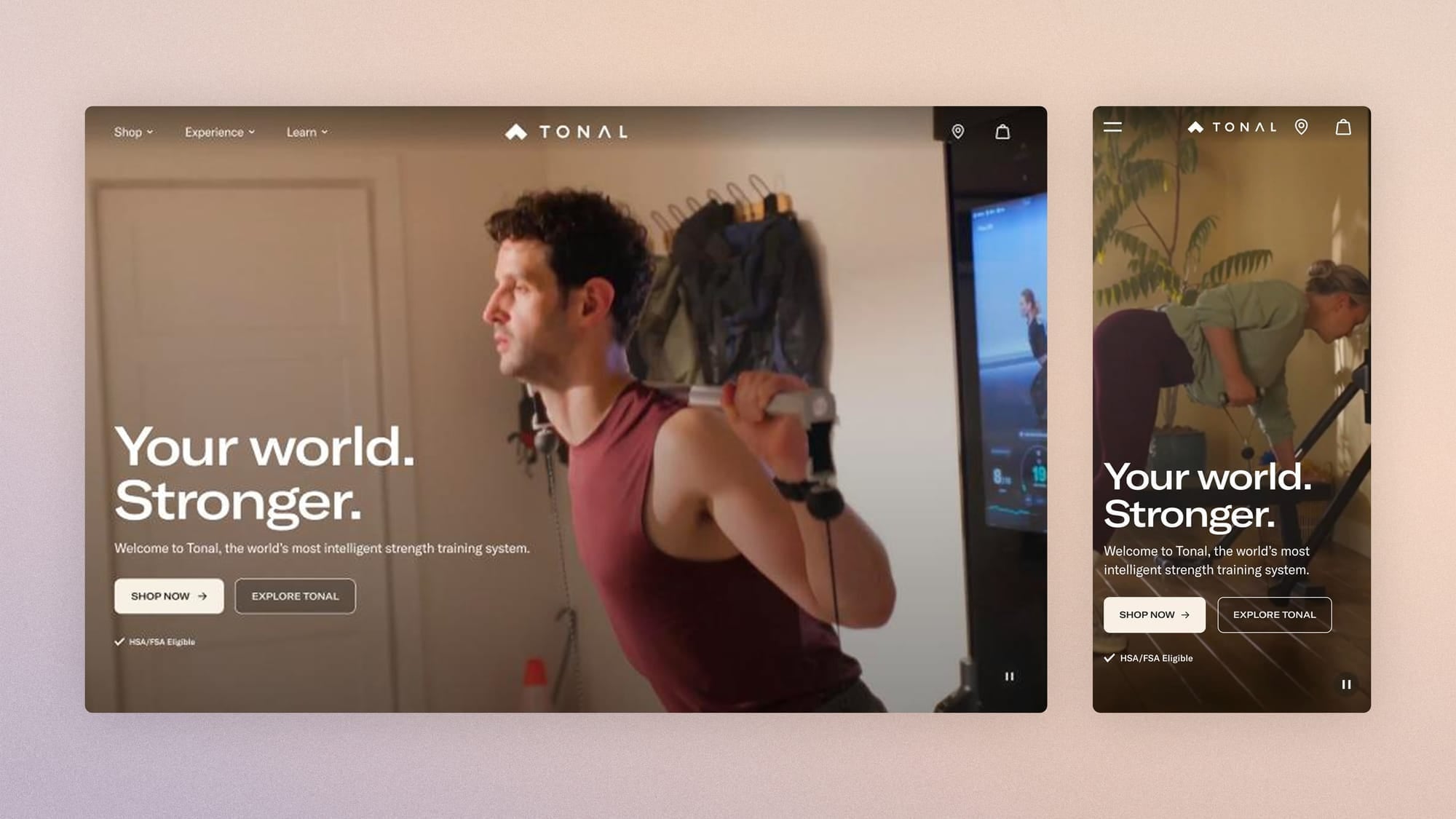
2. Tonal: moving the benefit from muscle to life
Tonal sells a wall-mounted, software-driven weight gym. Its H1, "Your world. Stronger.", mentions neither muscles nor machines. The subtitle introduces the product: "the world's most intelligent strength training system."
On the second screen, the brand owns this shift in perspective: "Muscle builds bodies. Strength builds lives." The proof is there: up to 250 pounds (about 113 kg) of digital resistance, a 4.5 rating on Trustpilot from more than 840 reviews, and a rental plan at $279 a month with the first month free, which lowers the price barrier.
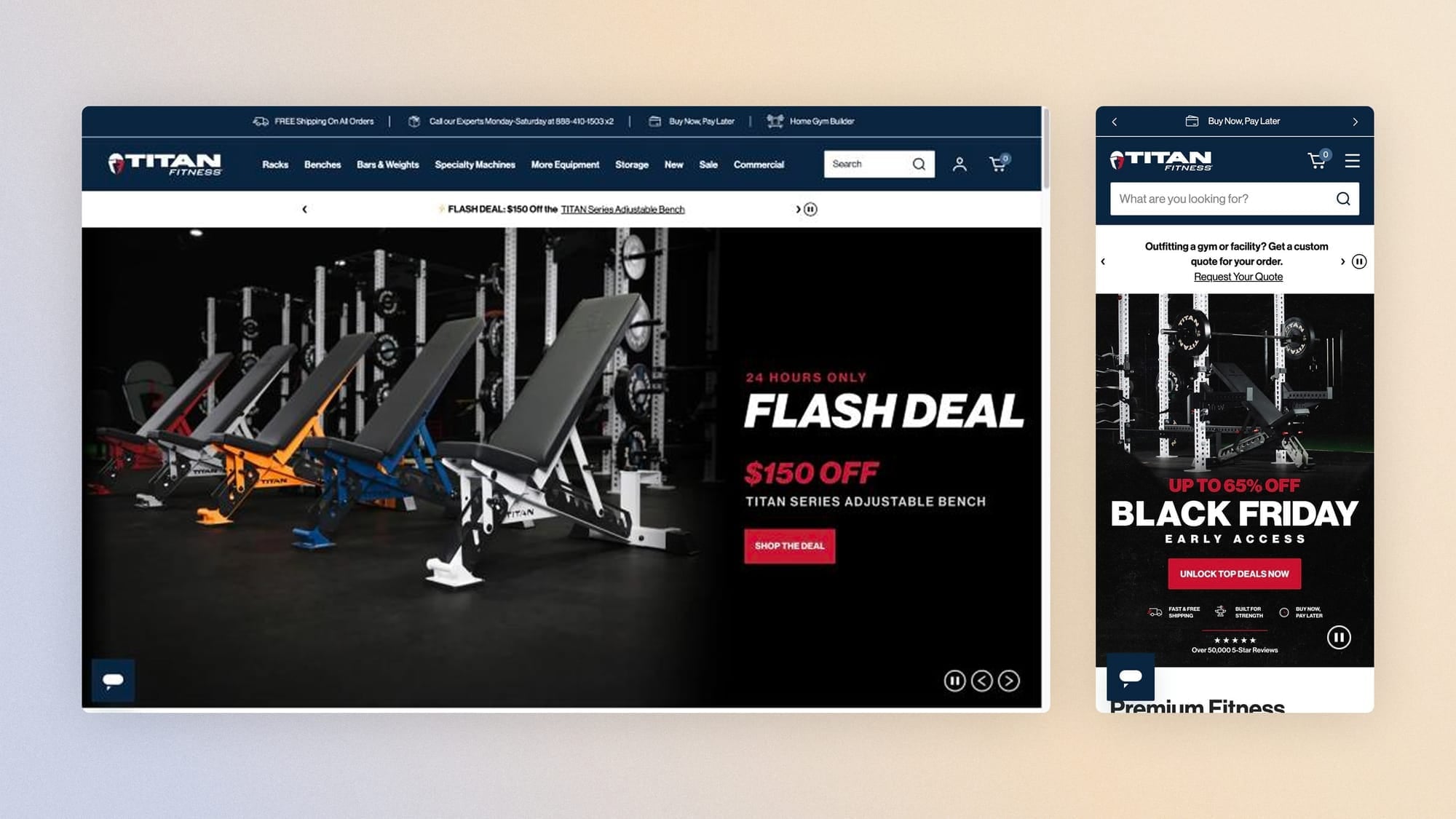
3. Titan Fitness: high-end without the high-end price
Titan Fitness sells strength equipment for home gyms. Its H1 sums up the whole brand: "Premium Fitness Equipment Without the Premium Price." The category leader isn't named, but the sentence is built against it.
The problem is placement: on desktop and mobile alike, this H1 appears on the second screen, under a Black Friday promotions carousel. The trust proof, by contrast, is visible at the very top of the page: free shipping, more than 50,000 5-star reviews and a phone number to reach experts Monday through Saturday.
4. Stio: origin as proof
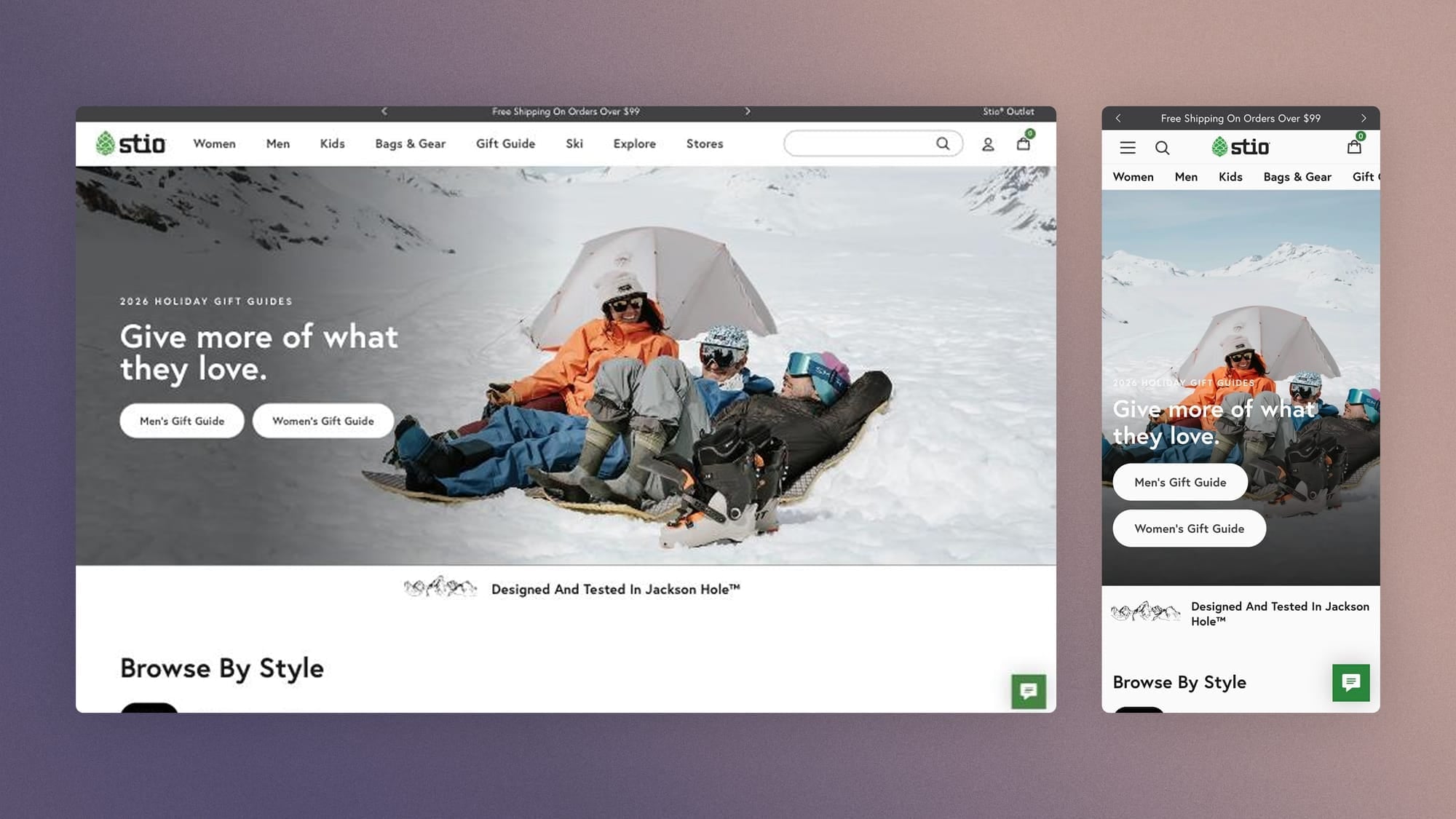
Stio sells outdoor apparel. Its value proposition isn't in the hero, which is taken up by gift guides, but in the strip right after it: "Designed And Tested In Jackson Hole." The line carries the ™ symbol and is visible on the first screen.
Jackson Hole, Wyoming, serves as both design office and proving ground: the name alone conveys the climate, the altitude and the use. Further down, a jacket carries the proof of durability: "Hundreds of 5-star reviews. 15 years. One jacket."
5. REP Fitness: showing the workshop
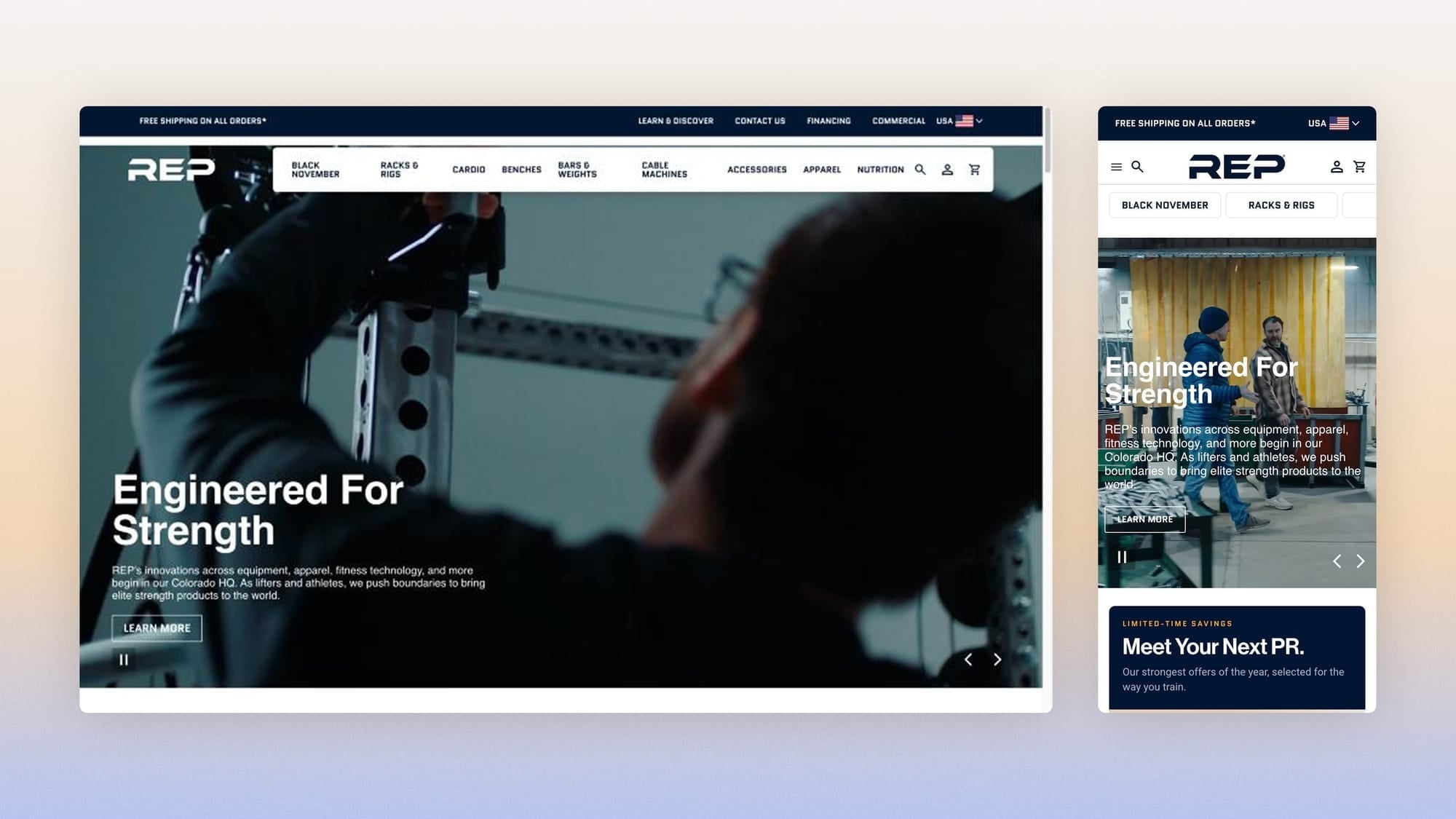
REP Fitness sells strength equipment. Its value proposition, "Engineered For Strength," sits on the fourth slide of the hero carousel, behind the sales. The subtitle gives its origin: "REP's innovations across equipment, apparel, fitness technology, and more begin in our Colorado HQ. As lifters and athletes, we push boundaries to bring elite strength products to the world."
The background video shows the workshop rather than the gym. Further down, the rack configurators (the PR-5000 Rack Builder has 1,197 reviews) let buyers assemble their equipment piece by piece: the promised engineering becomes a tool.
How did we evaluate the 50 sports brands?
Panel: 50 direct-to-consumer sports brands (strength equipment, connected devices, outdoor apparel, accessories), homepages captured in English and scored on 24 criteria.
The sports hero is often a carousel: we captured every slide and scored the value proposition at the position where it appears, first or fourth.
A promise embedded in an image with no alt text was counted as invisible to search engines.
Frequently asked questions
Why do sports brands hide their value proposition?
Because the hero is reserved for a promotion or the product of the moment. Titan Fitness keeps "Premium Fitness Equipment Without the Premium Price" on the second screen, under the sales; REP Fitness puts "Engineered For Strength" on the fourth slide. The promise exists, but visitors never come across it.
How do you differentiate a sports brand whose products look like competitors' products?
Through origin and testing ground. Stio writes "Designed And Tested In Jackson Hole"; REP Fitness shows its Colorado workshop in a background video. A specific place conveys climate, use and standards without an adjective.
What is the best sports value proposition of 2026?
CLMBR, "Arm day. Leg day. Glute day. Same day.": the routine every athlete knows, broken on the last word to reveal the benefit, time saved.
Get the full sports value proposition database
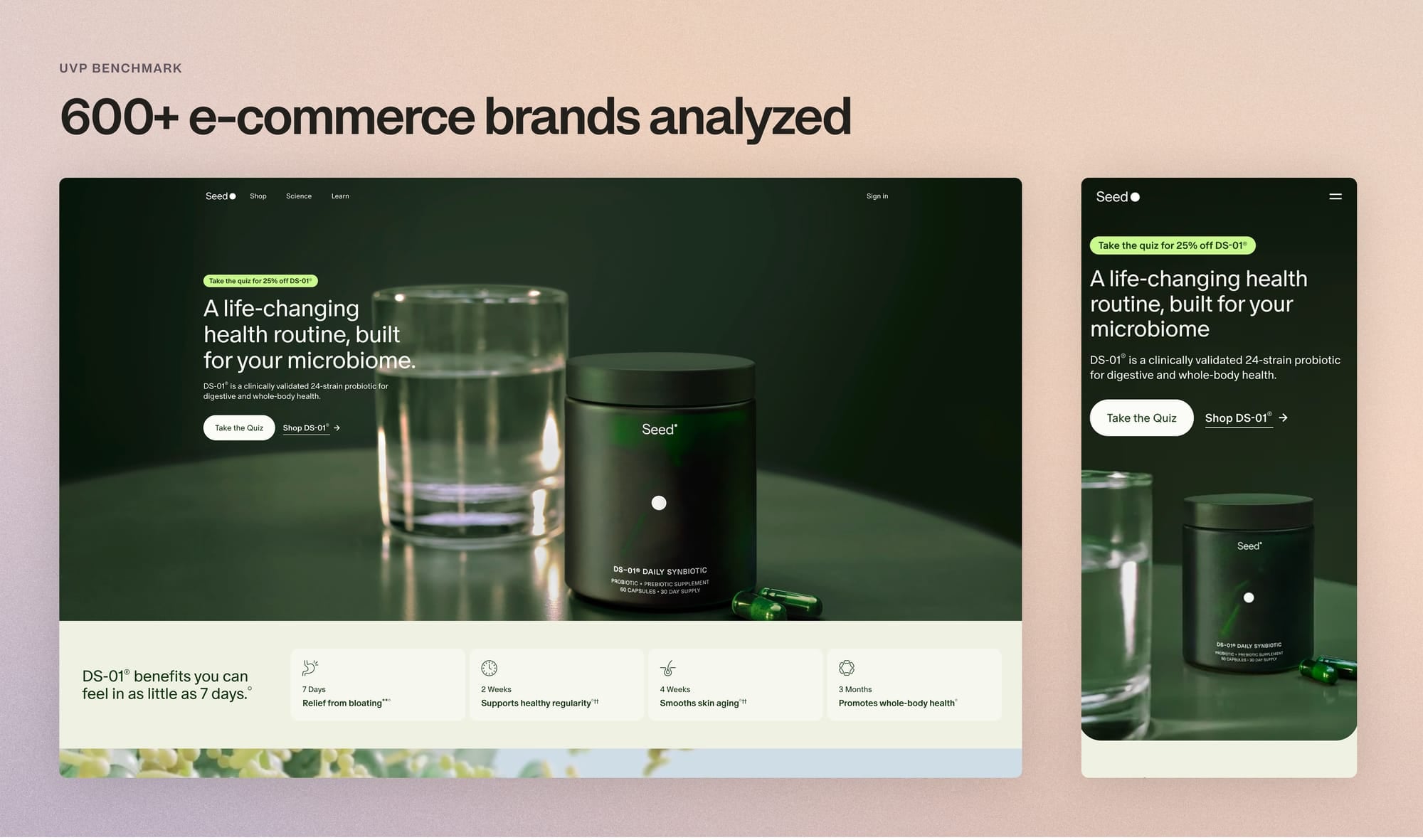
This article breaks down 5. The database covers all 50 brands in the sports panel, each analyzed on 24 criteria: value proposition and placement, relevance, quantification, differentiation, USP, hero headline, main CTA (text, shape, color), dominant color, visuals, proof displayed, tone and key lesson.
Ten other segments follow the same grid: B2B, beauty, electronics, food, home, media, fashion, baby products, health and specialty. 550 brands in total.
The database is for Club members only. Signing up is free.
Unique value proposition — Full comparative analysis
600+ brands · 12 segments · 24 criteria · 14,400 segmented data points