
Two in three beauty brands have a relevant value proposition, and only one in six shows it in the hero. Among 50 direct-to-consumer brands, 24 keep their promise to the title tag or meta description, and only 7 quantify it. The industry knows what it sells; it leaves visitors to guess. Five brands leave nothing to guess.
What makes a beauty value proposition effective?
An effective beauty value proposition names a visible result (stronger hair, lashes applied in seconds, skin monitored by a dermatologist) and says what it takes to get there: a quiz, a consultation, a formula made to order.
The condition reassures more than the adjective does, because it explains where the result comes from.
What does the benchmark of 50 beauty brands reveal?
33 of 50 brands state a relevant benefit; only 18 write a sentence a competitor couldn't sign.
The vocabulary repeats itself ("clean," "effective," "for all skin types"), and placement makes the problem worse: 48% of promises live in the title tag, 16% in the hero. Quantification is rare, at 14%, even though the industry has measurable results to use (breakage percentage, application time, price per shave).
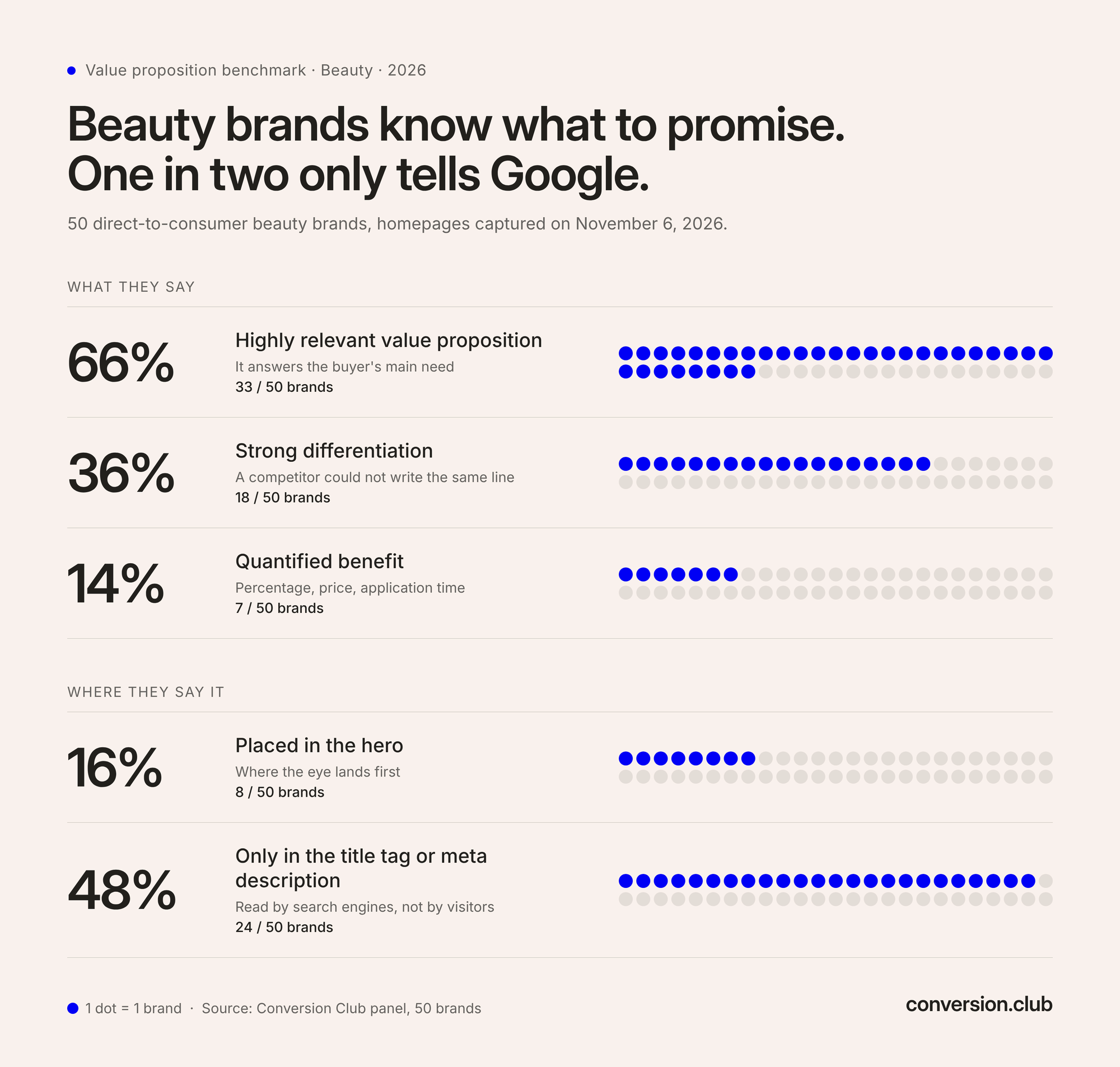
| Metric | Brands | Share of panel |
|---|---|---|
| Value proposition rated highly relevant | 33 / 50 | 66% |
| Strong differentiation (a competitor couldn't write the same sentence) | 18 / 50 | 36% |
| Value proposition placed in the hero | 8 / 50 | 16% |
| Value proposition only in title or meta description | 24 / 50 | 48% |
| Quantified benefit (percentage, price, application time) | 7 / 50 | 14% |
What are the best beauty value propositions?
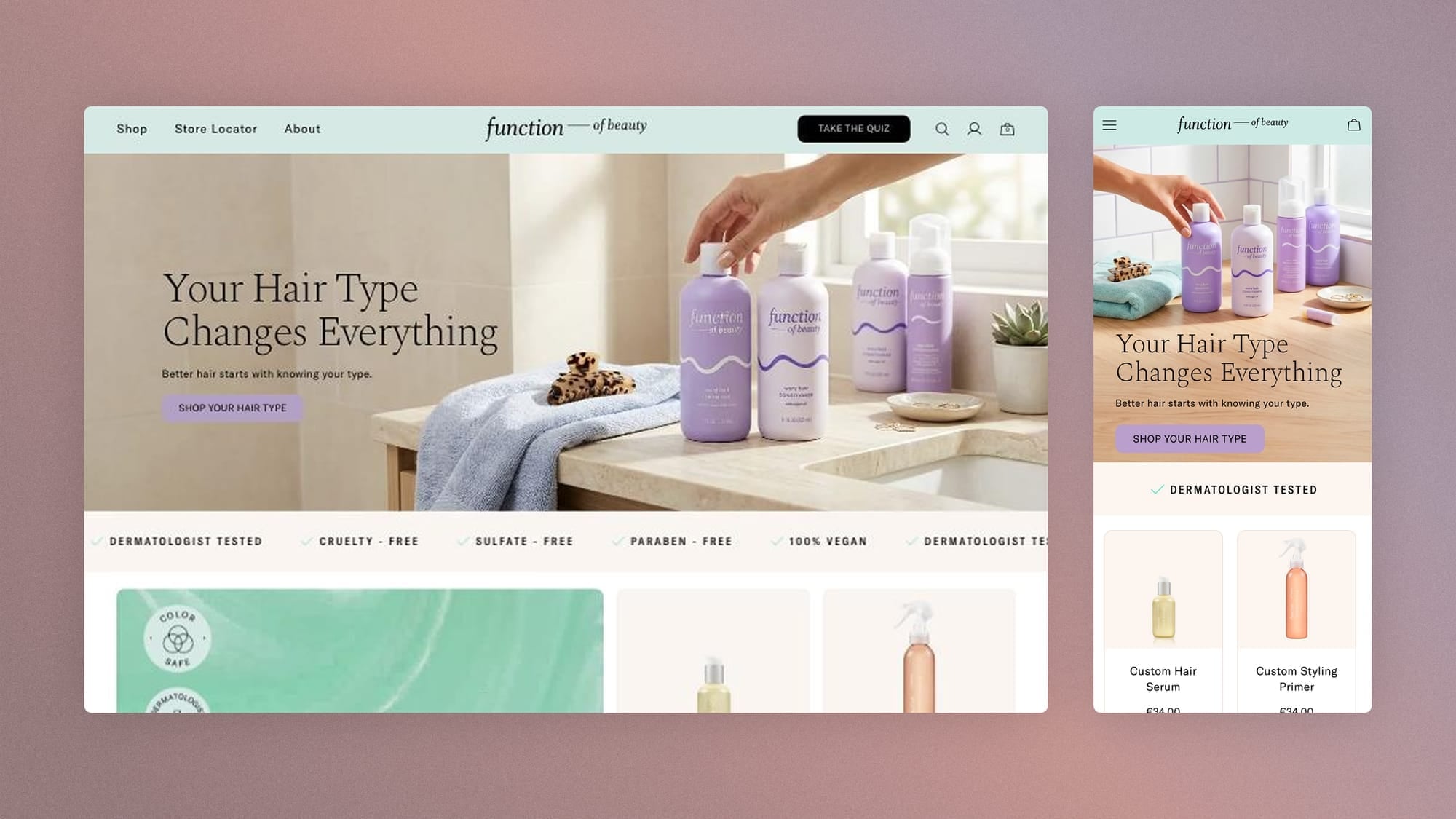
1. Function of Beauty: the customer's variable as the promise
Function of Beauty sells hair care formulated to order. Its hero headline: "Your Hair Type Changes Everything." The promise isn't about the product but about the customer: the nature of their hair decides the formula. The subheading drives it home: "Better hair starts with knowing your type."
The proof comes with numbers further down: "2x stronger hair, 90% less breakage," with an asterisk spelling out the comparison baseline, the full system versus untreated hair. A block explains the two-step journey: a two-minute quiz on hair history, goals and styling habits, then a formula made to order.
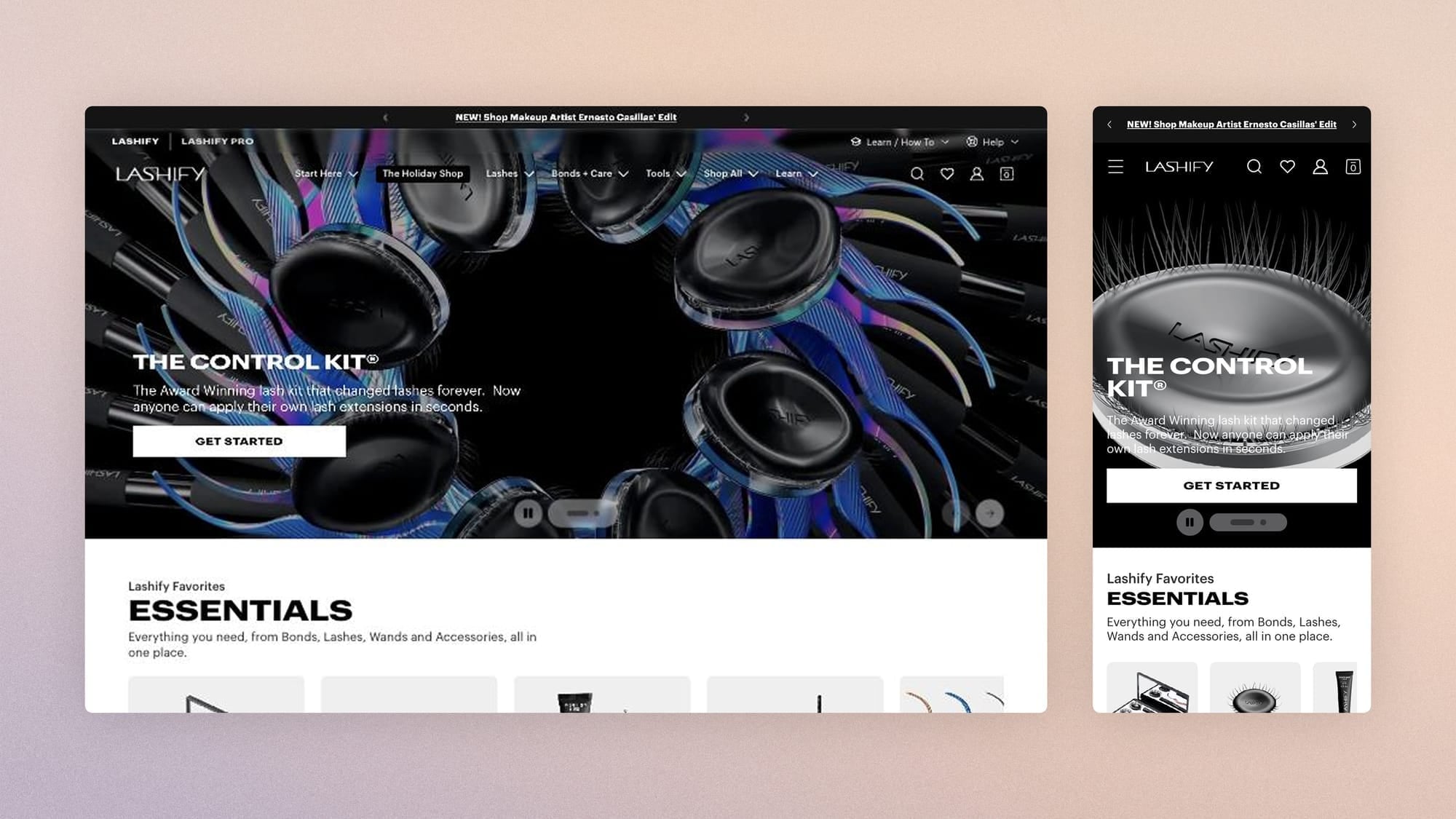
2. Lashify: the salon technique, in seconds
Lashify sells a kit of lash extensions you apply yourself. The H1 names the product, "The Control Kit®," and the subheading carries the whole promise: "The Award Winning lash kit that changed lashes forever. Now anyone can apply their own lash extensions in seconds." The brand takes a technique reserved for professionals and makes it accessible, with a time attached.
The page title says the same thing in one line: "DIY Lash Extension System by Lashify® – The Inventors." Further down, the endorsement comes from a professional makeup artist with two Emmy Awards, presented as a new ambassador, and a quiz helps visitors choose their next lash style.
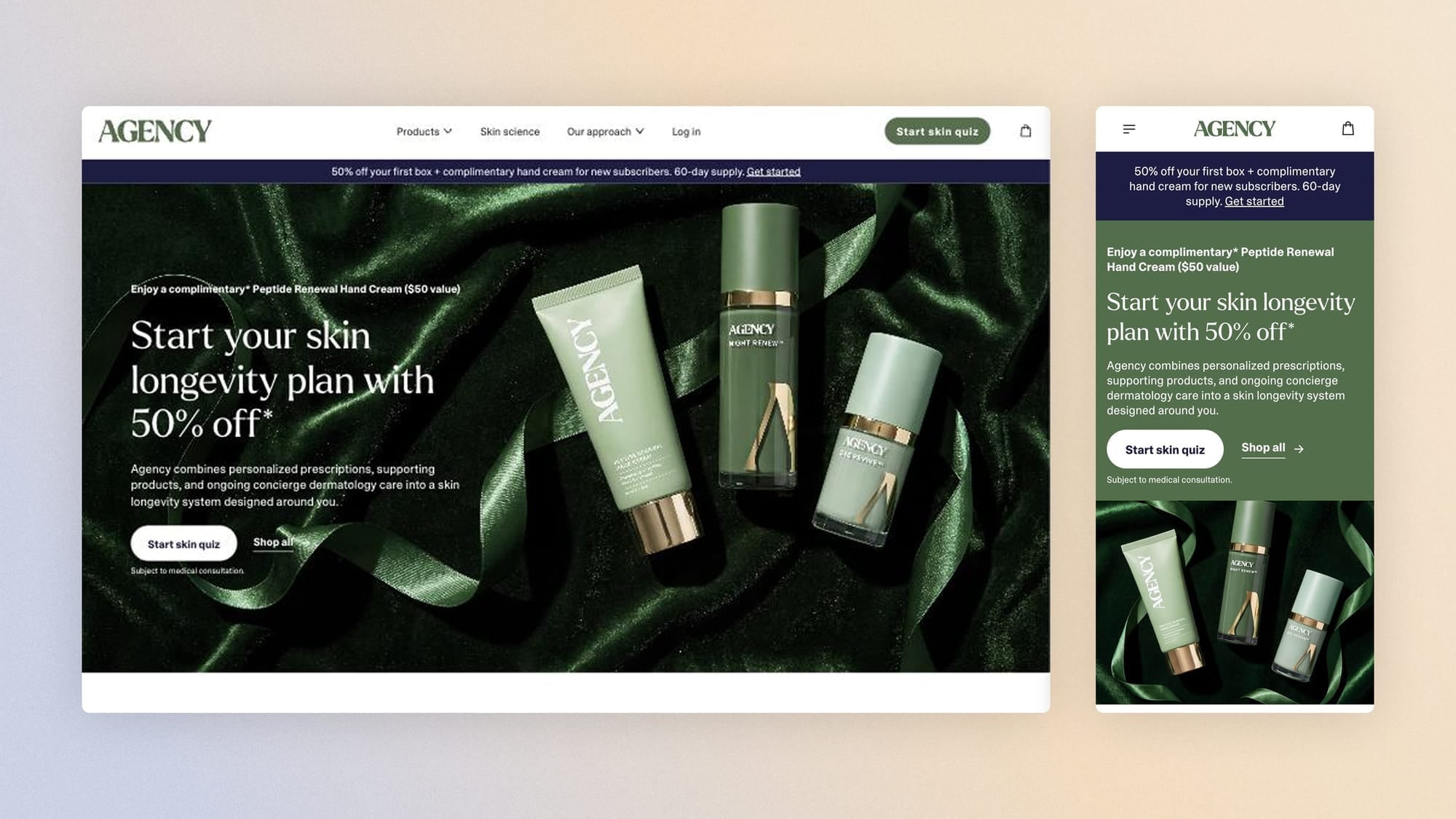
3. Agency: the prescription as proof
Agency sells prescription dermatology treatments by subscription. The current H1 is promotional: "Start your skin longevity plan with 50% off." The value proposition sits right below it: "Agency combines personalized prescriptions, supporting products, and ongoing concierge dermatology care into a skin longevity system designed around you."
The credibility comes from a visible constraint: under the button, a line specifies "Subject to medical consultation." The formulas are presented as created by the brand's dermatology team and "patent-pending," and each prescription treatment is sold as a 60-day supply, for $110 to $130.
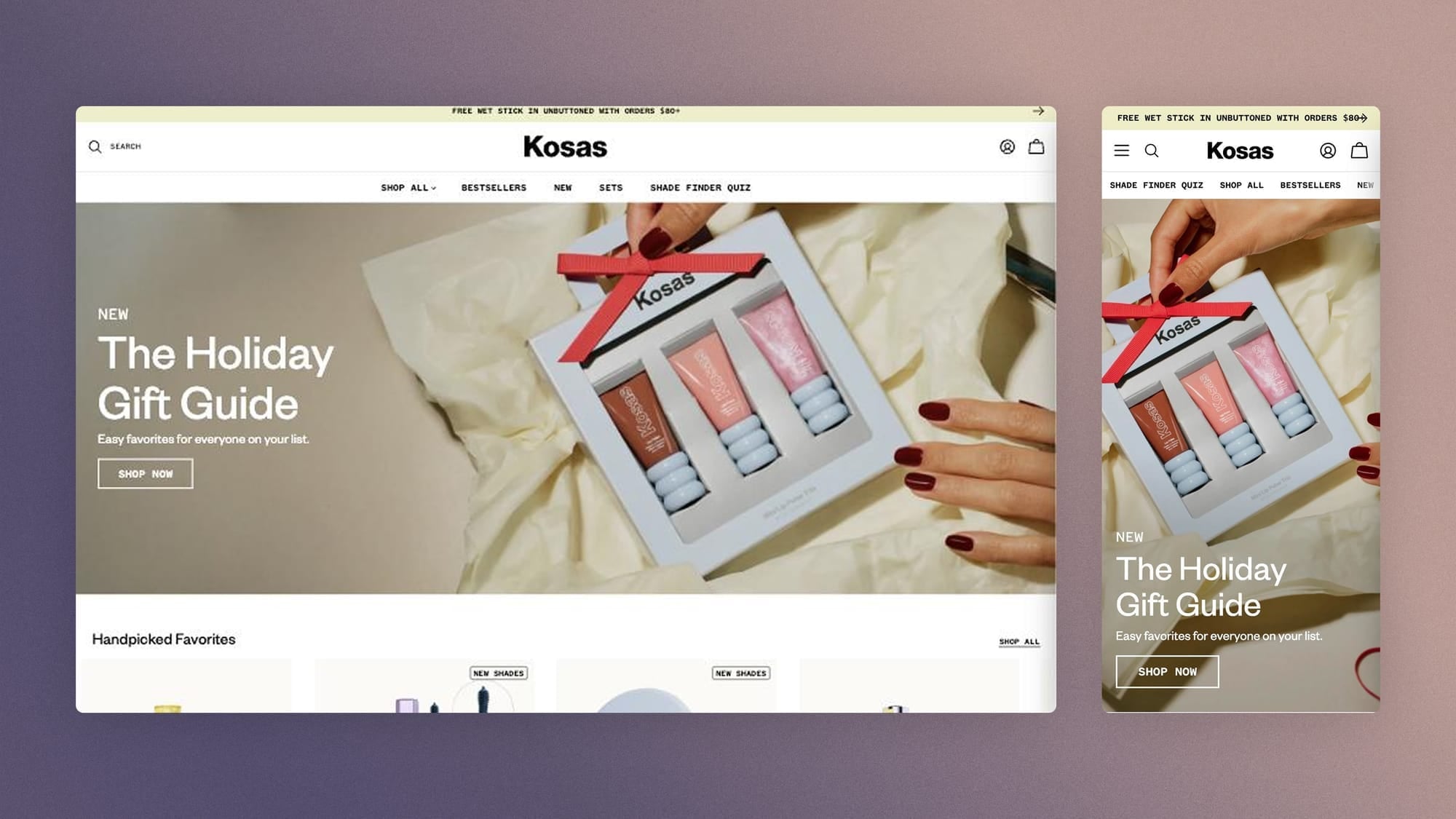
4. Kosas: two categories at 100%
Kosas sells makeup formulated like skincare. The hero is seasonal, a gift guide; the promise sits in the page title and returns as an H2 on the second screen: "100% Makeup. 100% Skincare." Two identical figures reject the category's usual trade-off, where a product either covers well or treats well.
The product pages deliver on the promise, one line each: a "Super Creamy + Brightening Concealer," a "Lengthening + Lifting Peptide Mascara," a "Serum-Powered Color Corrector." Each name pairs a makeup result with a skincare active.
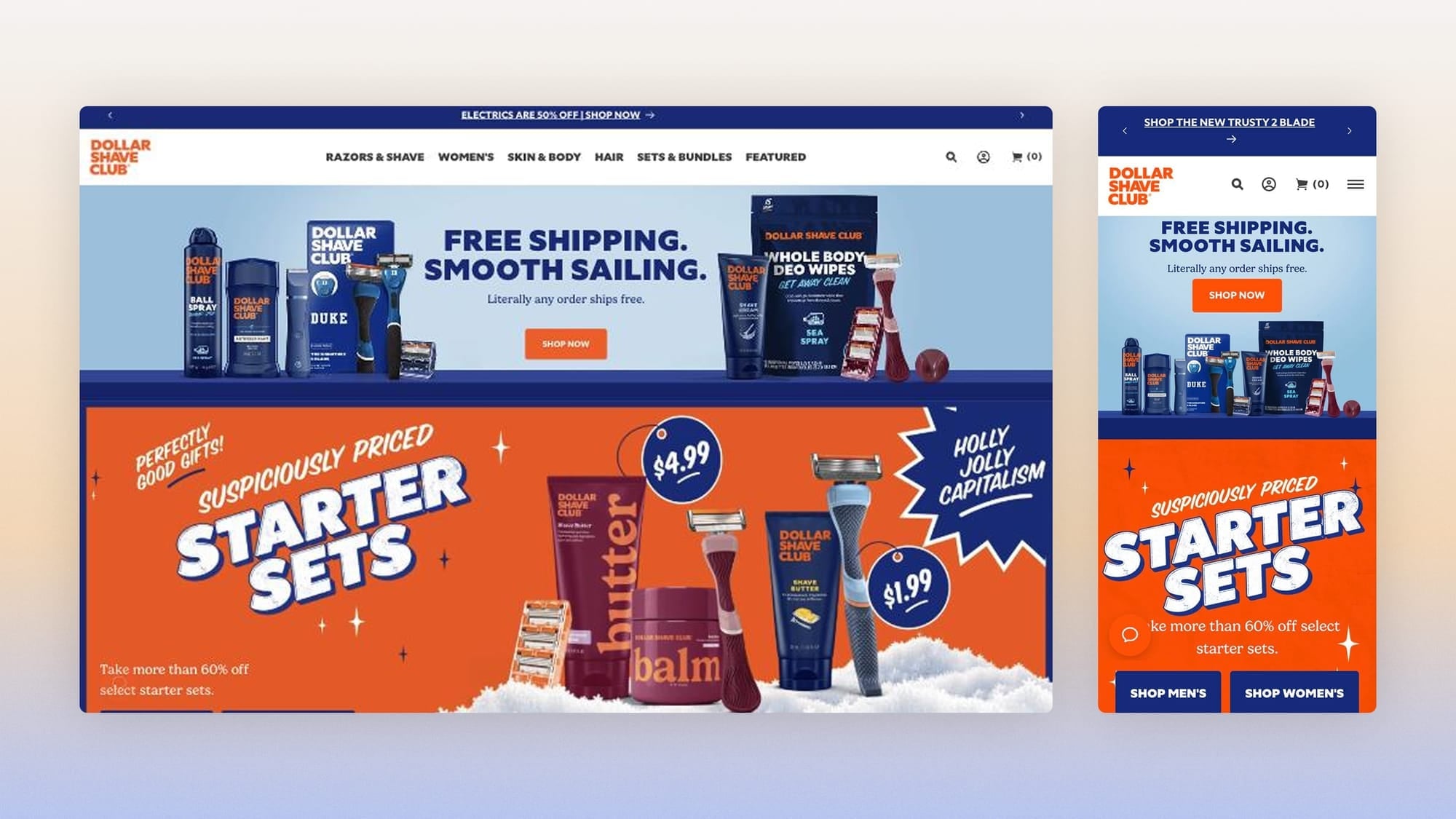
5. Dollar Shave Club: the price explained by the model
Dollar Shave Club sells razors and shaving products by subscription. The hero pushes free shipping; the promise is in the top banner: "A full shave starting at $1.99." A price that low raises doubts, and the page answers them in a section titled "Why we're the sharp choice."
It rests on three arguments: "sharp, longer-lasting stainless steel blades, not gimmicky nonsense"; no middleman markups ("We make our blades and ship them straight to you, so you get a great shave at a great price"); and a full refund within 30 days. The tone stays on brand all the way to the year-end promotion, "suspiciously priced" starter sets.
How did we evaluate the 50 beauty brands?
Panel: 50 direct-to-consumer beauty brands (skincare, hair care, makeup, shaving, online dermatology), homepages captured in their English version, scored on 24 criteria.
In beauty, the hero is often taken up by a gift guide or a launch offer; we looked for the promise in the subheading, the banner and the second screen before calling it absent. A quantified result was counted only if the page gives its comparison baseline.
Frequently asked questions
How do you write a beauty value proposition without promising a miracle?
By naming the condition for the result, not just the result. Function of Beauty writes "your hair type changes everything" and points to a quiz; Agency shows "Subject to medical consultation" under the button. The constraint is what makes it credible.
Can a low price be a value proposition in beauty?
Yes, as long as you explain it. Dollar Shave Club advertises a shave from $1.99 and devotes a section to where the savings come from: in-house blades, no middleman.
What is the best beauty value proposition of 2026?
Kosas, "100% Makeup. 100% Skincare.": two identical figures that reject the category's trade-off, then every product name repeating the pairing.
Get the full database of beauty value propositions
This article breaks down 5. The database covers all 50 brands in the beauty panel, each analyzed on 24 criteria: value proposition and placement, relevance, quantification, differentiation, USP, hero headline, primary CTA (text, shape, color), dominant color, visuals, proof displayed, tone and key takeaway.
Ten other segments follow the same grid: B2B, electronics, food, home, media, fashion, baby and childcare, health, specialty and sports. 550 brands in total.
The database is for Le Club members only. Signing up is free.
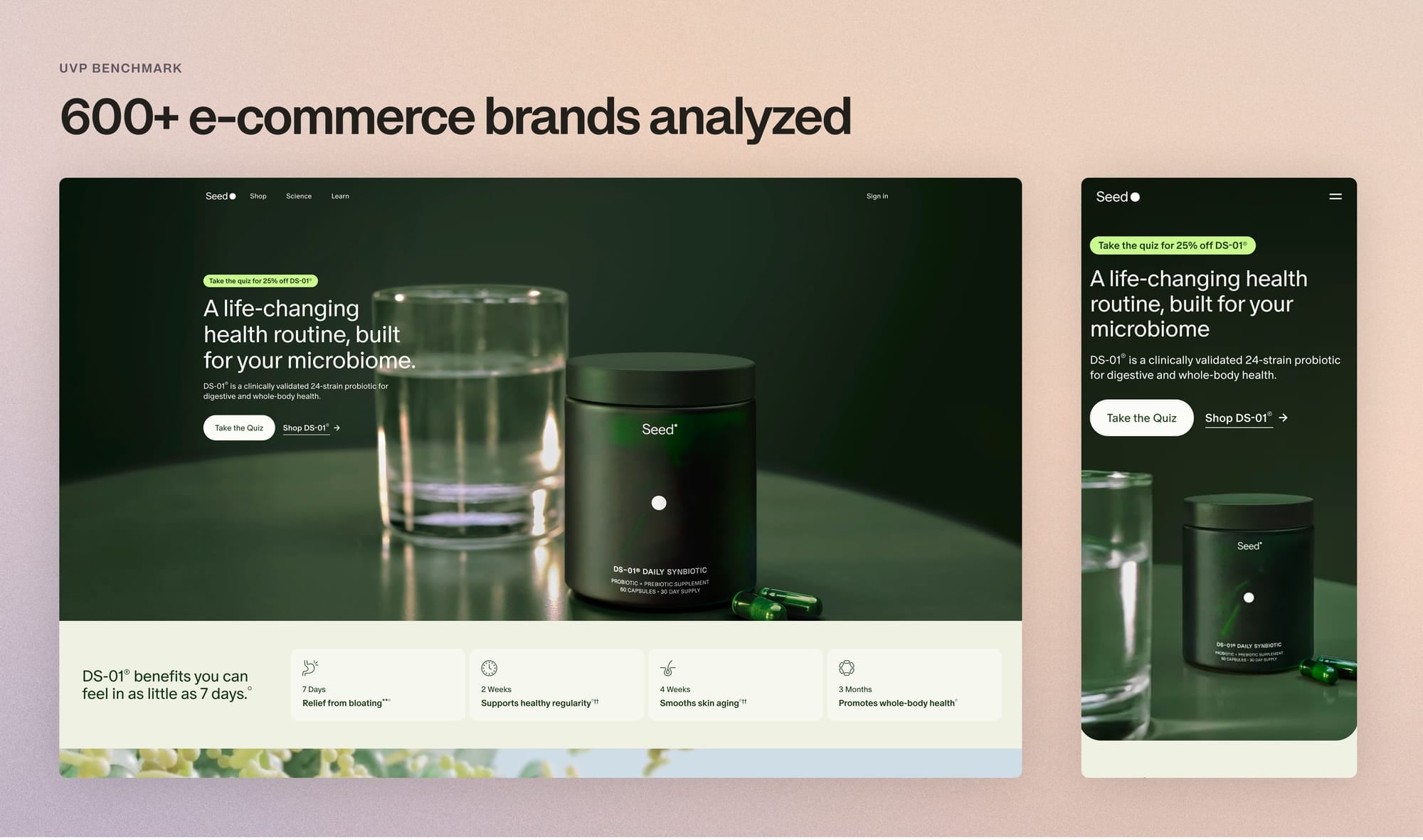
Unique Value Proposition — Full Comparative Analysis
600+ brands · 12 segments · 24 criteria · 14,400 segmented data points