
Fashion is the panel that talks most to Google and least to its visitors. Of 50 direct-to-consumer brands, 27 write their value proposition only in the title tag or meta description; 8 show it in the hero. Numbers are almost absent: just 4 brands out of 50 state a measurable benefit. Five brands do it differently, often beneath a promotion that takes over the H1.
What makes a fashion value proposition effective?
An effective fashion value proposition names the dilemma the garment solves (comfort or style, quality or price, the size that exists or the size that fits right) and takes a stand for both. The current promotion can take the H1; the promise should stay visible on the first screen, in the subtitle or the banner.
What does the 50-brand fashion benchmark reveal?
32 of 50 brands have a relevant value proposition, but only 18 have a sentence a competitor couldn't copy. Differentiation is the sector's weak point: "quality," "comfort" and "sustainable" repeat from page to page. On top of that, promotions crowd the hero: 54% of brands leave their promise to the title tag, and only 8% quantify it.
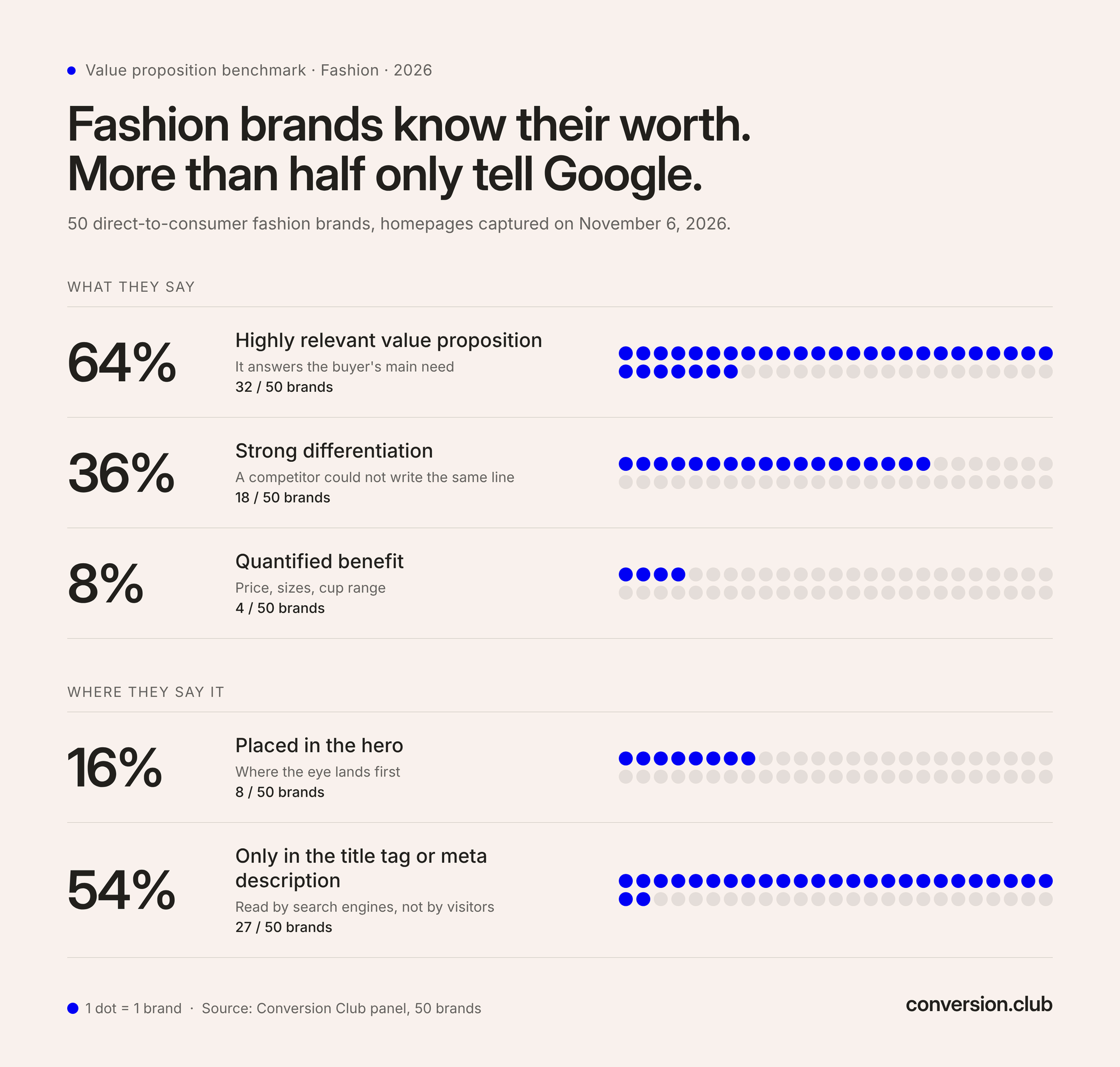
| Metric | Brands | Share of panel |
|---|---|---|
| Value proposition rated highly relevant | 32 / 50 | 64% |
| Strong differentiation (a competitor couldn't write the same sentence) | 18 / 50 | 36% |
| Value proposition placed in the hero | 8 / 50 | 16% |
| Value proposition only in title or meta description | 27 / 50 | 54% |
| Quantified benefit (price, sizes, cup sizes) | 4 / 50 | 8% |
What are the best fashion value propositions?
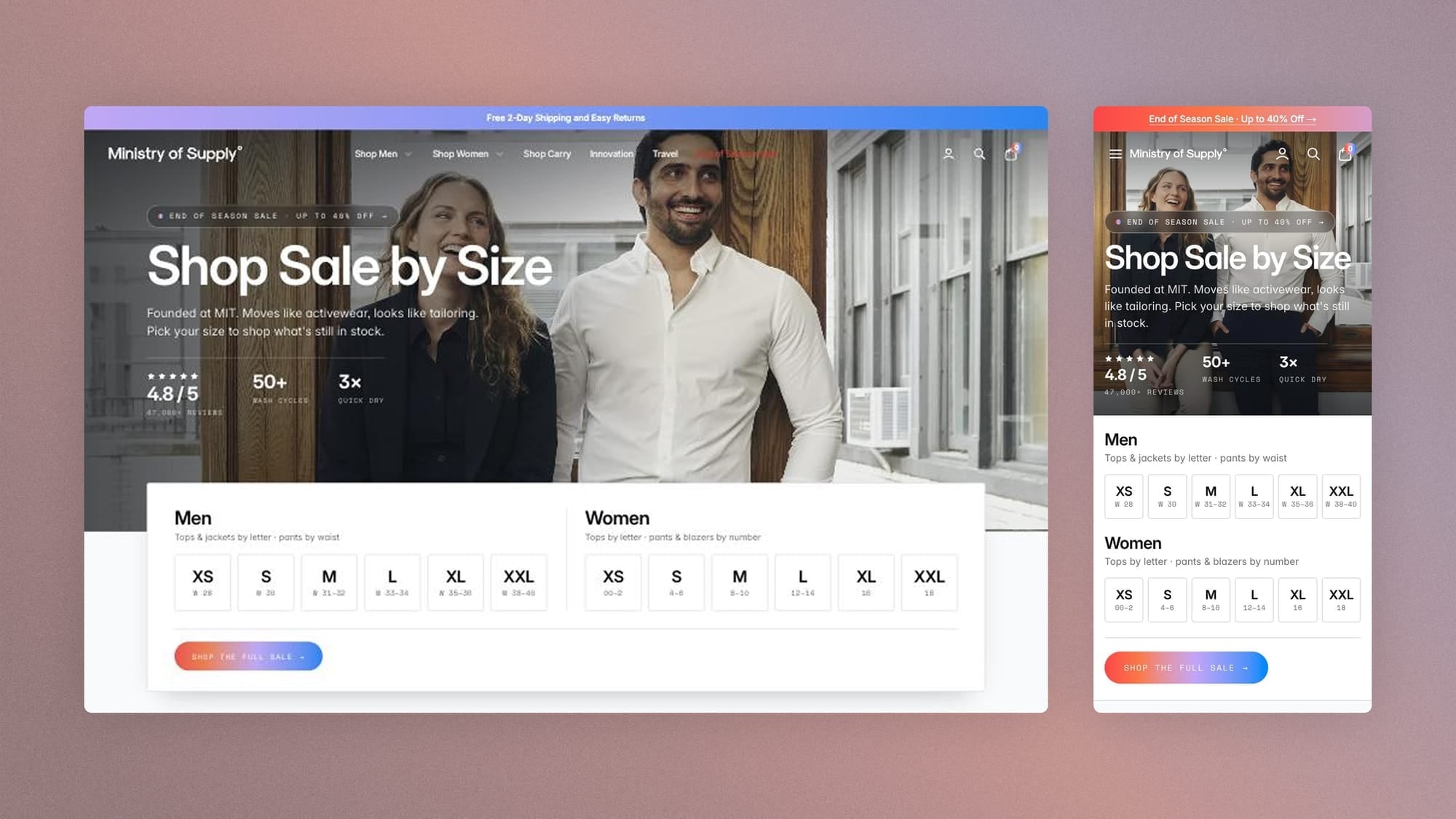
1. Ministry of Supply: two uses reconciled
Ministry of Supply sells technical workwear. The current H1 pushes the sale, but the line right below carries the promise: "Founded at MIT. Moves like activewear, looks like tailoring." In one sentence, the brand states its origin and resolves the office-wear dilemma: stylish or comfortable.
Three figures follow in the hero: 4.8 out of 5 across more than 47,000 reviews, more than 50 wash cycles, drying three times faster. Further down, a "Durability: us vs. them" comparison and a sentence that sums up the approach: "We don't design clothes. We engineer them around the human body, its climate and its movements."
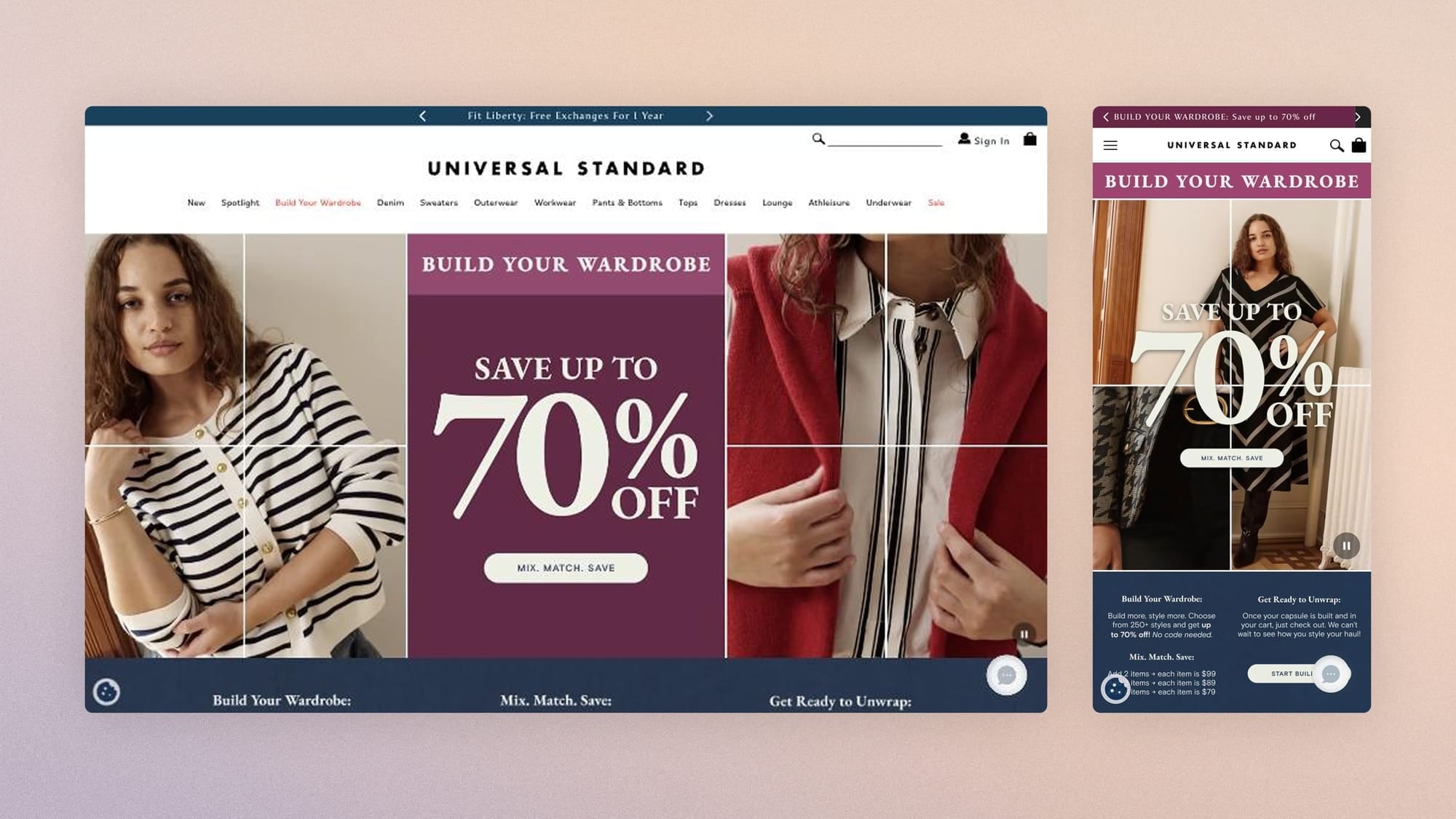
2. Universal Standard: insuring the sizing risk
Universal Standard sells clothing from size 00 to 40 in US sizing. The hero is a promotion at "up to 70% off"; the promise sits in the page title and the top banner, which alternates between "Sizes 00-40" and "Fit Liberty: Free Exchanges For 1 Year." The brand doesn't just promise that your size exists. It insures the risk that it won't fit.
The proof comes down to two figures: jeans that launched with a waitlist of more than 1,000 people and are now "in over 500,000 closets." A customer review supplies the emotion: "I have cried over my satisfaction of these jeans... no pinching, squeezing, pain in the waist ever."
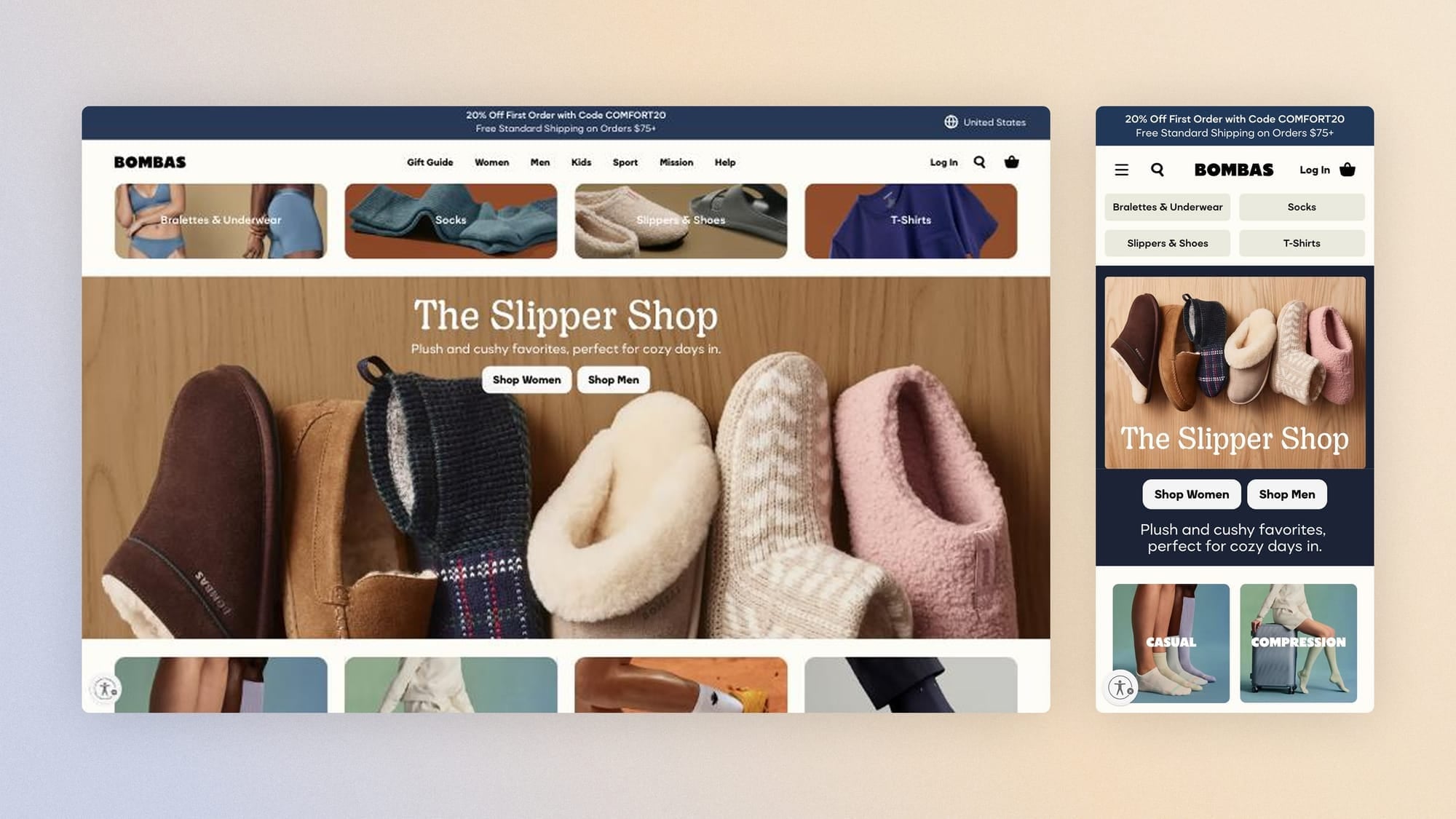
3. Bombas: the purchase that gives
Bombas sells socks, underwear and T-shirts. The hero features the season's slippers; the value proposition comes on the second screen: "One purchased = one donated." The subtitle adds: "We give on your behalf, in the US and beyond."
The proof is a counter: "over 200 million donations," detailed further down: "thanks to customers like you, we've donated over 200 million socks, underwear and T-shirts to those who need them most." The page title sums up the three pillars, comfort, quality and impact, and the main menu has a "Mission" tab.
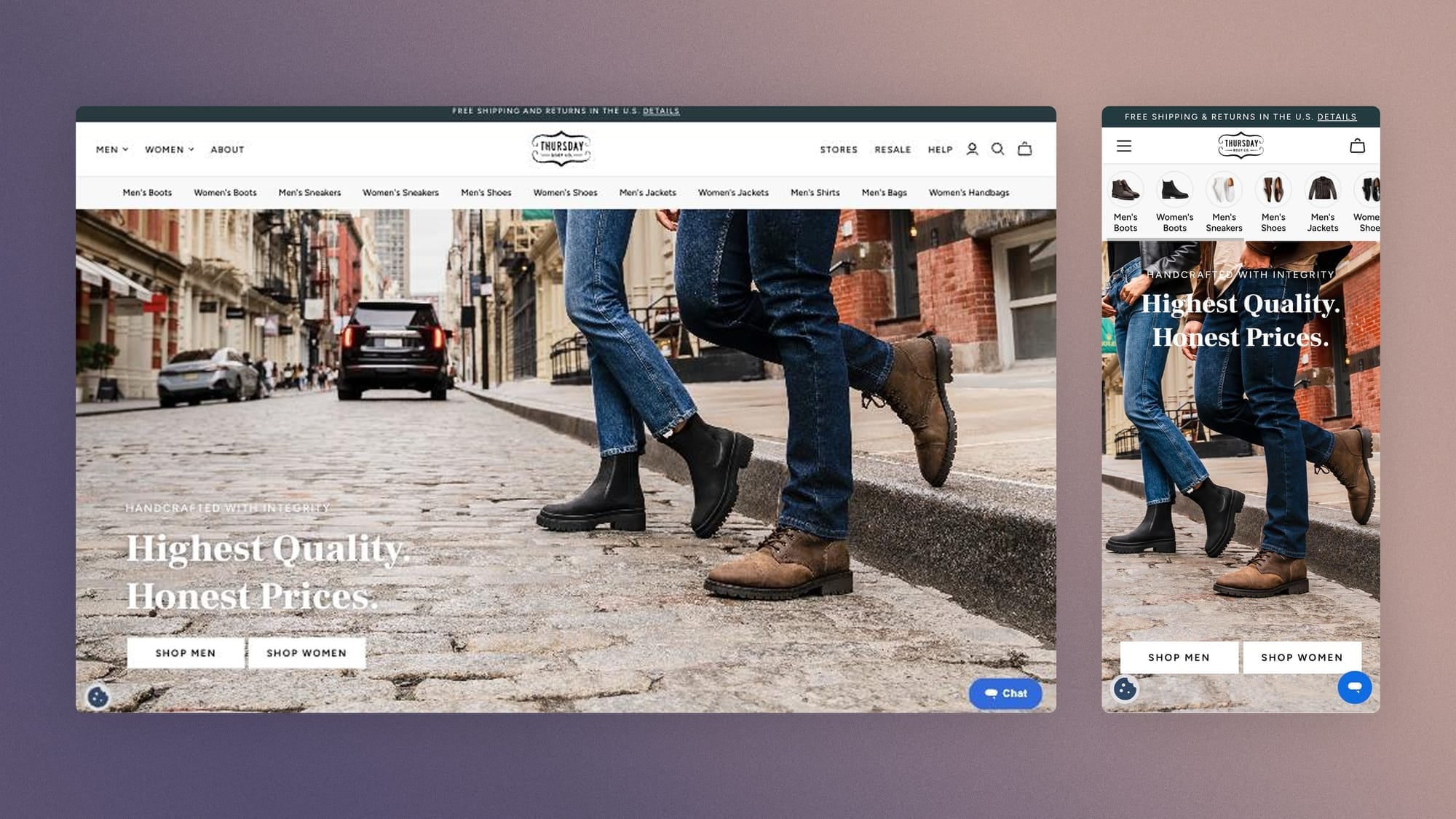
4. Thursday Boot: quality and price in two sentences
Thursday Boot sells boots and leather shoes. Its H1: "Highest Quality. Honest Prices." Two short sentences answer the buyer's twin fear: overpaying or buying badly. Above it, a tagline: "Handcrafted With Integrity."
The proof is social: more than 175,000 five-star reviews, a 4.8 out of 5 average. A customer review does the work of a comparison: "I have had several pairs in this style from others, some costing twice as much." The page finally explains the name: Thursday is a workday and the unofficial start of the weekend, and every product is designed for both.
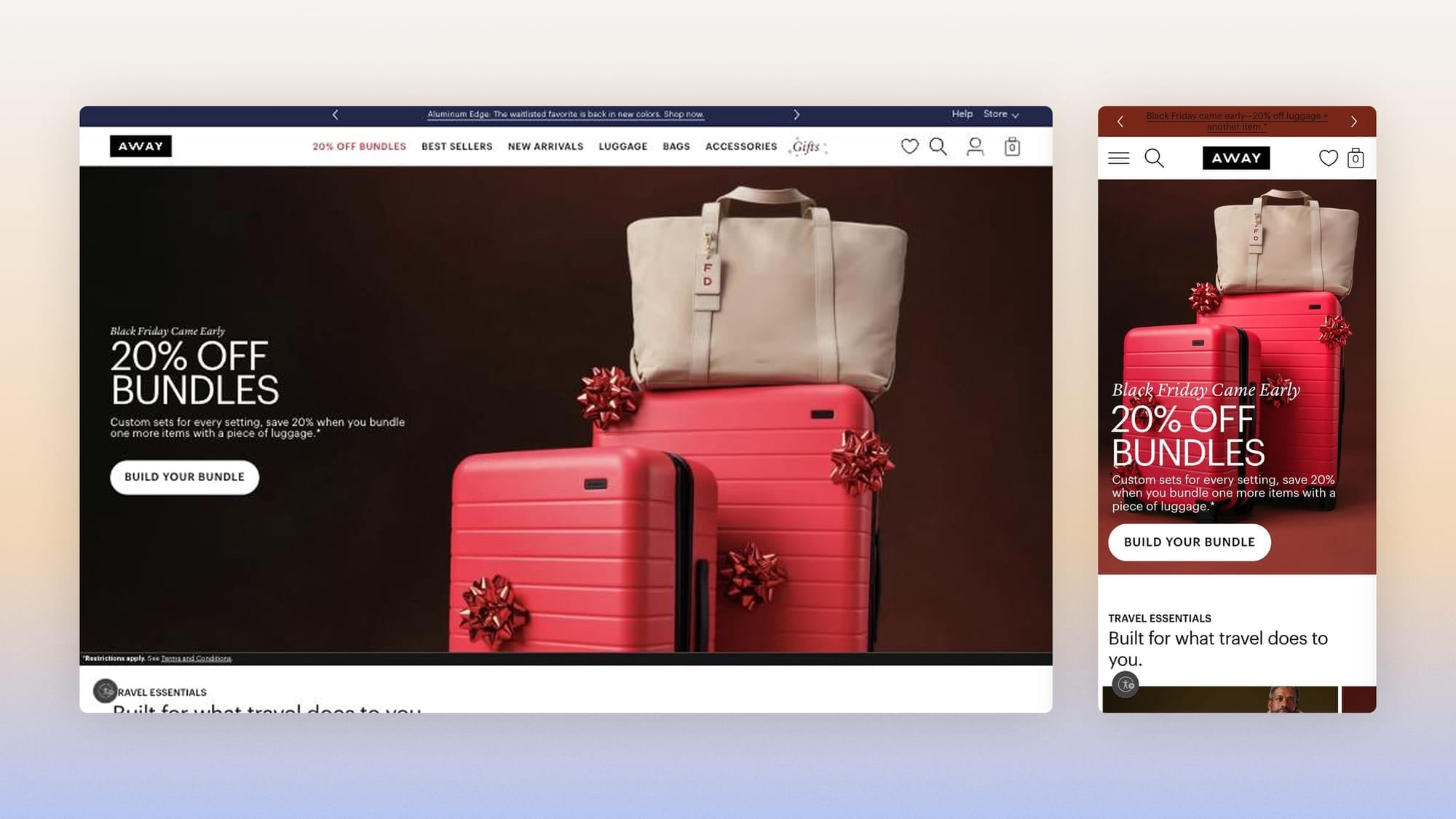
5. Away: what travel puts you through
Away sells suitcases and luggage. The current H1 is a promotion, "20% off bundles"; the promise comes in an H2 at the bottom of the first screen: "Built for what travel does to you." The brand talks not about shells or wheels, but about the ordeal that travel represents.
The proof follows as reasons: each suitcase is "designed and tested by a team of experts and travel obsessives before it earns the Away name," shipping is free, and returns and exchanges are accepted for 100 days. The top banner pitches them as a gift idea: "Luggage for a lifetime."
How did we evaluate the 50 fashion brands?
Panel: 50 direct-to-consumer fashion brands (ready-to-wear, shoes, underwear, luggage), homepages captured in their English version, scored on 24 criteria. Fashion poses a particular problem: the H1 often carries the current promotion.
So we recorded the value proposition where it actually appears (subtitle, banner, second screen) and marked it "hero" whenever it stays visible without scrolling. A promise readable only in the tab title was counted as absent for the visitor.
Frequently asked questions
How do you write a value proposition for a fashion brand?
By naming the dilemma customers face in front of their closet, then taking a stand for both sides. Ministry of Supply writes "moves like activewear, looks like tailoring"; Thursday Boot, "Highest Quality. Honest Prices."
Can a promotion replace the value proposition in the hero?
No, but it can sit alongside it. Universal Standard shows a discount in the H1 and keeps "Sizes 00-40" and "Free Exchanges For 1 Year" in the banner: the promotion sells today, the promise brings people back.
What is the best fashion value proposition of 2026?
Bombas, "One purchased = one donated": an equation customers remember, followed by a counter of more than 200 million donations that proves it's kept.
Access the full database of fashion value propositions
This article breaks down 5. The database covers all 50 brands in the fashion panel, each analyzed on 24 criteria: value proposition and placement, relevance, quantification, differentiation, USP, hero headline, main CTA (text, shape, color), dominant color, visuals, proof displayed, tone and key takeaway.
Ten other segments follow the same grid: B2B, beauty, electronics, food, home, media, childcare, health, specialty and sports. 550 brands in total.
The database is reserved for Club members. Signing up is free.
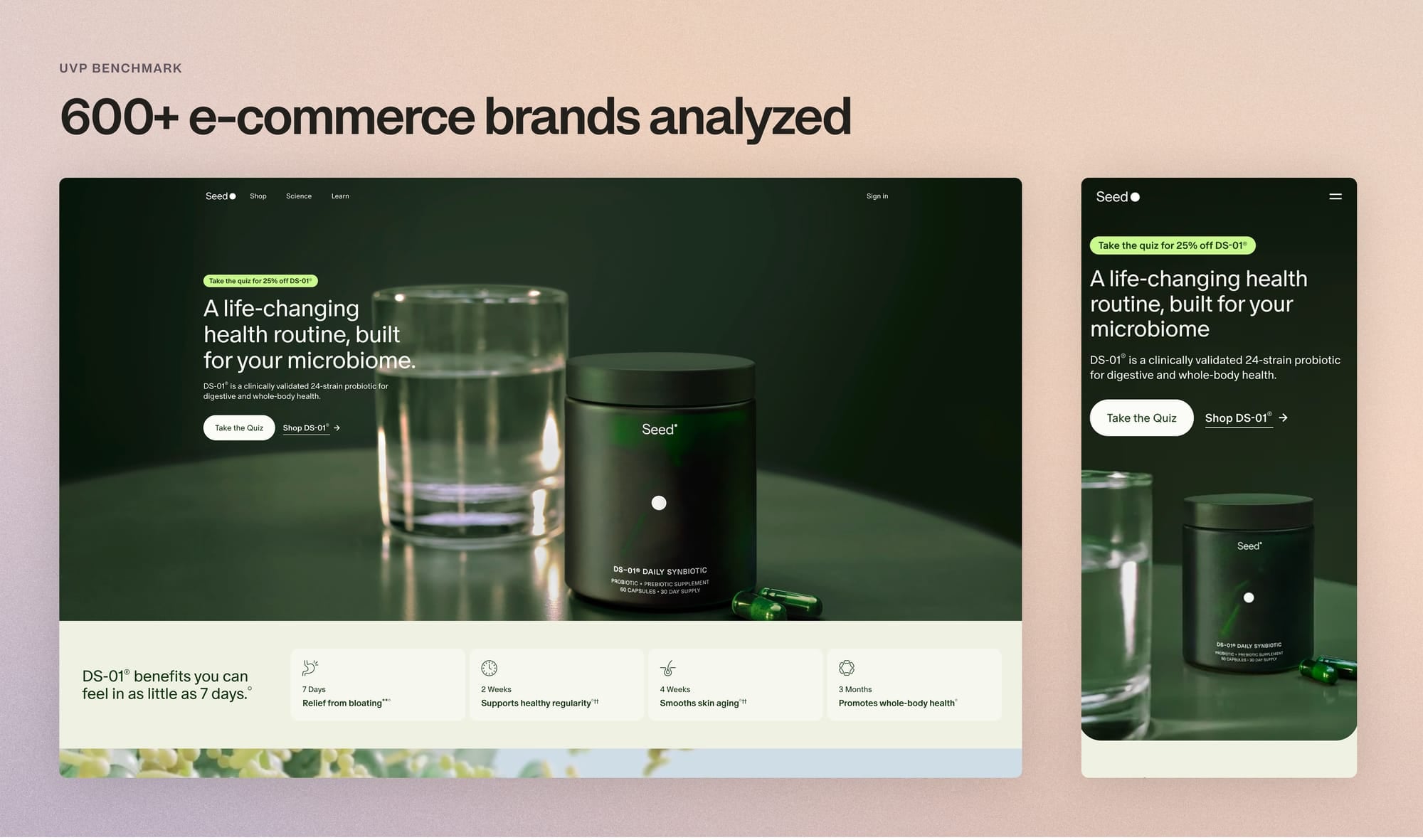
Unique value proposition — Full comparative analysis
600+ brands · 12 segments · 24 criteria · 14,400 segmented data points