
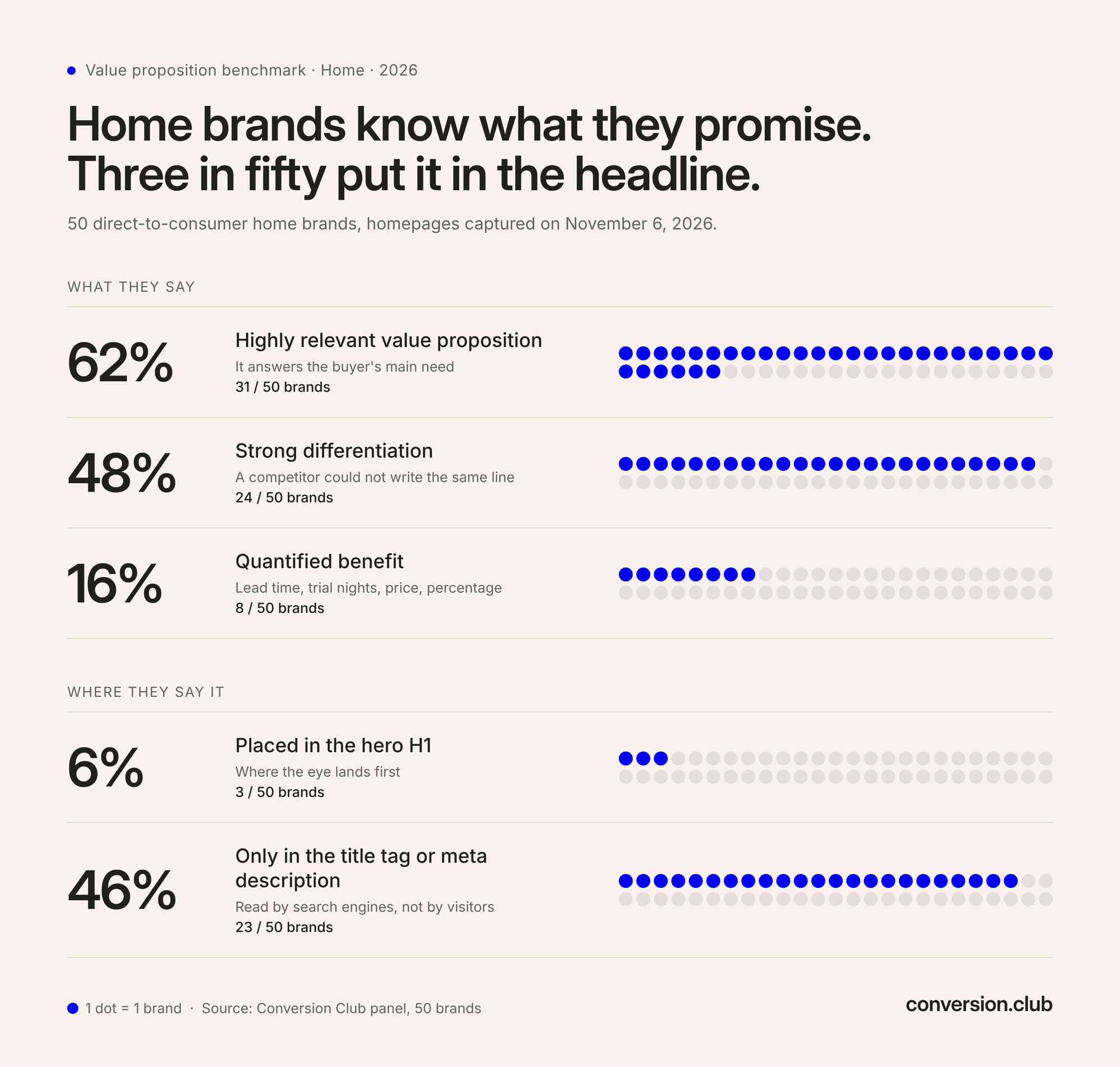
Three out of 50 home brands put their value proposition in the H1 of their homepage. Three. That's the lowest score in our benchmark, in a category where 31 of 50 brands do have a relevant promise: delivery time, trial nights, removal of the old mattress. The main headline sells the product of the moment; the promise waits on the second screen. Five brands bring it up top.
What makes a home brand value proposition effective?
An effective home brand value proposition removes the risk that holds back a big, infrequent purchase: delivery time, comfort you can't test online, the cost of a mistake. The benefit matters, but the guarantee that comes with it (trial nights, cushion exchange, removal of the old piece) often decides the purchase.
What does the 50-brand home benchmark reveal?
62% of brands have a value proposition rated relevant and 48% have a differentiating sentence: the substance is there.
Placement doesn't follow: 6% in the H1, versus 46% in the title tag alone, because the home hero is reserved for collections and promotions. Quantification remains weak, at 8 brands out of 50, even though the category has simple numbers to use: days to build, trial nights, years of warranty.
| Metric | Brands | Share of panel |
|---|---|---|
| Value proposition rated highly relevant | 31 / 50 | 62% |
| Strong differentiation (a competitor couldn't write the same sentence) | 24 / 50 | 48% |
| Value proposition placed in the hero H1 | 3 / 50 | 6% |
| Value proposition only in the title or meta description | 23 / 50 | 46% |
| Quantified benefit (delivery time, trial nights, price, percentage) | 8 / 50 | 16% |
What are the best home brand value propositions?
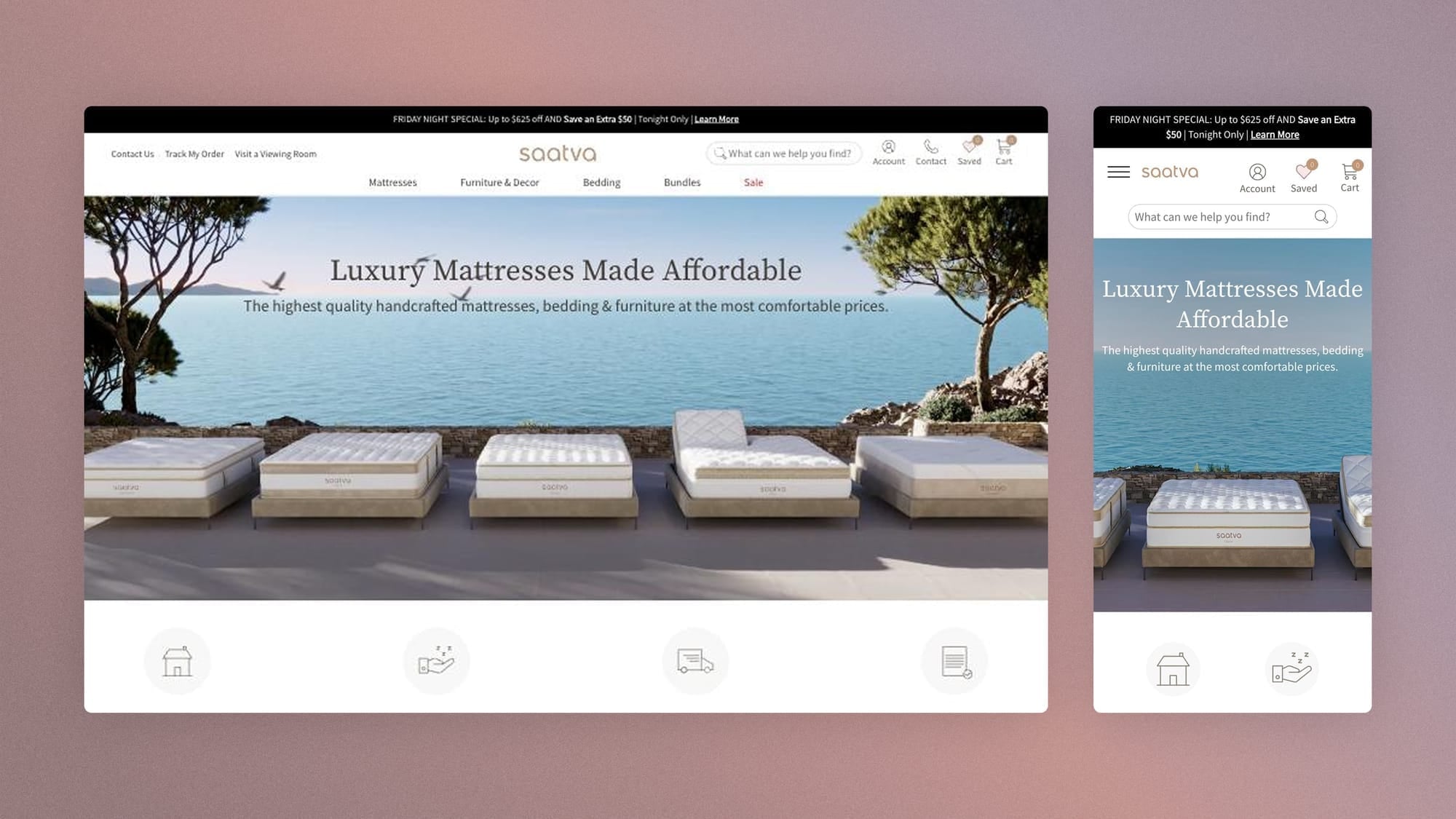
1. Saatva: The Contradiction Resolved
Saatva sells high-end mattresses online. Its H1: “Luxury Mattresses Made Affordable.” The line reconciles two words shoppers think are incompatible: luxury and accessible pricing. The subhead doubles down on the promise: “The highest quality handcrafted mattresses, bedding & furniture at the most comfortable prices.”
The proof follows right below the hero, in four icons: “365-night home trial,” “Free delivery & setup,” “Free mattress removal,” “Lifetime warranty.” Further down, the Saatva Classic shows a 4.8 rating from 6,677 reviews. Each guarantee removes a risk that the high price makes sharper.
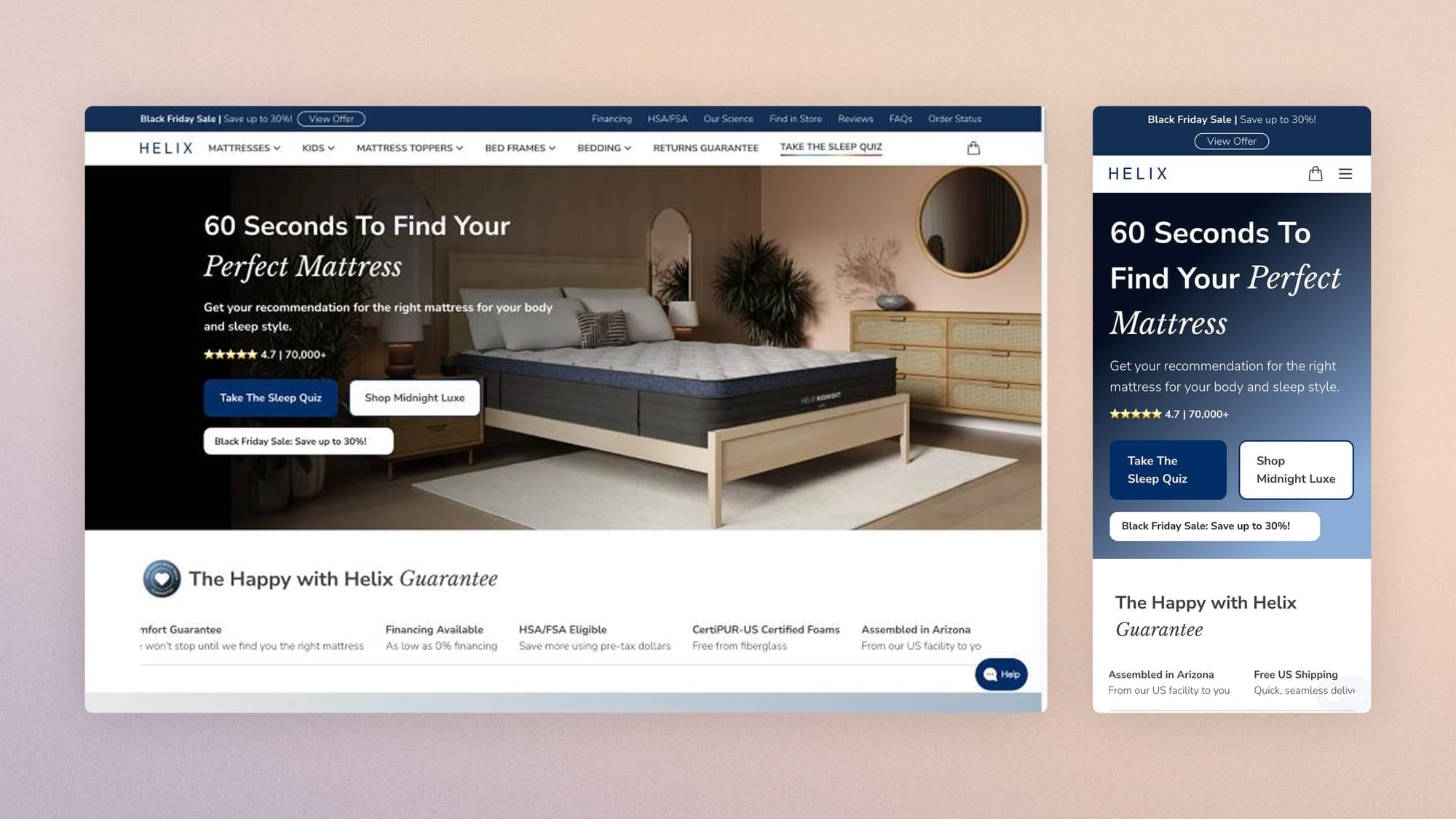
2. Helix: The Quantified Decision
Helix sells mattresses matched to each sleeper. Its hero headline: “60 Seconds To Find Your Perfect Mattress.” The number isn't about the product but about the effort of choosing, the step that blocks the most buyers. The subhead spells it out: “Get your recommendation for the right mattress for your body and sleep style.” The first CTA opens the quiz, not the catalog.
The proof stacks up around it: 4.7 from over 70,000 reviews right under the headline, then self-reported relief rates for back, hips and shoulders (66%, 68% and 74% depending on the model), drawn from a survey of Helix customers. One catch: the hero headline isn't tagged as an H1; the only H1 on the page is “Doctor Recommended,” further down.
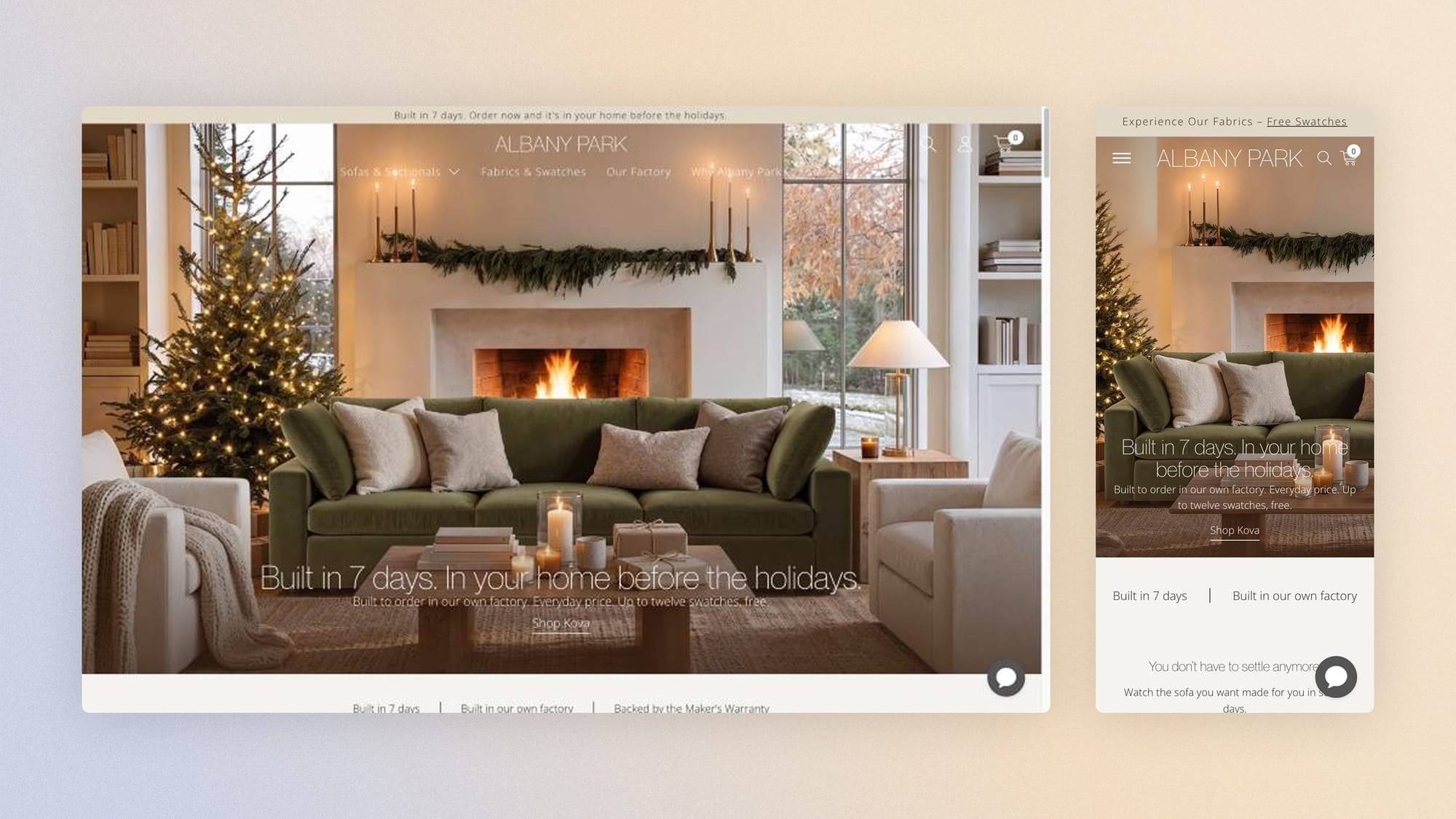
3. Albany Park: Delivery Time as the Promise
Albany Park sells made-to-order sofas. Its H1: “Built in 7 days. In your home before the holidays.” In a category where custom furniture takes months, the brand makes lead time its main benefit and ties it to the customer's calendar. The subhead gives the reason: “Built to order in our own factory. Everyday price. Up to twelve swatches, free.”
The proof is structural: “Other sofa brands hire a factory. We are the factory — with thirty years of furniture-making behind it.” The page places the workshop in El Florido, Baja California, and says a sofa leaves it within a week. A 60-day cushion exchange program removes the last risk, comfort.
4. Misen: The Everyday Frustration
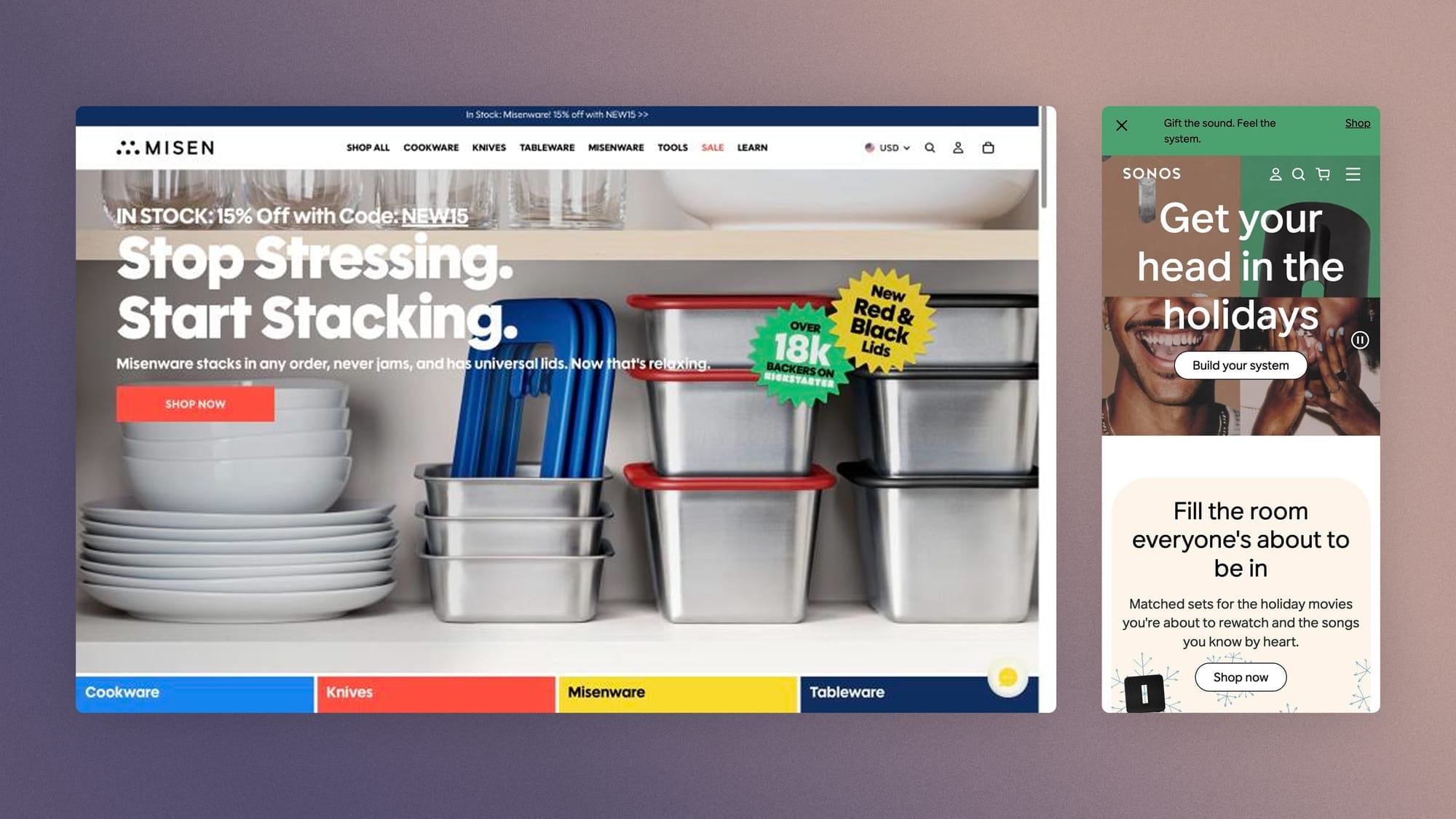
Misen sells cookware and food storage containers. Its hero headline: “Stop Stressing. Start Stacking.” The brand isn't selling a material but the end of an annoyance everyone knows: the cabinet where nothing fits together. The subhead keeps the promise: “Misenware stacks in any order, never jams, and has universal lids. Now that's relaxing.”
The proof is in the image: a badge reading “Over 18k backers on Kickstarter.” In the best sellers, the Misenware set claims 11,000% funding and 19,000 backers. Demand is proven before the product is even in stock.
5. Burrow: The Category's Flaw, Named
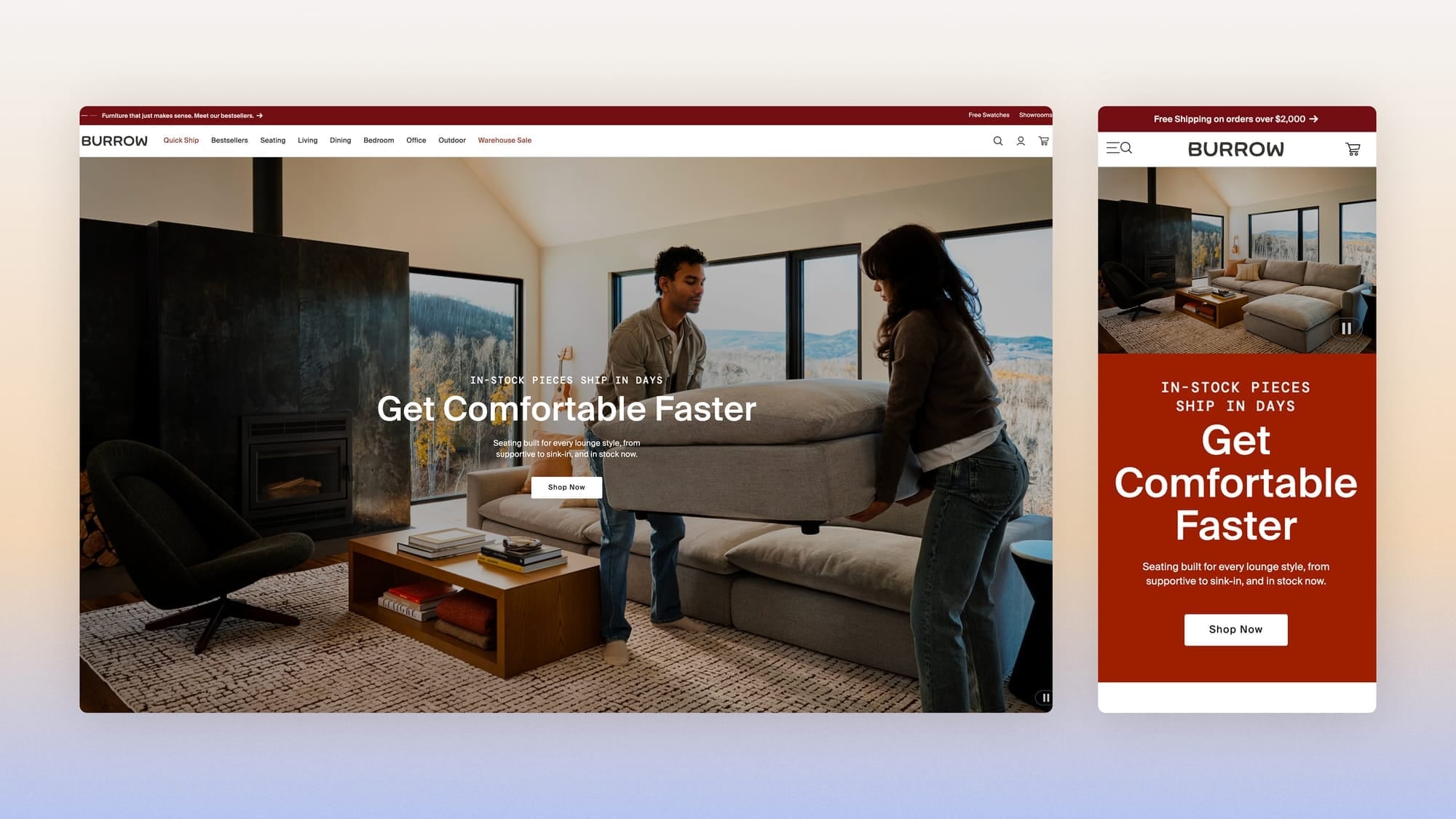
Burrow sells modular sofas and furniture. On the day we captured it, the hero pushed available stock: “Get Comfortable Faster.” The value proposition arrives on the second screen, in an H1: “We Fixed What Furniture Gets Wrong.” The subhead lists the fixes: “Modular pieces that adapt as your life evolves. Engineered for comfort, with smart solutions built in. Delivered in days, not months.”
The proof explains the mechanism: “Unlike other furniture brands, we keep inventory on hand thanks to our modular design: your order is delivered in days, not months. And it arrives in normal shipping boxes, not expensive freight.” Three press quotes about comfort, under the heading “Don't just take it from us!” round out the page.
How did we evaluate the 50 home brands?
Panel: 50 direct-to-consumer home brands (bedding, sofas and furniture, kitchen, storage), homepages captured in English, scored on 24 criteria.
For home, we paid particular attention to the guarantees shown below the hero (trial, return, removal, exchange), because they often carry the promise the headline leaves out. An H1 placed on the second screen was counted as an H1, with its position noted.
Frequently asked questions
Why do so few home brands put their value proposition in the H1?
Because the hero serves the current collection or promotion: on the day we captured it, Burrow pushed “Get Comfortable Faster” and saved “We Fixed What Furniture Gets Wrong” for the second screen. The promise exists, but it comes after the product.
Which guarantee should you highlight for a home purchase?
The one that removes the risk specific to the product. Saatva shows a 365-night trial for a mattress you can't test online; Albany Park offers a 60-day cushion exchange for a made-to-order sofa. The guarantee answers the objection, not the competition.
What is the best home brand value proposition of 2026?
Albany Park, “Built in 7 days. In your home before the holidays.”: a quantified lead time in a category measured in months, tied to the customer's calendar, and explained right after by the industrial model.
Get the full home value proposition database
This article breaks down 5. The database covers all 50 brands in the home panel, each analyzed on 24 criteria: value proposition and placement, relevance, quantification, differentiation, USP, hero headline, primary CTA (text, shape, color), dominant color, visuals, proof shown, tone and key takeaway.
Ten other segments follow the same grid: B2B, beauty, electronics, food, media, fashion, baby products, health, specialty and sports. 550 brands in total.
The database is reserved for Le Club members. Signing up is free.
Unique Value Proposition: Full Comparative Analysis
600+ brands · 12 segments · 24 criteria · 14,400 segmented data points