The Invisible Wall of Unexpected Fees

The checkout is nearly the same everywhere. The visitor isn't. And the number one source of friction isn't the form. It's the moment the price changes.
According to Shopify, three-quarters of customers reconsider a purchase when they discover unexpected customs fees, and nearly half refuse the delivery.
Picture the journey: a shopper in Düsseldorf browses your site, applies filters on your PLP, clicks on her dream dress, picks her size, adds it to her cart, enters her address… and discovers, right before completing her purchase, that €18 of import VAT is added to the listed price.
That's not cart abandonment. It's a breach of trust. She won't be back.
Shopify offers two approaches:
- DDP (Delivered Duty Paid) calculates and collects all taxes and duties at checkout. Customs clears prepaid parcels first, which cuts transit time by several days.
- The alternative, DDU (Delivered at Place), lets the visitor discover the bill on delivery, with the risk that the parcel gets sent back after seven days. You then pay shipping twice and lose a customer.
The rule: in any market where you're aiming for conversion, turn on DDP. Use Shopify Managed Markets, or set it up manually with HS codes on every product.
Zero surprises at checkout isn't a best practice. It's a survival requirement in cross-border selling.
Payment: Localization That's Infrastructure, Not Content
This is where most French brands on Shopify fail.
The default checkout (Visa, Mastercard, Shop Pay) covers France, the UK and the US. It automatically shuts out most shoppers in a dozen other markets.
Shopify supports more than 150 local payment methods, but you still have to turn them on (and know which ones).
Payment methods in Europe (and similar markets)
In the Netherlands, for example, a checkout without iDEAL is a dead checkout. More than 60% of online transactions go through this instant bank transfer, built into every Dutch bank.
In Belgium, the go-to is Bancontact, a local debit card that ranks above international cards in shoppers' hierarchy of trust.
In Germany, Kauf auf Rechnung (pay after delivery) accounts for about 28% of transactions. German shoppers don't refuse to pay, but they hesitate to pay before they've seen and touched the product.
Without this option, the abandonment rate can reach 82%. PayPal is the second go-to, far ahead of credit cards, which account for only about 10% of online payments. Klarna and Billie offer Kauf auf Rechnung on Shopify.
In Sweden, Klarna isn't an add-on: it's the default payment method (the company was born in Stockholm).
Swish (instant mobile payment between individuals and merchants, with 8 million users for 10 million inhabitants) rounds out the ecosystem for small amounts.
In Norway, Vipps plays that role, with the same mechanics and the same massive adoption. A Scandinavian checkout without native BNPL is an incomplete checkout.
In Switzerland, the detail that gives away a non-localized site is the euro. Switzerland isn't in the eurozone, and showing prices in EUR to a Swiss visitor signals a site that didn't make the effort.
Gymshark automatically detects the IP address and switches the free shipping bar to CHF. PostFinance and TWINT (a local wallet) are the trusted payment methods.
In the United Kingdom, Klarna leads BNPL in fashion (46% of BNPL transactions are in fashion, with an average basket of £114).
Apple Pay and Google Pay speed up mobile checkout. British shoppers look for "Pay in 3" or "Pay later" at checkout. If the option isn't visible, they look for a competitor that offers it.
Payment methods in the US
In the United States, checkout is a battlefield of options. Credit cards remain dominant, but Shop Pay, Apple Pay and Google Pay are growing fast, especially on mobile, where the friction of the card form is the top cause of abandonment.
American shoppers think in total cost: price + shipping + tax. In that context, a "Free shipping" banner isn't generosity. It simplifies the mental math.
Afterpay (rebranded "Pay in 4" by Block) is the most widespread American BNPL in fashion, with a very Gen Z positioning.
Finally, a key detail: taxes vary by state, and American shoppers expect to see the price excluding tax on the PDP and the price including tax at checkout.
Showing a tax-inclusive price European-style on an American .com creates dissonance.
Payment methods in Asia
In Japan, the konbini (convenience store payment) accounts for 10% of online purchases. Customers place an order, receive a barcode, and pay in cash at one of the country's 56,000 konbini.
Nearly half of 15-to-19-year-olds use this payment method. It's the choice of a whole generation without credit cards. As for cards, showing the JCB logo next to Visa/Mastercard isn't cosmetic. It's a trust signal.
JCB is the domestic card, and its absence on a foreign site triggers distrust. It's available on Shopify through Komoju or GMO Payment Gateway.
In South Korea, digital wallets account for 74% of all transactions. Naver Pay, Kakao Pay, Samsung Pay: the Korean checkout is biometric, instant and built into super-apps.
Only 40% of Koreans own an international Visa or Mastercard. A checkout that offers only Western card networks shuts out most of the market.
The paradox: the most connected country in the world has one of the lowest penetration rates of international cards. Integrate through Eximbay or PayGate.
Payment methods in the Middle East
In the UAE, mobile commerce accounts for 79% of transactions. Apple Pay is growing fast among young urbanites in Dubai and Abu Dhabi, but cash on delivery remains the default for a first purchase from an unknown brand.
Trust builds after the first successful delivery.
Tabby is the Klarna of the Gulf: BNPL in four installments, native Shopify integration, and fast-growing adoption.
In Saudi Arabia, Mada (the local debit card) is a must. It's the Saudi equivalent of iDEAL in the Netherlands.
Summary of the main payment methods by country available on Shopify
| Country | Top payment method | Second method | Trust signal | Shopify integration |
|---|---|---|---|---|
| France | Bank card | Alma / Scalapay interest-free installments | "3x interest-free" visible from the PDP | Shopify Payments + Alma app |
| Netherlands | iDEAL | Card / Klarna | iDEAL = absolute must-have | Managed Markets or Mollie |
| Belgium | Bancontact | Card / PayPal | Bancontact before Visa | Mollie / Adyen |
| Germany | PayPal / Kauf auf Rechnung | Debit card | Pay after delivery | Klarna / Billie |
| Switzerland | TWINT / PostFinance | Card | Prices in CHF, not EUR | Shopify Payments + Worldline |
| Sweden | Klarna | Swish | Native BNPL, not optional | Shopify Payments + Klarna |
| Norway | Klarna / Vipps | Card | Vipps = national wallet | Shopify Payments + Klarna |
| United Kingdom | Card / Klarna | Apple Pay | "Pay in 3" visible | Shopify Payments + Klarna |
| United States | Credit card | Shop Pay / Apple Pay | "Free shipping" + prices excl. tax | Shopify Payments native |
| Japan | Card (JCB + Visa) | Konbini | JCB logo + konbini option | Komoju / GMO |
| South Korea | Naver Pay / Kakao Pay | Samsung Pay | Built-in local wallet | Eximbay / PayGate |
| UAE | Apple Pay / Card | Tabby (BNPL) + COD | Tabby 4x + prices in AED | Shopify Payments + Tabby |
| Saudi Arabia | Mada (local debit) | Apple Pay / Tabby | Mada = must-have | Checkout.com / Tap Payments |

Shipping: Keeping Your Promises
Delivery time isn't just a number in a table. It's an implicit contract whose terms change at every border.
In Germany, 76% of visitors check the estimated delivery date before they buy. Speed matters less than predictability: a "3-5 days" window is acceptable, while "5-10 days" with no tracking is a deal-breaker.
DHL is the benchmark carrier, and its logo in the checkout works as a trust signal, just like Trusted Shops. A site that ships with a carrier unknown to the German market loses credibility before the parcel even leaves.
In Japan, punctuality is an absolute standard. A parcel promised for 2 p.m. and delivered at 2:30 p.m. is considered late. Yamato Transport and Sagawa are the local benchmarks.
Delivery time slots (morning, afternoon, evening) are expected, not offered as a premium service. A foreign site that announces "within 7-14 days" with no time slot risks losing credibility as early as the confirmation page.
In the United States, shoppers have been conditioned by Amazon Prime. Two-day delivery has become the psychological benchmark, the standard every industry is now measured against.
Free shipping is a must above $75-100. Below that threshold, a flat rate ($5-8) is tolerated. What isn't tolerated is a lack of information.
Real-time tracking with SMS notifications (Shopify apps: AfterShip, Wonderment, Malomo) isn't a nice-to-have. It's the minimum experience people expect.
In the UAE, speed is the premium standard. Ounass delivers in 89 minutes on average in Dubai, and Noon promises same-day delivery. A French brand that announces "7-10 business days" on its .ae site disqualifies itself from the premium segment before anyone even evaluates the product.
The minimum to be credible: 2-3 day express delivery via DHL Express or Aramex.
In the United Kingdom, the reflex is the opposite. Delivery speed doesn't decide the purchase. Easy returns do. 72% of shoppers cite free returns as a top purchase criterion (the country loves bracketing).
Returns: The Real Cost of Going International
In cross-border selling, returns are the blind spot nobody puts a number on before launch.
The parcel goes back to the country of origin, the duties paid on the way out aren't automatically refunded, and the logistics cost of an international return can eat up the entire margin.
Here are three approaches on Shopify, depending on the market.
Local returns
Local returns are a must for Germany, where the fashion return rate is the highest in Europe. A local 3PL (Hive, Bigblue, Spring GDS) handles returns in the country, so you avoid international repatriation.
It's a fixed investment, but without it, selling fashion in Germany amounts to giving away half your stock.
Shopify apps:
- Loop Returns
- AfterShip Returns
- Happy Returns.
"Keep it" returns
"Keep it" returns are a counterintuitive but rational strategy for distant markets.
A cross-border return from Japan or the UAE costs €15-25 in logistics. If the product is worth €50, the return wipes out the margin. Some brands offer a refund without a return: the customer keeps the item, the brand saves the return shipping, and the goodwill it generates is worth more than the recovered product.
Exchanges instead of refunds
Exchanges instead of refunds are the most underused driver. On Shopify, Loop Returns and Returnly let you offer an exchange (different size, another color, store credit) instead of a refund, which cuts net returns by 20 to 30%.
Zalando began penalizing excessive returns in 2025, a sign that the "everything free, everything returnable" model is reaching its economic limits. The exchange is the compromise that protects the customer relationship without destroying the margin.
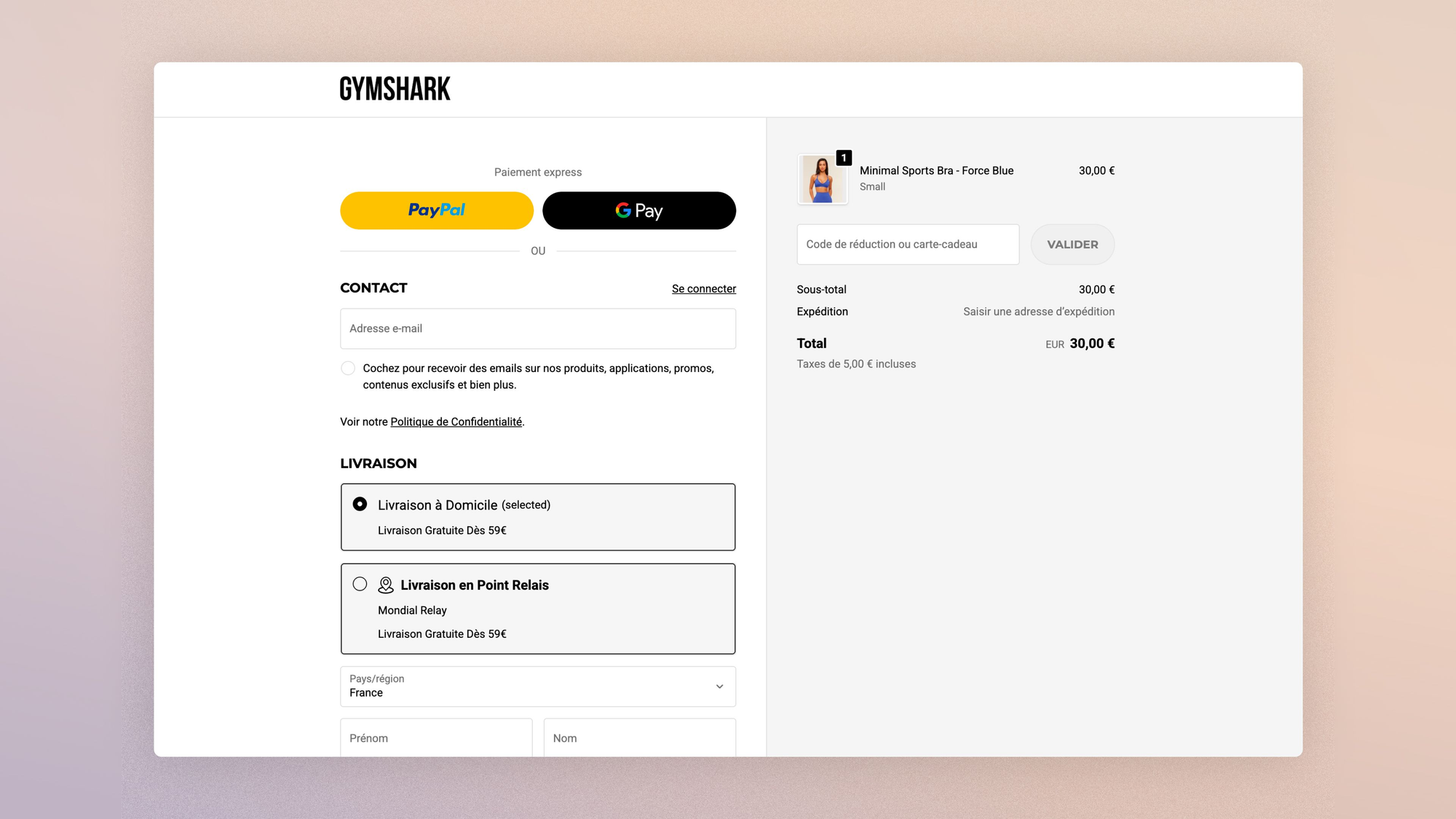
The Shopify checkout is a framework that provides the basic tools:
- multi-currency
- local gateways
- duty calculation
- checkout extensibility
But this foundation has to be localized to perform.
Every market has its non-negotiable payment methods, its non-compromisable delivery expectations, and its implicit return policy.
Setting them up takes a few hours in the Shopify admin. Not setting them up costs months of lost conversions. Worst of all, you won't see it in your analytics, because a visitor who can't find their payment method doesn't generate a "cart abandonment."
They generate silence.