Customers don't always start by looking for a product. Sometimes they just follow someone whose taste they like, or pin a few images to a Pinterest board for next summer's wedding.
Often, the need doesn't exist yet, and desire sharpens gradually until the shopper lands on a product page. Part of the choice has already been made.
This journey is nothing new. What has changed completely is the set of tools that connect its steps: collecting inspiration, finding a recommendation again, expressing an intent, then identifying an available product.
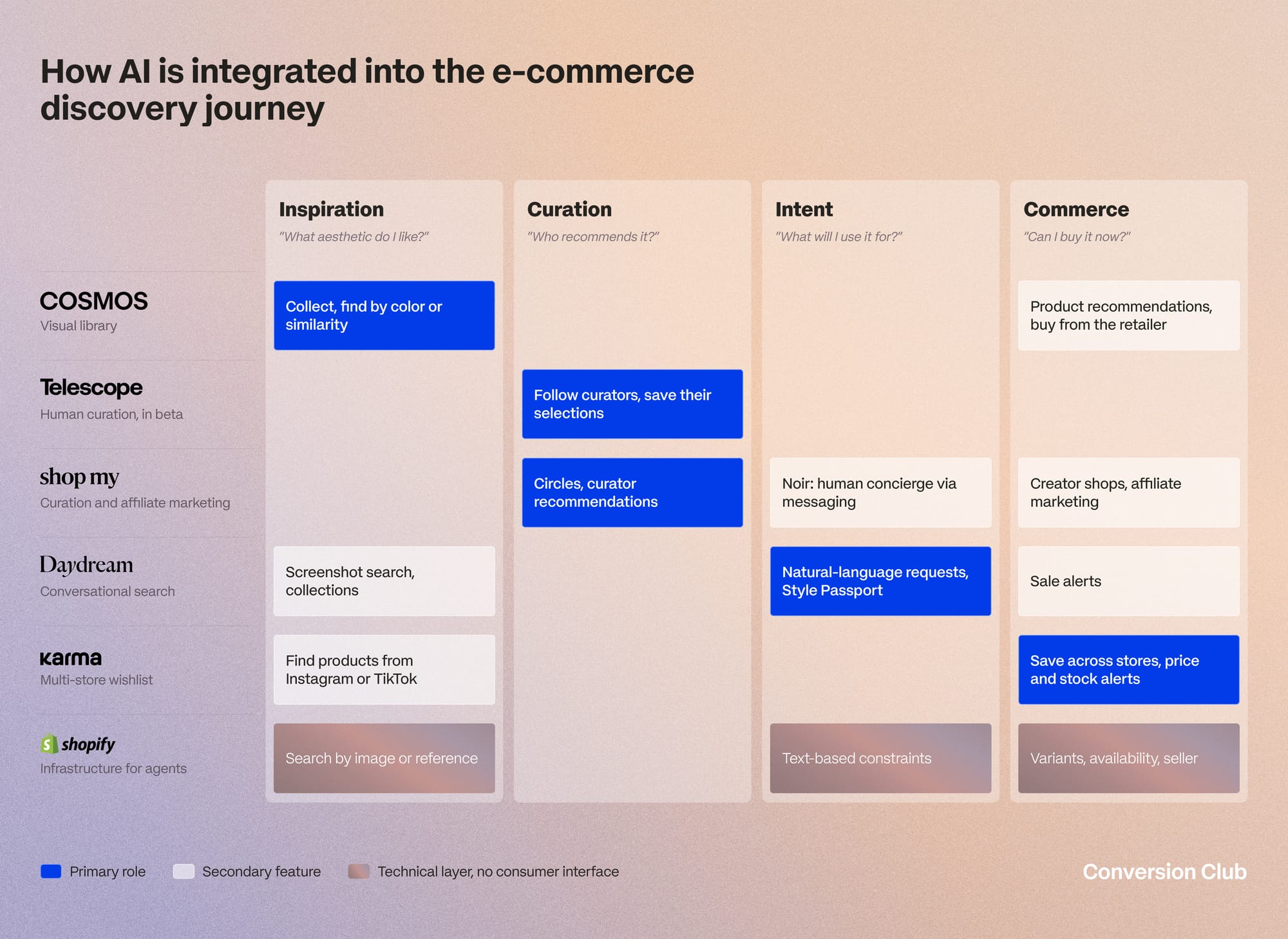
To understand them better, we can sort them into three main layers:
- discovery,
- memory and decision,
- and then transaction.
Within this journey, four types of information play different roles.
| Step | Useful information | The shopper's question |
|---|---|---|
| Inspiration | Image, post, collection | "Which world do I like?" |
| Curation | Author, recommendation, source | "Who recommends this item to me, and why?" |
| Intent | Occasion, constraints, role of the product | "What could I use it for?" |
| Sale | Seller, variant, price and availability | "Can I buy the right item now?" |
These steps don't follow a perfectly linear path. You can discover a product, save it, go back to inspiration, then change what you need. That's precisely what the new services make easier.
1. Discovery: a world before a product
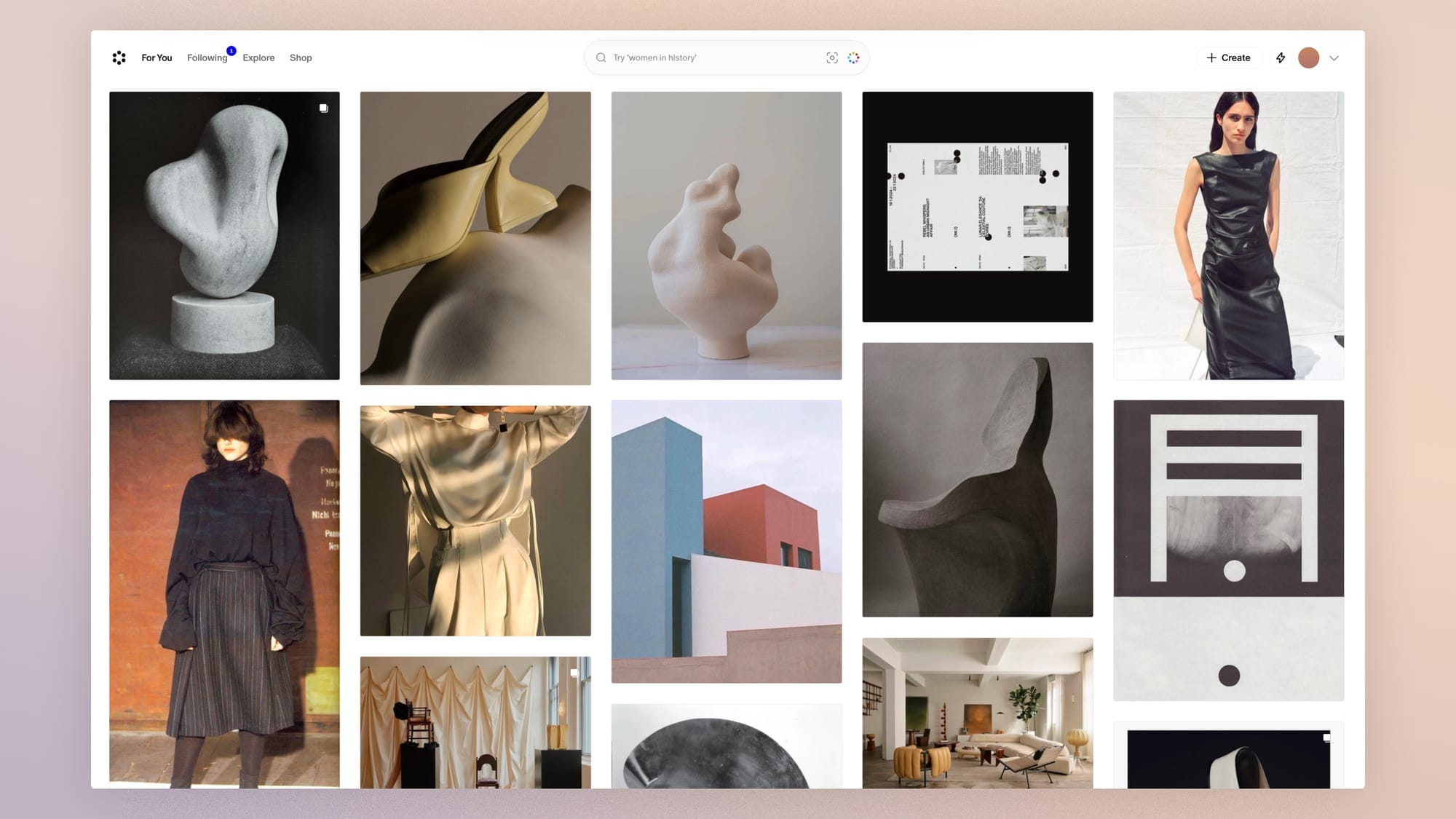
Building a visual moodboard
On a store site, people often start by browsing a category (dresses, shoes or bags), but discovery can start elsewhere too: a color, a lifestyle, a person or a combination of objects.
Cosmos illustrates this first entry point. The service lets you gather visual references and find them again by color or similarity. A collection can mix outfit pieces, home decor or project ideas, and isn't limited to items meant for purchase.
For an e-commerce brand, this difference matters. Someone may be drawn to the shape of a bag, the light in a photograph or the palette of an outfit. These references are linked before the person can even translate them into buying criteria.
Cosmos adds a commercial dimension to this moodboard: its FAQ describes product recommendations tailored to each person's taste, with the transaction completed directly with the retailer.
Inspiration is no longer just a board to browse: it can also be a starting point for discovering items to buy.
That doesn't mean every saved image signals purchase intent. It means each one is raw material for the kind of exploration that an e-commerce category doesn't allow.
Human curation versus the algorithm
Telescope approaches discovery differently: by relying on someone else's taste. The service, still presented as a beta, invites people to follow curators, save their recommendations and explore their collections. It claims human selection, with no ads and no recommendation algorithms.
Its "Outdoor Indoor Gear" collection brings together Gramicci, Satisfy, Norda and Pas Normal Studios around one idea: clothing and accessories for the mountains and the office alike. The title and the pairing of pieces already do part of the advisory work.
The same pair of pants doesn't say the same thing in "Men's Pants" and in "Outdoor Indoor Gear." In the first, it belongs to a taxonomy. In the second, it belongs to a proposition.
ShopMy brings this curation closer to commerce. The platform lets you follow products recommended by curators and create "Circles," groups of people whose recommendations match your style. Its positioning is clear: "Curated by the obsessed, not the algorithm."
For brands, ShopMy also offers creator storefronts, affiliate links and partnerships. Curation thus becomes both a discovery interface and a business.
The takeaway for a store: showing a product isn't always enough. Showing who chose it, with which other products and for what use can give shoppers a reason to consider it.
A collection called "The Essentials" stays abstract. "The pieces our stylist packs for three days in Copenhagen" gives a point of view, a context and pairings. The selection still has to be genuine, and the uses described precisely.
2. Decision: turning a wish into criteria
Inspiration sparks desire but doesn't answer questions. I like this piece, but does it suit my occasion, my budget, what I already own?
This is where Daydream stands apart from a simple visual library.
The service offers conversational search, where you can submit a request that mixes occasion, style and constraints.
On its presentation page, the example features a long, light, printed dress, sought for a wedding in Paris in June and available from Net-a-Porter for fast delivery. Instead of filling in filters one by one, the person describes their need in their own words.
Daydream also announces a "Style Passport" that remembers favorite brands, saved items and occasions, along with search from screenshots, collections and sale alerts. These features connect discovery, narrowing down choices and the ability to find a piece again later.
The value isn't only in generating an answer. It's in the continuity:
"I like this silhouette. Find something similar, but less formal, that I can wear to the office."
In practice:
- an image gives a first direction,
- the conversation pins down the constraints,
- the results offer candidates,
- and saves let people pick the decision back up later.
When curation lives on the brand's site
The "Powered by Daydream" feature will gradually bring conversational search directly to brand and retailer sites; pilots are already underway at ba&sh, Sandro and Maje.
This qualifies the idea that AI will move all discovery outside of stores: a brand can also build this way of searching into its own catalog.
For an e-commerce brand, the question is no longer just "Do I need a chatbot?" but also: "Which requests does our current search fail to understand?"
It then becomes possible to refine search by context. Categories and filters remain useful for people who know what they want. A conversational interface can now complement that path when the request mixes several registers: occasion, comfort, silhouette, visual reference or budget.
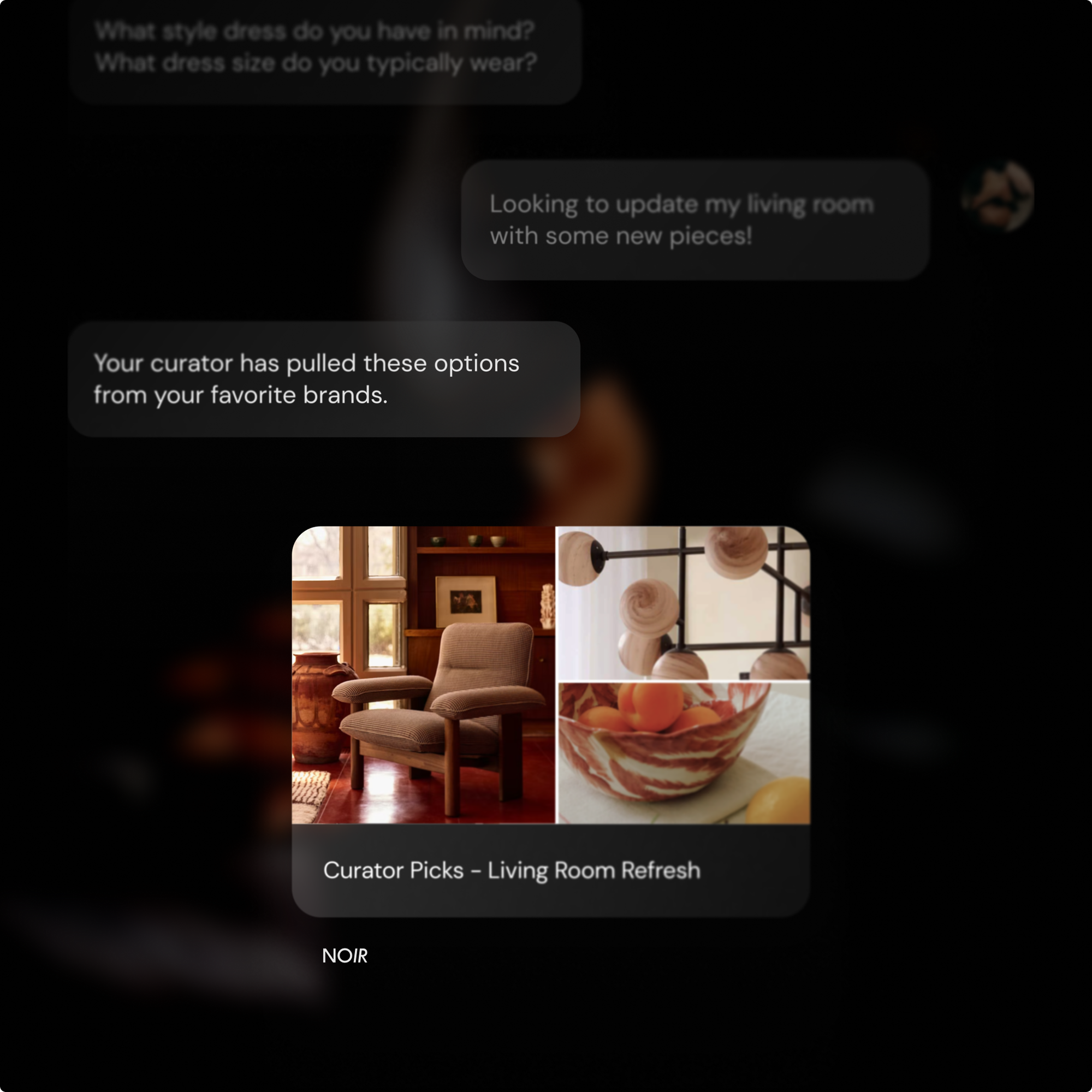
Human advice is another answer
With Noir, ShopMy offers a personal concierge, reachable by message, who provides personalized recommendations with the help of a real person. This human approach meets a need similar to Daydream's: turning a request into a selection.
The comparison is revealing: on one side, an AI interface specialized in fashion; on the other, a curator's judgment. Both try to close the gap between "what I have in mind" and "what I can actually choose."
A brand doesn't need to copy these services to take away their principle: usage information has to become visible.
- Why this cut?
- For which occasions?
- What should it be worn with?
- What's the trade-off between look and comfort?
A description limited to fabric and volume leaves these questions for the customer to answer, or for an intermediary.
3. Sale: triggering the purchase decision
Once the piece is spotted, the journey doesn't end there. The shopper still has to find the right variant, check the price and availability, then decide when to buy.
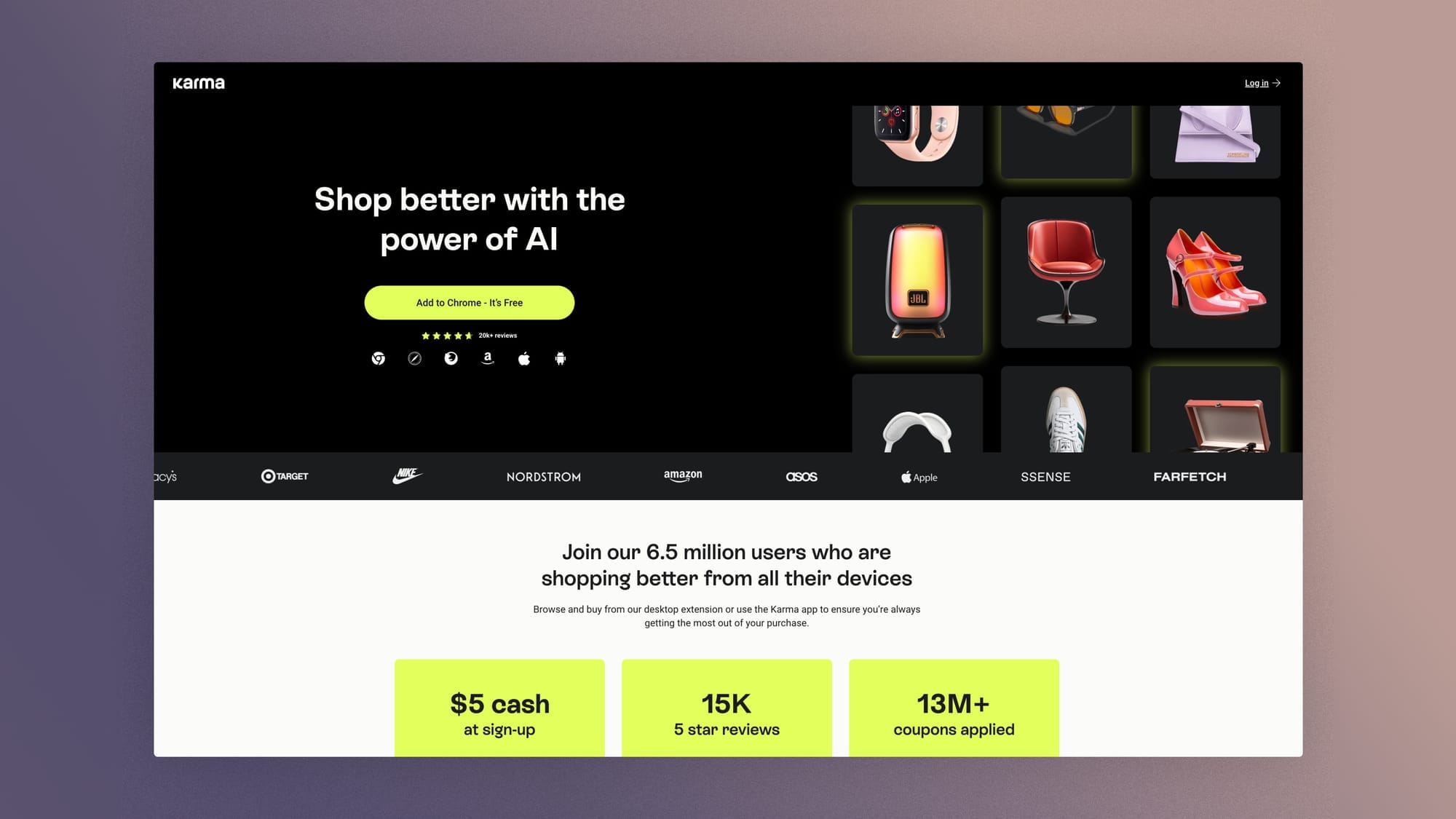
Karma sits squarely in this space. The service lets you save products across multiple stores and receive alerts for price drops or restocks.
The point is less to voice a new need than to avoid losing an interest that has already formed.
Someone might discover a jacket from a designer, compare it at two retailers, then wait. Their list becomes a set of pending decisions. Stock and price can reactivate them.
But we should be careful how we read this. A save doesn't prove firm intent. No purchase after a price drop doesn't prove the discount was too small. Size, fit, occasion or an alternative could explain the wait.
For a brand, the immediate use of a wishlist is therefore concrete: keep the variant, make it easy to return to the product, offer the alerts people asked for and track the gaps between saved products and sold products. It doesn't need to promise a perfect prediction of demand.
Agents connect references to the catalog
Shopify Global Catalog adds another capability: searching across multiple merchants from an image or product reference, then refining the search with text criteria. The service also retrieves structured information on variants, availability and sellers.
This makes a prompt like this possible:
"Based on these references, find jackets available in this size, under €250, deliverable in France."
Visual search offers results, while commercial constraints identify the ones that are actually relevant.
Wild, right?
Payment remains a separate question. Cosmos sends shoppers to the retailer; the Shopify/Claude repo can edit a cart but keeps the merchant's checkout. An experience can be assisted, even agentic in some operations, without handing the whole transaction to AI.
4. What e-commerce brands should take away
All these services reveal a shared shift: the thinking no longer starts in the store. The store may instead confirm an intent that has already matured.
But this is no invitation to replace the whole site with a conversation. It's an invitation to connect the four pieces of journey information better.
Inspiration calls for images and pairings that go beyond the isolated product
A full outfit, a worn detail or a lifestyle shot helps shoppers understand the world of the piece.
Curation must rest on an identifiable source
A stylist's pick, a designer's selection or a usage review can explain why a product deserves attention. If a paid partnership is involved, it must be clearly disclosed.
Intent must address real situations
Internal searches, advice exchanges and customer service requests reveal the phrasings the catalog can't yet handle.
Sales rely on reliable information: variant, size, price, stock availability and delivery terms
An appealing recommendation that can't be bought under good conditions only creates frustration. This data must also be readable by agents.
One more avenue is emerging: a sale can happen without a new explicit search.
- Cosmos suggests products based on taste;
- Daydream and Karma can bring a piece back to someone's attention with an alert.
Push comes in different forms, from embedded suggestions to requested notifications.
For a brand, the goal isn't to "retarget everyone who clicked a heart" but to extend their interest with relevant information: the size is back, the piece drops below the chosen threshold or a pairing completes the selection.
The store's role is getting more complex: it has to win over the person who's exploring, answer the questions of the one who's comparing and reassure the one who has already decided.
Cosmos organizes a visual world. Telescope and ShopMy value a human eye. Daydream interprets a nuanced request, while Karma extends interest over time. These services don't replace the store: they prepare, guide or extend the choice.
So an e-commerce brand's question isn't limited to "how do we show up in AI answers?" It also has to ask: what information about our products will help someone go from "I like this" to "this works for me"?